
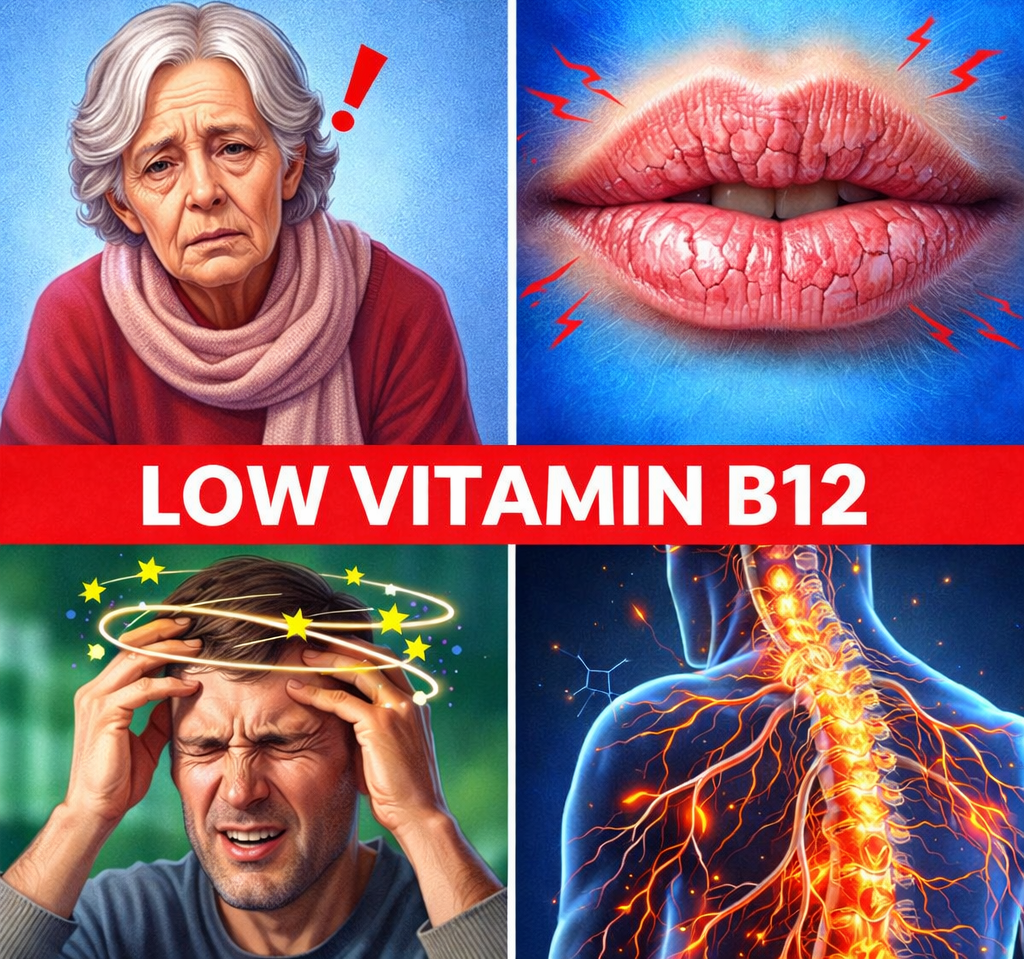
Vitamin B12 is a vital nutrient that helps keep your nervous system, brain, and blood cells functioning properly. It also assists the body in making DNA and supports energy production. Despite its importance, many people don’t realize they have low B12 levels until symptoms become noticeable. The deficiency often develops gradually, and early warning signs can be easy to overlook.
Below are nine subtle signs that may indicate your body needs more vitamin B12.
1. Constant Fatigue
Ongoing tiredness is one of the most frequent signs of low vitamin B12. Your body relies on B12 to produce healthy red blood cells that transport oxygen throughout the body. When oxygen delivery drops, you may feel weak, drained, or unusually exhausted even after resting well.
2. Tingling or Numbness in the Hands and Feet
Vitamin B12 plays an important role in maintaining nerve health. Low levels can damage the protective covering of nerves, leading to sensations like tingling, numbness, or “pins and needles” in the hands, legs, or feet. Many people assume this is caused by poor circulation, but B12 deficiency can also be responsible.
3. Memory Issues or Brain Fog
Frequent forgetfulness or difficulty concentrating may be linked to low B12 levels. This vitamin supports proper brain function, and deficiency has been associated with memory lapses, trouble focusing, and mental confusion.
4. Pale or Yellowish Skin
A shortage of vitamin B12 can interfere with red blood cell production. When these cells break down improperly, the skin may appear pale or slightly yellow due to the release of a pigment called bilirubin.
5. Shortness of Breath and Dizziness
Because B12 deficiency reduces the number of healthy red blood cells, the body may struggle to deliver enough oxygen to tissues. This can cause lightheadedness, dizziness, or breathlessness during everyday activities like walking or climbing stairs.
6. Mood Changes or Depression
Low B12 levels may also affect emotional well-being. Research suggests the vitamin helps produce brain chemicals that regulate mood. When levels drop, some people experience irritability, mood swings, or symptoms of depression.
7. Smooth or Swollen Tongue
An inflamed, swollen, or unusually smooth tongue can signal vitamin B12 deficiency. The tiny bumps on the tongue may disappear, leaving it glossy or red. Some people also feel burning sensations or discomfort in the mouth.
8. Vision Problems
Although uncommon, long-term vitamin B12 deficiency can damage the optic nerve that sends visual signals from the eyes to the brain. This may result in blurred or disturbed vision and should not be ignored.
9. Balance and Coordination Difficulties
If left untreated, vitamin B12 deficiency can affect the nervous system and lead to problems with balance or coordination. Some individuals may feel unsteady while walking or notice increased clumsiness.
Why Vitamin B12 Deficiency Occurs
There are several reasons someone may develop low vitamin B12 levels. Older adults often absorb less B12 from food. People following strict vegetarian or vegan diets may also have lower intake since B12 is mostly found in animal-based foods like meat, eggs, and dairy. Certain digestive conditions can also reduce the body’s ability to absorb the vitamin.
When to Talk to a Doctor
If you experience several of these symptoms, it’s important to consult a healthcare professional. A simple blood test can confirm whether your vitamin B12 levels are low. Treatment may involve dietary adjustments, supplements, or injections depending on how severe the deficiency is.
The Bottom Line
Vitamin B12 is essential for energy levels, nerve health, and proper brain function. Because the symptoms of deficiency can start off mild, they are often overlooked. Recognizing these early warning signs can help you take action before the problem becomes more serious.
Looking after your nutrition today can have a powerful impact on your long-term health.