
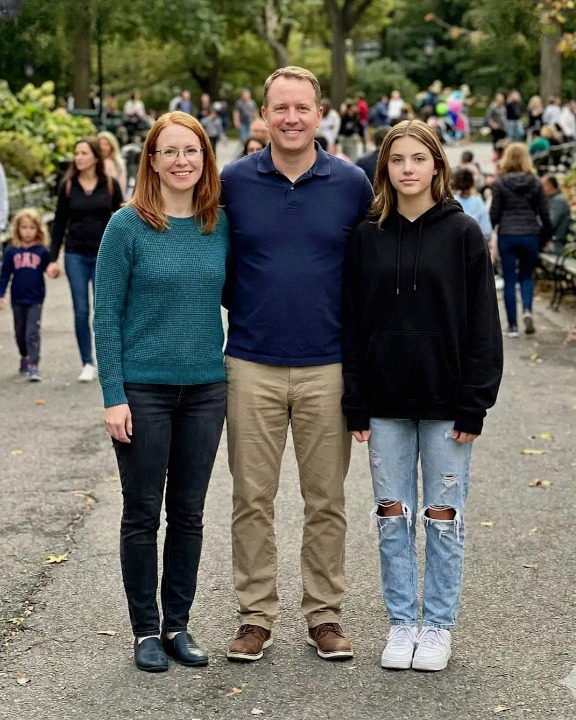
I once overheard my 16-year-old daughter quietly telling her stepfather, “Mom doesn’t know the truth… and she must never find out.”
The next afternoon, they said they were heading out to buy a poster board for a school project. Something about it didn’t sit right with me, so I decided to follow them.
But they didn’t drive to Target like they’d said.
Instead, they went to the hospital.
What I discovered there forced me to face a decision I had always dreaded.
My daughter, Avery, is sixteen. She’s at that stage where she’s almost an adult—old enough to start driving soon, old enough to close her bedroom door with a little more attitude than before.
Still, I always believed I could tell when something was wrong with her.
Recently, though, she had become different.
Not just typical teenage quiet—more like she was being careful about what she said.
She would come home from school, head straight to her room, and barely speak during dinner. Whenever I asked if something was bothering her, she would simply nod and say, “I’m fine, Mom.”
But I knew she wasn’t.
One Tuesday evening, I stepped out of the shower after remembering a new hair mask I’d left in my purse downstairs.
With the water still running, I wrapped a towel around myself and hurried down the hall.
I was only planning to grab it quickly when I heard voices in the kitchen.
Avery was speaking softly, her voice trembling.
“Mom doesn’t know the truth,” she said.
I froze in the hallway.
“And she can’t ever find out.”
My stomach tightened.
Before I could react, the floor creaked under my foot.
The conversation stopped instantly.
Ryan—my husband—quickly changed his tone. “Oh, hey! We were just talking about her science project.”
Avery added quickly, “Yeah, Mom. I need a poster board for school tomorrow.”
Their smiles seemed too rehearsed. Too quick.
Something felt wrong.
That night I barely slept.
What truth were they talking about? Why couldn’t I know it?
Was it really about a school project?
The following afternoon, Ryan grabbed his keys and said, “We’re going out to pick up that poster board. Maybe grab pizza too.”
Avery slipped on her sneakers without even looking at me.
“Want me to come?” I asked.
“No need,” Ryan replied. “We’ll be quick.”
Shortly after they left, my phone rang.
It was Avery’s school.
The caller explained she had been absent the previous Wednesday and Friday.
I felt my heart drop.
Both of those mornings I had watched Avery leave the house with Ryan, thinking she was heading to school.
After hanging up, a heavy feeling settled in my chest.
Something was seriously wrong.
I grabbed my keys and followed them.
Ryan didn’t head toward the shopping center.
Instead, he turned in the opposite direction.
Ten minutes later, his car pulled into a parking lot.
It wasn’t a store.
It was the local hospital.
My hands tightened on the steering wheel.
Why would they come here?
Were they hiding an illness? Was Avery sick?
They stopped briefly at the flower shop near the entrance. Avery came out holding a bouquet of white lilies and yellow roses before they went inside.
I waited a moment before following them.
They took the elevator to the third floor.
From the hallway, I watched them enter Room 312.
Ten minutes later they came out again.
Avery’s eyes were red from crying, and Ryan had his arm around her shoulders.
I slipped into a nearby closet so they wouldn’t see me.
Once they left, I walked toward the room.
But when I tried to go inside, a nurse stopped me, explaining that I wasn’t allowed without being family.
I went home with more questions than answers.
The next day they tried the same excuse again—another “library trip.”
This time I followed them directly.
They returned to the hospital.
I went straight to Room 312 and opened the door.
Ryan and Avery both turned toward me in shock.
But my eyes were fixed on the man lying in the bed.
Thin. Pale. Connected to an IV.
It was David—my ex-husband.
Avery burst into tears, apologizing.
Ryan explained everything.
David was dying from stage-four cancer.
He had contacted Ryan weeks earlier, asking for the chance to see Avery before it was too late.
Avery had begged Ryan not to tell me, afraid I would refuse.
David had once destroyed our family.
Years earlier, I had discovered he’d been having an affair with his secretary—someone much younger than me. He left us without looking back. Avery was only nine.
Now he looked fragile and broken.
“I know I don’t deserve forgiveness,” he said quietly. “But I wanted to see our daughter one more time.”
Avery begged me through tears to let her stay.
I couldn’t answer.
I walked out.
That night I thought about everything.
About the pain David caused.
About Avery—and how much these moments with her father meant to her.
Eventually I realized something important.
This wasn’t about me.
It was about my daughter.
The next afternoon I told them, “I’m coming with you.”
They were surprised, but they didn’t argue.
Before leaving, I grabbed a blueberry pie—David’s favorite—that I had baked earlier that day.
When we entered the hospital room, he looked stunned to see me.
“This doesn’t erase the past,” I told him.
“I know,” he replied quietly.
“I’m not here for you,” I said. “I’m here so Avery doesn’t have to hide anymore.”
Over the following weeks, we visited together.
I never fully forgave him.
Maybe I never will.
But Avery got the time she needed with her father.
And slowly, things at home became calmer again.
Sometimes love can’t change the past.
But it can give us the strength to face whatever comes next.