
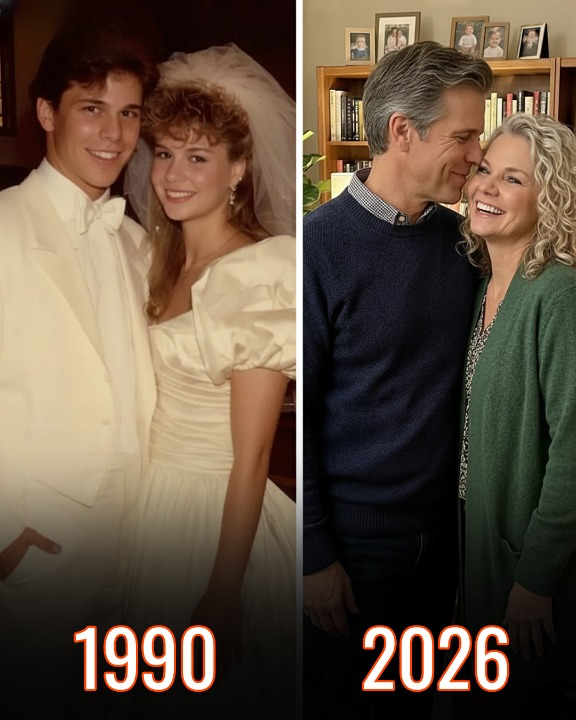
At 55, newly widowed after 36 years of marriage, I thought I knew everything about my husband—until something I discovered at his funeral made me question it all.
For the first time since I was 19, I no longer had someone to call “my husband.” His name was Greg—Raymond Gregory on official documents, but simply Greg to me.
Our marriage wasn’t a fairytale, but it was steady and real—built on everyday routines, small habits, and quiet love. Then, on a rainy Tuesday, everything ended in an instant. A truck didn’t stop in time. One phone call, one hospital visit, one heartbreaking sentence from a doctor—and my life split into before and after.
By the day of the viewing, I felt completely empty. I had cried until it hurt. My sister had to help me get dressed because my hands wouldn’t stop shaking.
Greg looked peaceful in his casket, dressed in the navy suit I’d bought for our last anniversary. His hair was neatly combed, his hands folded as if he were simply resting.
When the crowd thinned, I stepped forward with a single red rose, wanting to do one last thing for him. As I gently lifted his hands to place the flower, I noticed something unusual—a small folded piece of paper tucked beneath his fingers.
It wasn’t a prayer card.
Confused, I glanced around. No one seemed to notice. My heart raced as I carefully slipped the note into my purse and walked quickly to the restroom.
Inside, I unfolded it with trembling hands.
“Even though we could never be together the way we deserved… my kids and I will love you forever.”
At first, the words didn’t make sense.
Then they did—and they shattered me.
Greg and I never had children. Not because we didn’t want them, but because I couldn’t. Years of trying, of disappointment, of tears—and through it all, he had always told me I was enough.
So who wrote this?
Who were “the kids”?
Determined to find out, I went to the security office and asked to see the footage from the viewing. After some hesitation, the attendant replayed the recording.
There, on the screen, I saw her.
Susan Miller—a business associate I’d met before—approached the casket, glanced around, and slipped the note into Greg’s hands.
I took a photo of the footage and went straight back to the chapel.
She stood among the guests, looking just as grief-stricken as everyone else. But when she saw me approaching, something in her expression shifted.
I confronted her.
At first, she denied everything. But when I pressed her—when I asked about the children—she broke.
“They’re his,” she said. “A boy and a girl.”
Her words spread through the room like shockwaves. I felt every eye on me, every whisper cutting deeper. I couldn’t stay. I couldn’t fall apart there, in front of everyone.
So I left.
Later, alone in the quiet of my house, I found Greg’s journals—years’ worth of his private thoughts. I had never read them before, but now I needed answers.
Page after page, I found only us—our life, our struggles, our love. He wrote about my pain, our failed attempts to have children, and how deeply he cared for me.
There was no secret family. No hidden life.
But there was Susan.
In later entries, he wrote about business conflicts with her—bad deals, arguments, and a decision to cut ties, even though it would cost her.
Then one line stood out:
“She has two kids. I don’t want to take food off their table.”
That’s when it clicked.
The children weren’t his.
They were hers.
With help from a close friend, I confronted the truth. Susan had lied. She admitted it—she had made everything up out of anger, wanting to hurt me the way she felt hurt by Greg.
There were no secret children.
No betrayal.
Just cruelty.
In the end, the truth didn’t come from her words—but from his.
From the pages he left behind.
From the quiet, consistent love he had written over and over again.
My marriage wasn’t a lie.
And despite everything, one thing remained undeniable—
He loved me.
“I love her.”
He never stopped showing that.