
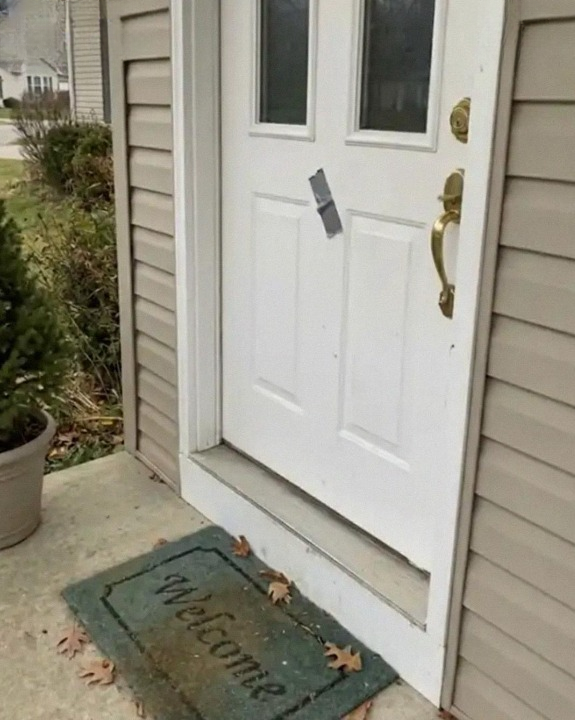
I’m 62 and live alone on a quiet, familiar street. I used to think nothing could ever go wrong here. Then a strip of gray tape appeared on my front door—and everything changed.
At first, I thought it was nothing. But soon I saw the same tape on my neighbor Linda’s door and others down the block. When I mentioned it to her, she got serious. “Don’t remove it,” she said. “It means something.”
She explained that her house had been acting strangely—doors not latching, cabinets swinging open. And then she revealed that the city had inspected the street: the ground was shifting beneath some houses, and hers was considered at risk. She was leaving immediately.
I ignored the warning at first, thinking it was overcaution. But that night, I felt a low hum under my feet. Lights flickered, glasses rattled. Outside, utility crews began setting up with dimmed lights. One worker checked the tape on my door, looked at the clipboard, and said my house had been marked “likely vacant.”
Suddenly, my house shivered, cracks appeared in the walls, and the floor gave beneath me. The tape had been a marker for city crews working to identify at-risk homes after subsurface issues were discovered. The system had failed, and my removal of the tape almost left me off the radar.
I grabbed my essentials—wallet, keys, papers, and my late wife’s framed photo—and ran outside just as part of the concrete walkway dropped. Across the street, a house sank at the corner. My street, which had always seemed safe, had been slowly collapsing beneath us.
The city relocated residents to a motel. Linda admitted she should have been more direct about the danger. Watching engineers collect what could still be saved, I realized something important: the quiet street I trusted was no longer home. But at least, for now, I was alive.