
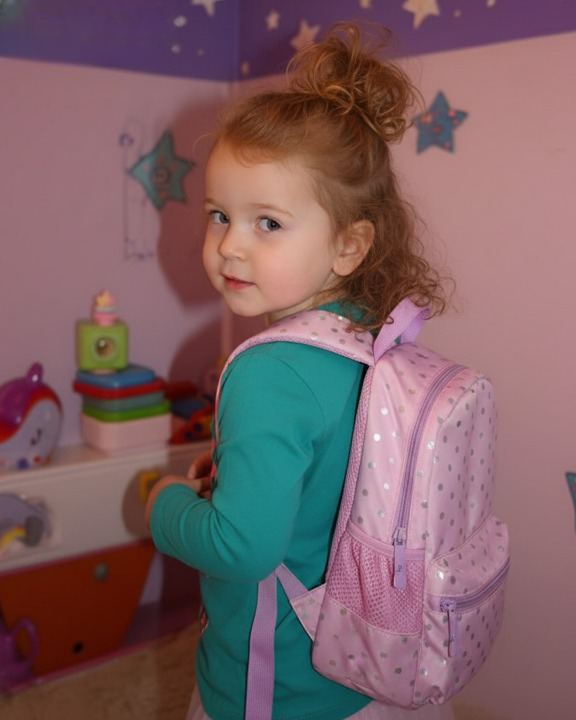
Twenty-one years after my daughter vanished from her kindergarten playground, I thought I had made peace with her absence. Then, on what would have been her 25th birthday, a plain white envelope arrived. Inside was a photo and a letter that began, “Dear Mom.”
For two decades, I left her room untouched—lavender walls, glow-in-the-dark stars, tiny sneakers by the door. Opening the closet still brought the faint scent of strawberry shampoo.
Catherine had disappeared at age four, wearing a yellow daisy dress and mismatched barrettes because, as she said, “princesses mix colors.” That morning she’d asked for “curly noodles tonight,” and her father Frank had grinned, “Spaghetti with curlies. Deal.”
Ten minutes later, she was gone. One moment she was in line for juice boxes; the next, vanished. When the school called, I was washing a mug, thinking of nothing important.
“Mrs. Holloway? We can’t find Catherine,” Ms. Dillon said, voice shaking.
I grabbed my keys and ran, only to find her pink backpack tipped over, her red mitten in the mulch. A police officer crouched nearby, looking helpless.
Without cameras or clear evidence, searches and sirens became our new reality. Detectives interrogated us as if we were suspects. Frank kept his hands clenched, pale and tense.
Months later, the stress broke him physically. He collapsed in the kitchen over a cabinet hinge, and in the ER, a doctor called it “stress cardiomyopathy,” while a nurse whispered, “broken heart syndrome.” I hated the cute name.
Years passed. Life went on, bills were paid, and birthdays were marked with a single candle in Catherine’s empty room. Until her 25th birthday, when a white envelope changed everything.
Inside was a photo of a young woman—my daughter, grown—with my face and Frank’s unmistakable eyes. The letter began: “Dear Mom. You have no idea what happened that day. The person who took me was never a stranger. Dad didn’t die. He faked my kidnapping to start a new life with Evelyn, the woman he was seeing. She couldn’t have kids.”
The letter ended with a phone number and a meeting place. I called immediately, and a trembling voice said, “Mom?”
We spoke in fragments. She told me Evelyn had renamed her “Callie,” and we arranged to meet with police nearby for protection. When we arrived, Catherine was tense but relieved to see me. She handed me a folder of documents exposing Frank and Evelyn’s deception, including fake custody papers and a blurry photo of him alive.
Together, we went to Evelyn’s home. Frank appeared, calm and defiant, until Catherine confronted him. Evelyn’s polished facade cracked. Security arrived, and the officers confirmed Frank’s fake death. His second life collapsed.
In the weeks that followed, we navigated legal actions, statements, and media frenzy. At home, Catherine checked locks, slept with the light on, and slowly reacquainted herself with the room I’d preserved.
On her next birthday, we lit two cupcakes—one for who she was, one for who she had become. Knees touching in the rocking chair, the lavender room finally felt like home again.