
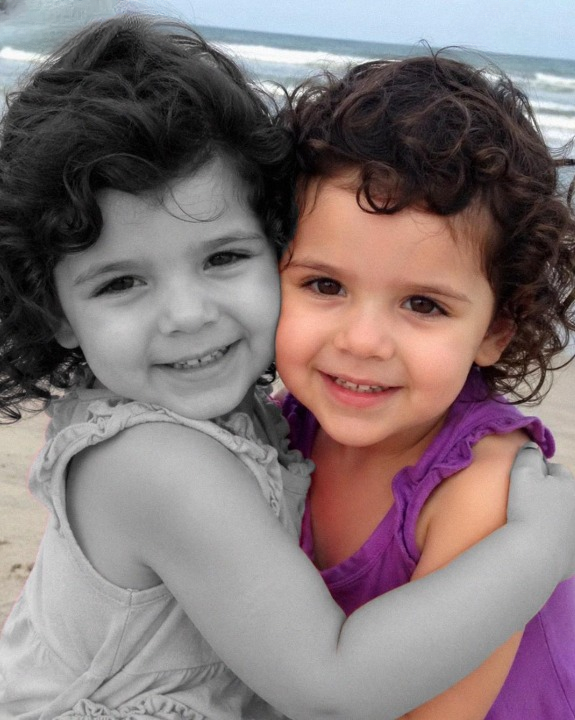
I lost one of my twin daughters three years ago, and every day since had been shaped by that unbearable grief. So when my surviving daughter’s teacher casually told me, “Both of your girls are doing great,” on her very first day of first grade, I felt the air leave my lungs.
What I remember most is the fever. Ava had been irritable for two days. By the third morning, her temperature reached 104, and she went limp in my arms.
I knew in the instinctive, bone-deep way only a mother can know that this was something serious.
The hospital lights were blinding. Machines beeped endlessly. Then came the word meningitis—spoken softly, carefully, as if the doctor hoped gentleness could soften it.
John gripped my hand until my knuckles hurt. Ava’s twin sister, Lily, sat in the waiting room with crackers in her lap, too young to understand why no one was smiling.
Four days later, Ava was gone.
After that, my memories blur. IV drips. Ceiling tiles. John’s mother, Debbie, whispering in hallways. Papers placed in front of me to sign. John’s face, hollowed out by grief.
I never saw the casket lowered. I never held Ava one last time after the machines stopped. There’s a wall in my memory where those days should be, and behind it is nothing.
But Lily still needed me, so I kept breathing.
Three years is a long time to keep breathing through pain.
I went back to work. Took Lily to preschool, gymnastics, birthday parties. Made dinners, folded laundry, smiled when expected. From the outside, I probably looked healed. Inside, it felt like carrying a stone in my chest everywhere I went. I’d simply learned how to bear the weight.
Eventually, I told John we needed to move. He didn’t argue. He already understood.
We sold our house, packed our lives into boxes, and drove a thousand miles away to a city where no one knew us. We bought a small house with a yellow door, and for a while, the unfamiliarity helped.
Lily was about to begin first grade. That morning, she stood at the door in brand-new sneakers, backpack straps cinched tight, practically vibrating with excitement.
“You ready, sweetie bug?” I asked.
“Oh yes, Mommy!” she chirped.
And for one genuine second, I laughed.
I drove her to school, watched her disappear through the doors without looking back, then went home and sat quietly in the kitchen.
That afternoon, when I returned to pick her up, a woman in a blue cardigan approached me with the warm efficiency of a teacher trying to meet dozens of parents.
“Hi, you’re Lily’s mom?” she asked.
“I am. Grace.”
“Ms. Thompson,” she said, shaking my hand. “I just wanted to tell you both of your girls are doing wonderfully today.”
I froze.
“I think there’s a mistake,” I said carefully. “I only have one daughter. Lily.”
Her smile faltered.
“Oh—I’m sorry. I only started yesterday and I’m still learning names. But I thought Lily had a twin. There’s another girl in the afternoon group who looks exactly like her.”
My heartbeat sped up.
“Lily doesn’t have a sister,” I said.
Ms. Thompson frowned, puzzled. “Come with me. I’ll show you.”
I followed her down the hallway, telling myself it was coincidence. Just another little girl with similar features. Nothing more.
The classroom buzzed with the end-of-day chaos of children packing bags and scraping chairs.
Ms. Thompson pointed toward a table by the window.
“There she is—Lily’s twin.”
I looked.
A little girl sat stuffing crayons into her backpack, dark curls falling over her face. She tilted her head to one side while concentrating.
That exact tilt.
Then she laughed at something another child said.
The sound hit me like a blow to the chest.
“Ma’am?” Ms. Thompson said somewhere far away. “Are you alright?”
The floor rushed upward.
I woke in a hospital room for the second time in three years.
John stood near the window. Lily sat beside him clutching her backpack straps, staring at me with worried eyes.
“The school called,” John said, his voice too controlled—the kind of calm built from fear.
I pushed upright. “I saw her. John, I saw Ava.”
“Grace…”
“She had Ava’s face. Ava’s laugh.”
“You were barely conscious after we lost her,” he said gently. “Those days aren’t clear in your memory. Ava is gone.”
“I know what I saw.”
“You saw a child who resembles her. That happens.”
I stared at him.
“Do you realize you never let me talk about this? About any of it?”
That landed, but he said nothing.
Still, one thought kept circling in my mind: I never saw Ava buried. That blank wall in my memory had always felt wrong.
“I’m not falling apart,” I said finally. “I just need you to come see her. Please.”
After a long pause, he nodded.
The next morning, after dropping Lily off, we went straight to the other classroom.
The teacher told us the girl’s name was Bella. She sat by the window, pencil twirling absently in her fingers exactly the way Lily had done since age four.
John stopped walking.
I watched certainty leave his face.
Bella had transferred two weeks earlier. Her parents, Daniel and Susan, dropped her off every morning at 7:45 sharp.
The following day, we waited. At exactly 7:45, a man and woman entered through the school gate holding Bella’s hands. They looked warm, ordinary, and deeply confused when we quietly asked to speak with them.
Lily and Bella stood ten feet apart, studying each other with fascinated suspicion.
Daniel looked between the girls and exhaled slowly.
“That is… uncanny,” he admitted.
Susan tightened her hand on Bella’s shoulder.
That night, I couldn’t sleep.
“I need a DNA test,” I whispered into the dark.
John was silent for so long I thought he’d ignored me.
Then he said, “Grace…”
“I know what you think—that grief is making me spiral. But I’ll suffer more not knowing.”
He stared upward for a long time.
“If it comes back negative,” he said finally, “you have to let her go. Truly let her go.”
I reached for his hand.
“Yes.”
Asking Daniel and Susan was one of the hardest conversations of my life.
Daniel’s confusion turned to anger within seconds, and I didn’t blame him. I was a stranger asking him to question the identity of his child.
But John told them quietly about Ava. The fever. The loss. The holes in my memory.
Daniel exchanged a long glance with Susan. Then he nodded once.
“One test,” he said. “And whatever it says, you accept it.”
We agreed.
The wait lasted six days. I barely ate. I stood in Lily’s doorway at night watching her sleep, comparing her face to every old photo on my phone. I doubted my own mind so often it stopped feeling like mine.
The envelope came on a Thursday morning.
John opened it because my hands shook too much. He read it once, then handed it to me.
“Negative,” he said softly. “She isn’t Ava.”
I cried for two hours.
Not only from heartbreak, though some of that remained. I cried because the grief I’d gripped for three years had finally loosened.
John held me the whole time without speaking.
Bella was not my daughter. She was another family’s bright, ordinary, cherished little girl who happened to resemble the one I lost. Nothing sinister. Nothing miraculous. Just coincidence—cruel and strangely kind at once.
And somehow, seeing that truth in black and white gave me something I hadn’t had in three years: the goodbye I’d never been able to say.
A week later, I stood at the school gate and watched Lily sprint across the yard toward Bella with her arms wide open. They collided in laughter and immediately began braiding each other’s hair.
They walked through the doors side by side, identical from behind—same curls, same bounce, same size.
My heart ached the way it had that first afternoon.
Then it softened.
Standing there in the morning light, watching Lily and her new best friend disappear into the school, I felt something settle quietly inside me.
Not sorrow. Not panic.
Peace.
I didn’t get my daughter back.
But at last, I got my goodbye.