
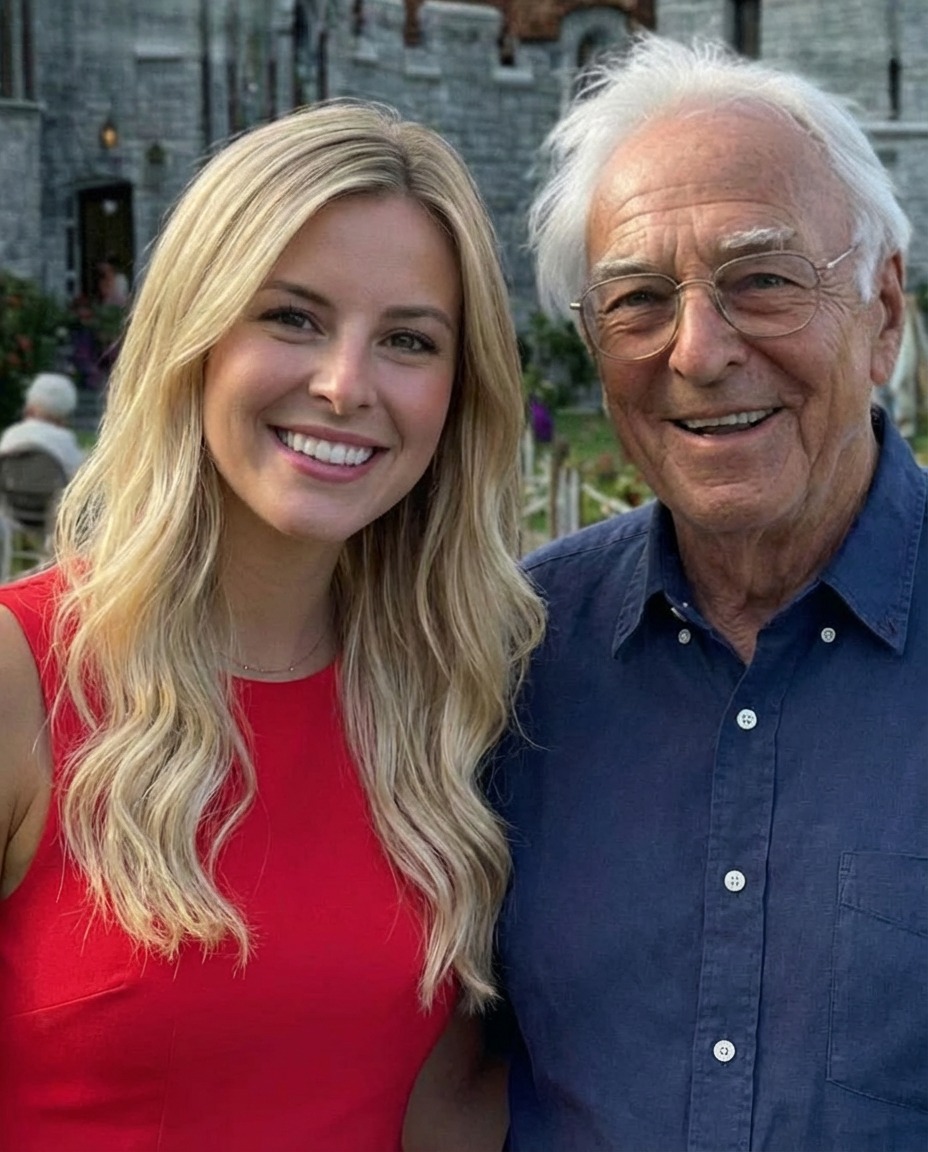
I married a man much older than me because I believed he could offer my children the stability I couldn’t provide.
I was thirty, raising two young kids on my own—a kindergartener and a second grader. Their father had left shortly after our daughter was born, and I never heard from him again.
I worked full-time as an accountant, but it was never enough. We were constantly struggling, always one unexpected bill away from falling apart. I was exhausted, trying to hold everything together.
So when Richard entered my life promising security, I said yes.
He was old enough to be my father.
We met at work during an important meeting I attended after leaving my kids with a babysitter. Richard was one of the company’s founders—calm, controlled, and quietly commanding. The kind of man who never seemed rattled.
Our conversations started casually, but I noticed how carefully he listened to me. That attention felt unfamiliar, even comforting.
He was forty years older than me, but he was still sharp, healthy, and easy to talk to.
We went out a few times after that. I told myself it was nothing serious—just dinner, just conversation. He was steady in a way my life wasn’t, and being around him felt like a break from constant survival rather than romance.
Then one evening, things shifted.
I was venting about something small—my daughter insisting on expensive cereal I couldn’t afford after trying it once.
“You don’t have to live like this,” Richard said.
I laughed it off, but he didn’t.
“I mean it,” he continued. “Not just about cereal.”
He reached across the table and took my hands.
“I can give you stability. A real home. Security for you and your children. A life without constant worry.”
My breath caught. “Richard… what are you saying?”
He smiled and opened a ring box.
Inside was an expensive diamond and sapphire ring.
“Marry me,” he said. “Let me take care of you.”
I stared at it, overwhelmed. I had loved before, and it had left me alone and struggling. I didn’t love Richard—but I trusted his steadiness. And he hadn’t claimed love either, which somehow made it feel more practical.
“Is it really that hard to decide?” he asked gently.
I hesitated, then told myself I was choosing responsibility over hope.
“Okay,” I said quietly. “Yes.”
At first, everything felt perfect.
He was kind to my children, and they warmed to him quickly. One day, they came home excited after spending time with him.
“We met a nice lady!” my daughter said.
“She had toys and games!” my son added.
Richard explained it away as a friend of his who worked with children. I didn’t question it. I wish I had.
Soon after, he began talking about better schooling opportunities—private education, even abroad.
“It would be good for them,” I admitted.
“I’ll handle it,” he said. “Money won’t be a problem.”
I didn’t realize how easily I was being led.
On our wedding day, everything looked perfect—soft lighting, elegant flowers, a carefully arranged celebration. But I felt uneasy, though I couldn’t explain why.
At one point, I stepped away for air in the restroom. That’s when a woman approached me.
“Are you connected to Richard?” I asked.
She leaned in and whispered, “Check the bottom drawer of his desk before your honeymoon… or you’ll regret it.”
Then she walked out.
I tried to dismiss it, but later that night, after Richard fell asleep, I went to his study.
My hands shook as I opened the bottom drawer.
Inside were documents—financial records, property files—and a folder labeled with my children’s names.
Ava. Mason.
My stomach dropped.
The first pages were psychological reports questioning my stability as a parent.
Then I remembered my daughter mentioning a “nice lady” asking questions.
Next came school enrollment papers—private boarding school in Europe. Set to begin within days.
While I was supposed to be on my honeymoon.
But the final document was the worst: legal authorization giving Richard decision-making power over my children.
Signed by their biological father.
The same man who had abandoned us years ago.
Somehow, Richard had found him and convinced him to sign away control.
The next morning, I confronted him at brunch, placing the folder on the table.
“You planned to send my children away without telling me?”
“You said you wanted better for them,” he replied calmly.
“Not like this,” I snapped.
Before he could respond, another voice interrupted.
“He didn’t do it for your children’s benefit,” the woman from the restroom said. “He did it for control.”
She introduced herself as Claire—his relative by marriage—and said she had overheard him describe my children as “obstacles.”
Richard denied everything, but the evidence was undeniable.
I removed my wedding ring and placed it on the folder.
“You didn’t want a family,” I said. “You wanted control.”
“And you wanted money,” he replied coldly.
Maybe he wasn’t entirely wrong about my desperation—but I wouldn’t lose my children.
I left that day with them.
What followed was a long, draining legal battle. But the truth, the documents, and Claire’s testimony worked in my favor. Even the psychological report was eventually discredited.
In the end, I learned something I’ll never forget:
Anyone who asks you to give up your children in exchange for security is not offering safety—they’re taking everything that matters.
I made a desperate choice when I married him.
But when it mattered most, I chose my children.