
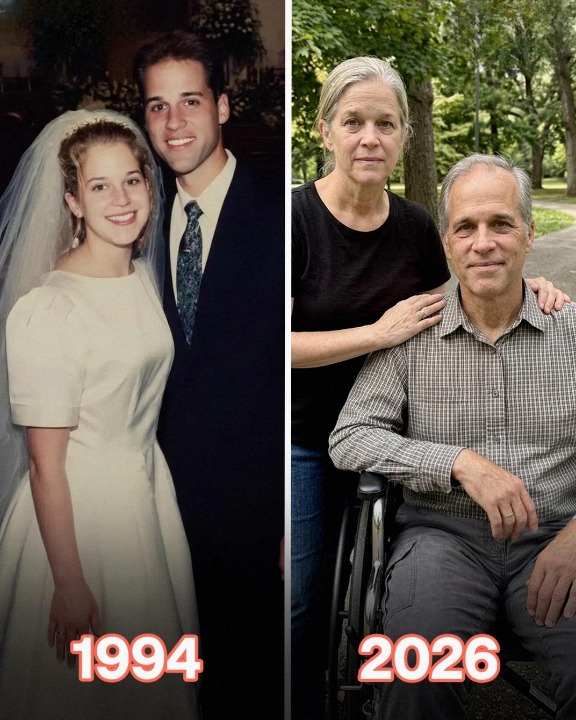
I spent 29 years caring for my disabled husband. Then one afternoon I came home early and heard steady footsteps upstairs. When I saw Robert walk down the stairs without help, laughing with Celia from church, I realized the life I had built was based on a lie.
I’m 57 now, and for most of my life I believed loyalty was simple: choose your partner, stay committed, and never keep score.
That’s exactly what I did.
Last Thursday, I learned my husband had been playing by completely different rules.
The accident that changed everything
I was 28 when Robert fell off a ladder while fixing a gutter on our garage. We had been married only three years and were talking about starting a family.
At the hospital, the doctors spoke in careful, clinical tones: spinal injury, nerve damage, chronic pain.
Recovery, they said, would be long—and possibly incomplete.
From that moment on, our lives revolved around his condition.
My days filled with medications, physical therapy appointments, heating pads, insurance calls, and doctor visits. I worked full-time while managing everything at home.
Robert changed too. The man who once carried groceries two bags at a time now struggled to walk without help.
So I became the strong one.
People called me devoted and selfless.
I just called it marriage.
A life built around his pain
We never had children. It didn’t feel fair to bring a baby into a life already shaped by illness.
Most days Robert used a cane. On worse days, he relied on a wheelchair. Eventually we installed a stair lift in the house.
His pain dictated everything—our schedule, our finances, our future.
And for nearly three decades, I accepted that reality.
The moment everything changed
Then one Thursday afternoon, I left work early after a client canceled.
When I pulled into the driveway, I noticed something strange: a silver sedan I didn’t recognize.
Inside the house, it was quiet.
Too quiet.
No television. No cane tapping the floor. No familiar sounds from Robert’s recliner.
Then I heard something upstairs.
Footsteps.
Not the uneven shuffle I knew so well—but steady, confident steps.
My heart began to pound.
I slipped behind the half-open hallway closet door and waited.
And then I saw him.
Robert.
Walking down the stairs perfectly fine.
No cane. No railing. No hesitation.
Behind him was someone I recognized instantly.
Celia.
The woman who knew my life
Celia wasn’t a stranger.
She attended our church and even organized a “Caregiver Appreciation Luncheon” once where she made me stand while everyone applauded my dedication.
She worked in insurance claims and always said proudly,
“I help people navigate the system.”
Now she was standing in my kitchen with my husband—laughing.
Like she belonged there.
I quietly pulled out my phone and recorded.
Just enough footage to show him walking normally.
Enough to prove the truth.
Then I slipped out of the house and drove away before they noticed I had come home.
The truth begins to unfold
I stopped at my neighbor Dana’s house and told her everything.
Her reaction made my stomach sink.
She admitted she’d seen Robert walking outside several times in recent months.
She had assumed I knew.
Months.
My husband had been walking normally for months.
That night I acted as if nothing had happened. Robert sat in his recliner with his cane nearby, complaining about pain like always.
But while he talked, I noticed things.
An extra glass in the sink.
Lemon slices in the trash.
A faint trace of Celia’s perfume.
Later that night, I checked our bank accounts.
At first everything seemed normal.
Then I noticed small transfers—hundreds of dollars at a time—going to accounts I didn’t recognize.
They went back years.
There was even a credit card and line of credit opened without my knowledge.
A plan instead of a confrontation
The next day I contacted a lawyer.
He watched my video and reviewed the financial records.
His conclusion was simple:
Robert had been hiding money and possibly committing disability fraud.
Instead of confronting him immediately, the lawyer advised me to gather evidence and prepare carefully.
So I did.
The final confrontation
The following Monday, I invited Celia over while Robert was home.
I also invited two witnesses—my neighbor Dana and my coworker Nina.
When everyone sat down, I played the video.
The room went silent.
Robert watched himself walking down the stairs like a perfectly healthy man.
Then I placed the financial records on the table.
Years of secret transfers.
Hidden accounts.
Finally, I slid a separation agreement toward him.
I told him he had two choices:
Sign the agreement…
Or I would send everything to the insurance company’s fraud department.
He signed.
Celia left immediately without saying another word.
Walking away
That night I stood beside the stair lift I had fought so hard to install for him.
The machine he never actually needed.
I ran my hand along the rail.
Then I switched it off.
For the first time in 29 years, I slept in the guest room.
The next morning I opened a bank account in my own name, changed my direct deposit, and scheduled a doctor’s appointment for myself—something I hadn’t done in years.
When Robert called after me, I didn’t stop.
I walked out the front door and drove away.
For the first time in decades, I went somewhere without worrying about how quickly I needed to return home.
I spent almost thirty years believing love meant sacrifice.
Now I know that love without honesty isn’t devotion—it’s unpaid labor.
And I’m done clocking in.