
Being a single father was never the life I planned for. But after everything else fell apart, it became the only thing that still mattered—and I was willing to fight for it no matter what.
I work two exhausting jobs just to keep a cramped apartment afloat. By day, I’m on a garbage crew or fixing broken water lines with the city sanitation team. By night, I clean empty office buildings that smell like disinfectant and success I’ll never touch. The money barely lasts a moment before it’s gone again.
But my six-year-old daughter, Lily, makes it all worth it.
She’s the reason I get up every morning.
My mother lives with us too. She moves slowly and relies on a cane, but she still takes care of Lily in her own quiet way—braiding her hair, making breakfast, remembering every little detail I forget. In many ways, she holds us together.
Lily loves ballet. It’s more than a hobby for her—it’s how she expresses everything she feels. When she’s happy, she spins. When she’s nervous, she goes still and focused, like the world disappears.
One day, she found a ballet flyer at a laundromat and begged me to let her join. I couldn’t really afford it, but I said yes anyway. Somehow, I would make it work.
From then on, I saved every spare dollar I could. I skipped meals, worked extra shifts, and set aside whatever I could in an envelope just for her classes.
The studio felt like another world—bright, polished, full of families who didn’t look like they were constantly struggling. I never felt like I belonged there, but I showed up anyway, because Lily did.
At home, we practiced together. I’d move furniture aside while she danced in our small living room. My mother would sit nearby, clapping softly, while Lily asked me to watch every detail. No matter how tired I was, I made sure I did.
The recital became the most important day of our lives.
I promised Lily I would be there—front row, cheering the loudest.
But that day, everything went wrong.
A major emergency hit my work site, and I got pulled into hours of urgent repairs. Water was flooding streets, and we couldn’t leave until it was under control. Time slipped away while I kept thinking about 6:30 p.m.
By the time I got free, I was soaked, exhausted, and already late.
I ran anyway.
I took the subway, then sprinted to the school, arriving just as the performance was starting.
Inside the auditorium, Lily stood on stage in her pink costume, searching the crowd. For a moment, she couldn’t find me—and I saw fear flash across her face.
Then she spotted me.
I raised my hand.
Her whole expression changed.
She danced with everything she had—not perfectly, but beautifully. Every movement carried joy, effort, and trust.
Afterward, she ran straight into my arms, laughing and crying at the same time.
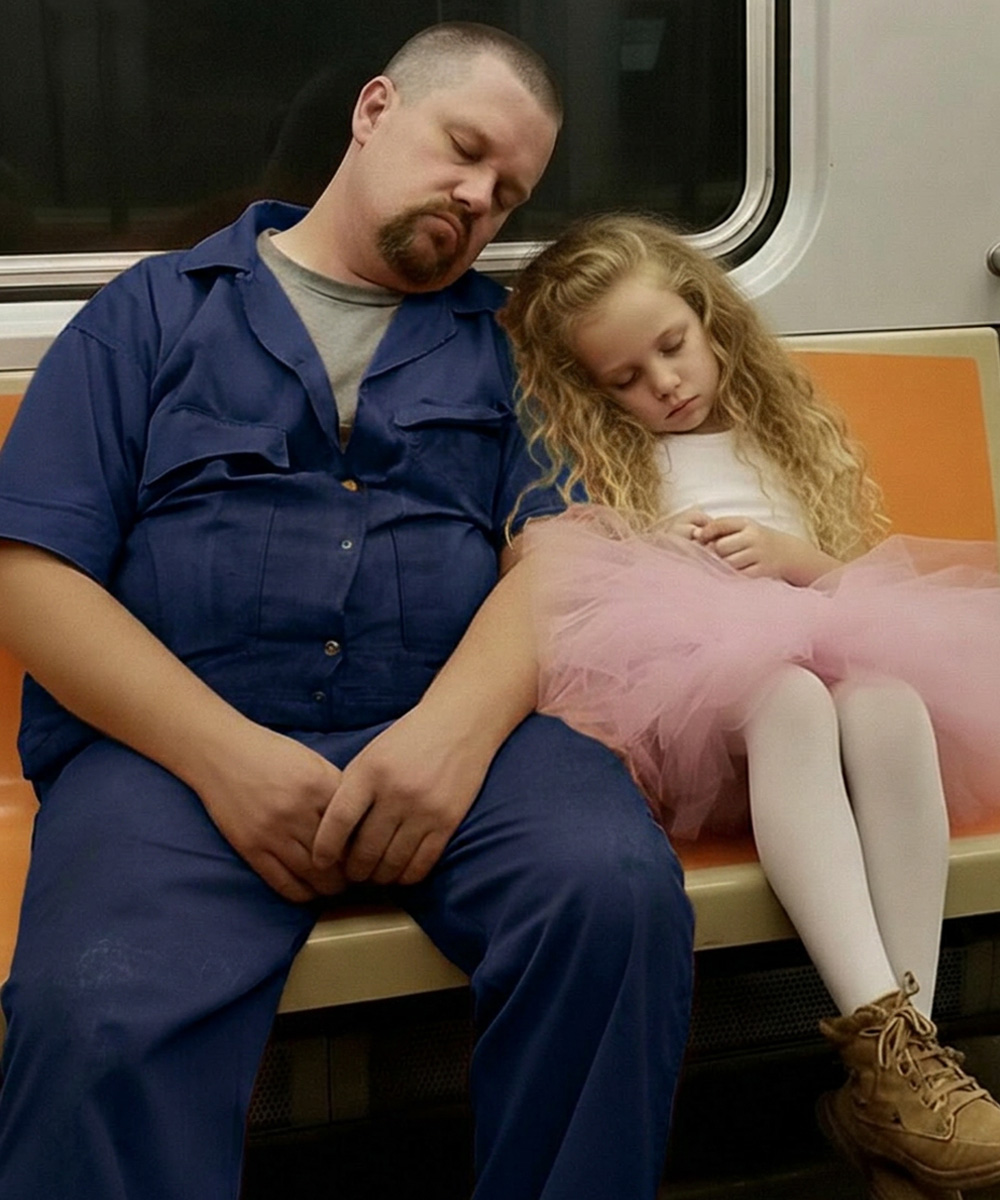
That night, on the subway ride home, she fell asleep against me in her costume.
That’s when I noticed a man watching us.
He seemed out of place—calm, well-dressed, quietly observing. Then he raised his phone and took a picture.
I immediately confronted him. He apologized and deleted it in front of me, showing me his gallery to prove it was gone.
I thought that was the end of it.
But the next morning, everything changed.
There was a hard knock at our door. When I opened it, I found the same man—now accompanied by two others.
He told me to pack Lily’s things.
I panicked, demanding to know who they were and what they wanted. He quickly clarified that it wasn’t what it sounded like.
His name was Graham.
He explained that he ran a foundation and had seen Lily the night before. More importantly, he saw something that reminded him of his own daughter—Emma, a gifted dancer he had lost years ago after missing too many of her moments.
Before she died, she made him promise something: to help children like her, and to support families like ours.
Inside the envelope he handed me were documents offering Lily a full scholarship, support for her training, and stability I could never afford alone. There was even a job opportunity for me nearby so I wouldn’t have to keep working multiple unstable shifts.
At first, I didn’t trust it. It felt too sudden, too generous.
But there was no hidden agenda—just a man trying to keep a promise he made too late.
My daughter looked up at me and quietly asked if she could go, as long as I came with her.
That was the moment everything settled.
We accepted.
Now Lily dances in real studios with proper training, and I finally have a stable job that lets me show up for her life instead of chasing survival.
I still work hard. I still struggle.
But I never miss her performances anymore.
And every time I watch her dance, I feel like someone out there—someone who understands loss—might finally be clapping for us too.