
For years, my mother-in-law treated every family dinner like a trial, and I was always the one on trial. I thought her fixation on my son was just cruel. I didn’t realize she was laying a trap that would end up ruining her own life first.
My mother-in-law, Patricia, had despised me since the day I married Dave. Not just disliked—despised.
Her favorite pastime was hinting that my son might not actually be Dave’s.
She’s the type of woman who wears ivory to someone else’s wedding and insists, “Oh, this old thing? It’s cream.” The kind who delivers insults in the sweetest voice and then pretends to be shocked if you notice.
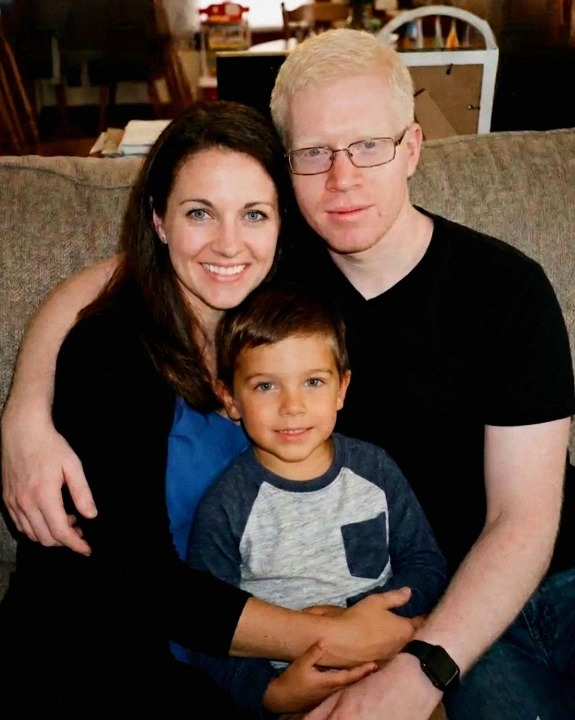
My son Sam is five years old. He inherited my dark curls, olive skin, and eyes. Dave, on the other hand, is blond and pale.
Patricia never let that go.
At family dinners, she’d tilt her head and say things like, “He doesn’t really look like Dave, does he?” or “Genetics are funny like that.” My personal favorite was, “Are we sure about the timeline?”
At first I brushed it off. Then I tried confronting her directly.
“That’s a disgusting thing to suggest,” I told her once.
She blinked at me and replied sweetly, “I was only making conversation.”
Dave would squeeze my knee under the table and whisper, “Just ignore it. She’s being Mom.”
So I did. For years.
Then everything changed when Dave’s father, Robert, received a terminal diagnosis.
Robert had always been the quiet one—sharp, calm, not easily rattled. He was also extremely wealthy: old money, investments, property, the whole package.
Suddenly Patricia became obsessed with “protecting the family legacy.”
One night Dave came home looking pale and shaken.
We were in the kitchen while Sam was in the living room building a blanket fort and shouting that a dragon had stolen his socks.
Dave leaned against the counter and said, “Mom talked to Dad.”
“About what?” I asked.
He rubbed his face. “About Sam.”
I froze. “No.”
His silence confirmed it.
“Tell me exactly what she said.”
He sighed. “She thinks Dad should request a paternity test.”
I laughed—not because it was funny, but because I couldn’t believe she’d actually gone that far.
“A paternity test? For our son?”
“She says if there’s ever a dispute over the estate—”
I cut him off. “There won’t be a dispute unless she creates one.”
“I know.”
Then he added the part that made my blood boil.
“Mom told him that if we refuse, he might reconsider the will.”
I stood there for a moment before answering calmly, “Fine.”
Dave blinked. “Fine?”
“Let’s do the test.”
Relief washed over his face, which only irritated me more.
Then I added, “But not a basic one.”
He frowned. “What do you mean?”
“If your mother wants science, she’s getting science. A full family comparison. The extended panel.”
“Why?”
Because I was furious. Because I had nothing to hide. And because some instinct told me every hidden truth should come to light.
“I’m done being polite,” I said.
The test was done. Then we waited.
The next day Patricia called in a syrupy voice and said, “I’m so glad you’re being reasonable.”
I replied, “Don’t thank me yet.”
She treated the waiting period like she was preparing for a coronation.
Then she insisted the results be opened during Sunday dinner so Robert could hear everything “as a family.”
When we arrived, the table was set like a formal event—candles, silverware, cloth napkins. In the center sat a silver platter.
And on that platter was the envelope.
Dave muttered, “This is insane.”
I replied, “Your mother loves theatrics.”
Sam was at my sister’s house, thankfully. I wasn’t letting him anywhere near that dinner.
Robert looked more exhausted than the last time I’d seen him. He gave me a small nod.
Before I could speak, Patricia said, “Since everyone’s here, let’s just get it over with.”
Dave sighed. “Mom, stop acting like you’re hosting a game show.”
Dinner was unbearable. Patricia barely ate, constantly glancing at the envelope.
Finally she set down her fork. “I think we’ve waited long enough.”
Without waiting for permission, she grabbed the envelope and opened it.
At first her face held that smug little smile.
Then it disappeared.
She quickly folded the paper, her cheeks draining of color before turning blotchy red.
“This… this doesn’t make sense,” she whispered.
Dave leaned forward. “What does it say?”
“There must be a mistake.”
Robert extended his hand. “Give it to me.”
He read it for about ten seconds.
Then he looked at Patricia and said quietly, “You’ve dug your own grave.”
The room went silent.
Dave jumped up. “What does that mean?”
Robert handed him the results.
I watched Dave read them.
I’d never seen someone’s expression change so dramatically—confusion, disbelief, then something deeper.
He looked at Patricia. “What is this?”
She shook her head quickly. “It means the company made an error.”
Dave glanced back at the paper.
“Sam is my son.”
Relief flashed through me.
Then he continued in a strained voice:
“And apparently I’m not Robert’s.”
“What?” I said.
Dave read from the report: “Extended markers show no biological parent-child relationship between me and Robert.”
Patricia stood up quickly. “These companies make mistakes all the time. Robert, say something.”
Robert did.
“How long have you known?”
Patricia stared at him. “I didn’t.”
He let out a harsh laugh. “You expect me to believe that?”
She burst into tears. “It was a long time ago.”
Dave went rigid. “A long time ago?”
“David—”
“No,” he said, voice cracking. “Answer me.”
Her chin trembled. “I made a mistake.”
Dave asked quietly, “So you spent years accusing my wife while knowing this could come out?”
She suddenly pointed at me. “She pushed for the extended test. She wanted to humiliate this family.”
I laughed.
“You accused me of cheating for five years,” I said. “You tried to use my child to threaten the will. You set this whole thing up.”
Robert slammed his hand on the table.
“Enough.”
Patricia flinched.
“You used my illness to force this test,” he said coldly. “You threatened my grandson over inheritance.”
“I was protecting what was ours,” she cried.
“Ours?” he replied.
Then Dave spoke, and his quiet voice was worse than shouting.
“You spent five years trying to prove Sam wasn’t family.”
She reached for him. “You are my son.”
He stepped back. “That’s not what I said.”
She sobbed harder. “I was scared.”
“Of what?” he asked. “Losing money? Losing control?”
Robert’s face had gone completely still. “You already did this here.”
At that point I said the only thing that mattered to me.
“This ends tonight. Sam never hears a word of this.”
Robert nodded immediately. “Agreed.”
Patricia tried one last move. “Robert, whatever happened between us, don’t punish David for it. He should still be provided for.”
Robert stared at her for a long moment.
“I was never going to punish David,” he said. “I was going to provide for my family. You turned it into a blood test.”
Then he added, “The will is being rewritten into a trust. You will control none of it.”
She looked stunned. “You can’t be serious.”
“I’ve never been more serious.”
She turned to Dave. “Say something.”
Dave looked exhausted and broken.
“You didn’t just lie to him,” he said. “You made my wife and son pay for it.”
Then he turned to me.
“Let’s go.”
We left.
When we got home, Sam was already asleep in his room. Dave stood there for a long time just watching him.
Later he sat beside me on the couch and said quietly, “I don’t know who I am right now.”
I took his hand.
“You’re Sam’s dad.”
He let out a weak laugh. “That’s the one thing I’m sure of.”
“Then hold on to that.”
He looked at me with red eyes. “I should have stopped her years ago.”
“Yes,” I said honestly.
A few days later Robert asked to see Dave alone. When Dave returned, he looked shaken but calmer.
Robert had told him something important: DNA doesn’t erase a lifetime.
He had raised Dave, loved him, and that hadn’t changed.
Dave and Sam would remain in the will.
Patricia, however, would no longer control anything.
After that, the messages started pouring in from her—long, frantic texts blaming stress, saying it was one mistake decades ago, claiming I had manipulated the situation.
Dave read them once.
Then he blocked her.
In the end, the only person she pushed out of the family was herself.
We still visit Robert when we can. His health is worse now, but when he sees Sam his face lights up. They build block towers, argue about dinosaurs, and eat too much ice cream before dinner.
Patricia spent five years trying to prove my son didn’t belong in the family.
In the end, she was the only one who didn’t.