
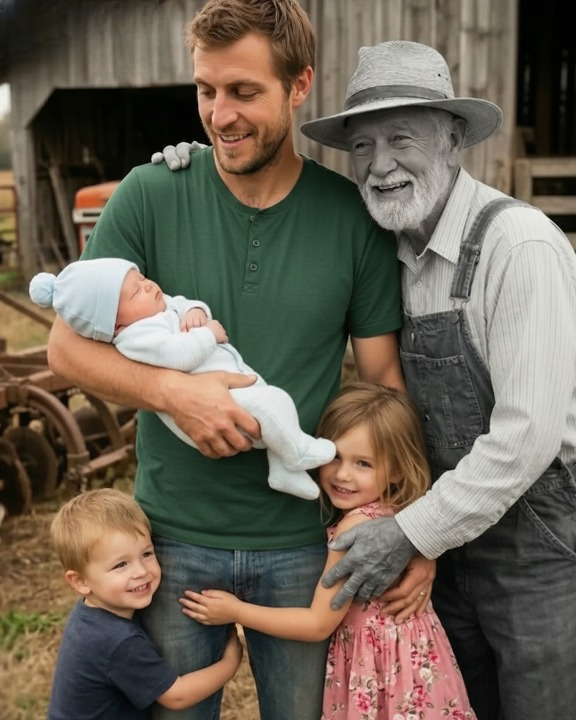
I grew up thinking the farm would always be my safe haven. I never imagined I’d have to fight to keep it the week we laid my grandfather to rest.
My grandfather raised me after my parents died in a car crash one rainy October night, when I was 12. I remember sitting in the hospital with a social worker talking about “placement” and “temporary housing,” and then hearing Grandpa’s voice cut through the hall:
“He’s coming home with me.”
That was all. His steady hand on my shoulder, the smell of hay and peppermint gum — and suddenly the world felt right.
The farm became everything. It wasn’t fancy — peeling paint on the barn, a leaky roof — but it was ours. Grandpa taught me to fix fences, read the skies, and assured me during nightmares, “You’re safe here, Kevin. Nothing touches you on this land.”
Years passed. I married young, divorced younger, and moved back in with Grandpa with my three kids after my ex refused responsibility. Grandpa never complained, just smiled and said, “More boots by the door means more life in the house.”
As he aged, I stepped in to manage the farm, run the harvest, balance the books, drive him to doctors, and cover bills after failed crops. I did it all quietly, sometimes taking small loans to keep things afloat.
But my aunt Linda, Grandpa’s other child, was different. She left town decades ago for city life, posted about her luxury lifestyle, and only called Grandpa when she needed money. She never visited while he was in hospice — only sending brief texts: “Keep me posted.”
When he passed, she arrived in a Mercedes, oversized sunglasses hiding her eyes, more interested in inspecting the property than mourning. Over the next three days, she roamed the house like a buyer, dismissing our home as outdated, noting potential for developers.
Then, the night before the funeral, she cornered me:
“Three days. Pack up. I already have a developer lined up.”
I had no savings or backup plan. “You can’t just throw us out,” I said.
She smirked. “Once the will is read, it’s mine. Just giving you a head start.”
At the will reading two days later, she arrived late, smug, and slid an eviction notice across the desk. My vision blurred.
The lawyer, Mr. Henderson, didn’t even glance at it. Calmly, he said:
“Actually, we won’t be discussing the property today.”
Then he revealed the truth in one sentence that made her go pale:
“Three days ago, your father no longer owned the farm.”
Grandpa had placed the farm in a protected family trust. The beneficiary? His youngest great-grandchild, Noah, who would live there for life, with the trustee being me until Noah turned 21.
Aunt Linda tried to protest, claiming he wasn’t thinking clearly, but Mr. Henderson played a recording of Grandpa’s instructions: he wanted the farm to remain with the family members who truly cared for it — me and my children.
Her face went white. She received a modest inheritance of $25,000, conditional on working the farm faithfully for five years. Attempting to contest the trust would forfeit it entirely. She crumpled the eviction notice and left without another word.
For the first time since Grandpa’s passing, the farm felt like ours again. Weeks later, as the sun set over the north fields, my children and I sat on the porch, safe and home, knowing Grandpa had not only protected the land but secured our future.