
I delivered a pizza to an elderly woman and stepped into her cold, dark home, immediately sensing something was wrong. I thought I was helping her—but minutes later, she looked me in the eye and said, “This is your fault.”
The March night was bitter. Her house was dark, the yard unkempt. I balanced a large pepperoni pizza in one hand, my phone in the other, double-checking the address. The note said: “Please knock loud.”
“This better not be a prank,” I muttered as I knocked.
“Come in,” a voice called.
Every instinct screamed danger, but I was already late, and the voice didn’t sound threatening. I stepped inside.
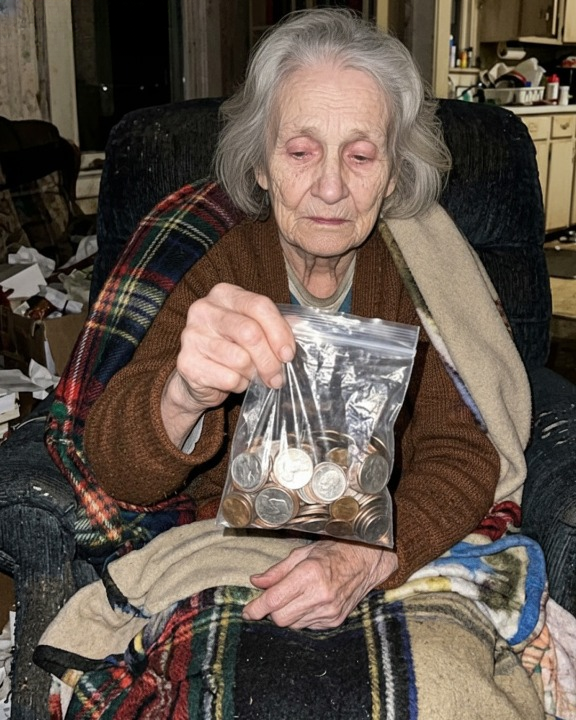
The kitchen was dim, lit only by the open fridge. It was colder inside than outside. A small living room revealed an elderly woman wrapped in layers of blankets, her head almost disappearing into them. Her eyes fixed on the pizza.
“I’m fine,” she said. “I keep the heat low—medication comes first.”
She pushed a plastic bag toward me. It was full of coins—quarters, dimes, nickels, pennies—scraped together over a lifetime.
“This should cover it,” she said.
I looked around the fridge: nearly empty, only a few water bottles and a pharmacy bag. That’s when it hit me—this pizza wasn’t a treat. It was probably her only hot meal.
I leaned over. “Don’t worry about it. It’s taken care of.”
Her brow furrowed. “I don’t want you to get in trouble.”
For some reason, I lied. “It’s fine. I own the place.”
She studied me, then relaxed, glancing at my name tag. “Thank you, Kyle.”
She opened the pizza, inhaling the steam, smiling in that small, quiet way that hit me harder than anything else that night.
I left, got in my car, and for the first time all night, sat still, thinking about her dark, cold home. I called dispatch, citing a flat tire as an excuse—I needed time to do the only thing I could: drive to the police station and report her, ask for a welfare check.
Minutes later, on my way back, I saw the flashing lights of an ambulance outside her house. Neighbors had gathered. Two paramedics carried her out. She pointed at me:
“This is your fault.”
“I was worried about you,” I said.
“They’re taking me out because of you!” she snapped.
“They’re concerned about hypothermia. You need help,” one paramedic explained.
Tears filled her eyes. The neighbors turned on me, questioning why I interfered. I tried to explain: no heat, empty fridge, and her pretending everything was fine. Nobody answered. I drove away, hands shaking.
For weeks after, I couldn’t stop thinking about her voice: “This is your fault.” Every dark porch, every elderly person living alone made me pause. Doing the right thing didn’t feel good.
A week later, I returned to her home and saw the difference. The house was warm, neighbors were helping, groceries on the counter, children playing on the floor. The elderly woman smiled at me, stronger now.
“I owe you an apology,” she said. “You were the only one who saw I was in trouble.”
Neighbors explained they now check in daily, county services visit regularly.
I realized then: doing the right thing isn’t always comfortable. Sometimes it angers people. Sometimes it feels awful. But sometimes, it’s the only way to interrupt the lie that’s slowly destroying someone’s life.
Doing the right thing doesn’t always feel good—but it’s worth it.