
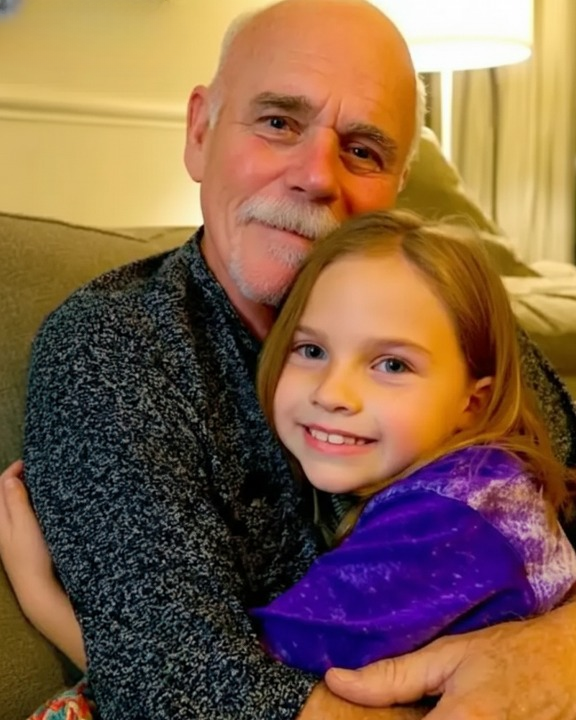
My granddaughter Lily had always rushed into Grandpa Jim’s arms the moment she arrived at our house. So when she spent a week with us and suddenly refused her usual goodnight hug, I thought she was just tired—until she looked at me in bed and whispered, “Grandma… he’s different.”
Lily had adored my husband for as long as she could remember. She’d wrap herself around him and proudly announce, “I’m here!” whenever she arrived. He was her favorite person, teaching her to ride a bike, shuffle cards, whistle, and letting her wear his old baseball cap around the house like a crown.
One Monday morning, my daughter Erin called. “Mom, can Lily stay with you for a week? Things are… complicated at work.” Of course, I said yes, and she arrived that evening. At first, everything seemed normal. Lily ran into Jim’s arms, they played games, ate pancakes, and enjoyed the first few days like always.
But on the fourth day, Lily became quiet. She followed Jim around, watching him closely as he made coffee, narrating each step with solemn precision. At dinner, she pushed peas around her plate, answering Jim’s questions with polite “yes” and “no.”
When bedtime came, Jim stood ready for their usual hug, but Lily stopped and shook her head.
“Grandma… he’s different,” she whispered.
Later, tucked into bed, Lily told me she had seen Jim crying the night before while getting water. He had been at the table, head down, hands over his face, shaking. She was confused and afraid.
I reassured her it wasn’t her fault, that grown-ups sometimes cry, and that it didn’t mean she was unsafe. But I realized Jim had been hiding something serious.
The next day, I watched him more closely. He seemed distracted, nervous, and hiding papers in his desk drawer. That night, I confronted him and found appointment cards, pamphlets, and test results. He admitted he’d been diagnosed with early dementia and possibly Alzheimer’s.
He had been crying and hiding it because he didn’t want to burden anyone, especially Lily. He feared she’d see him differently, and he wanted to stay her safe, reliable Grandpa.
We called Erin immediately and shared the diagnosis. Jim spoke openly with her, and together we made a plan for support, appointments, and routines to help him stay grounded—especially for Lily. We emphasized honesty: no more secrets that could confuse or scare a child.
That evening, I explained to Lily that Grandpa might need more help sometimes, but he was still her Grandpa. She asked if she had done something wrong—she hadn’t. She hugged him tightly and said, “No more secrets.” Jim promised her the same.
Over the following days, Jim and Lily reestablished their routines. He was still here, still her Grandpa, learning to navigate this new reality with our support. I visited the cemetery afterward to let my own fear out, but coming home, I found him in the kitchen with his book, solid and present.
For now, he was still here, and we held onto each other through the uncertainty.