
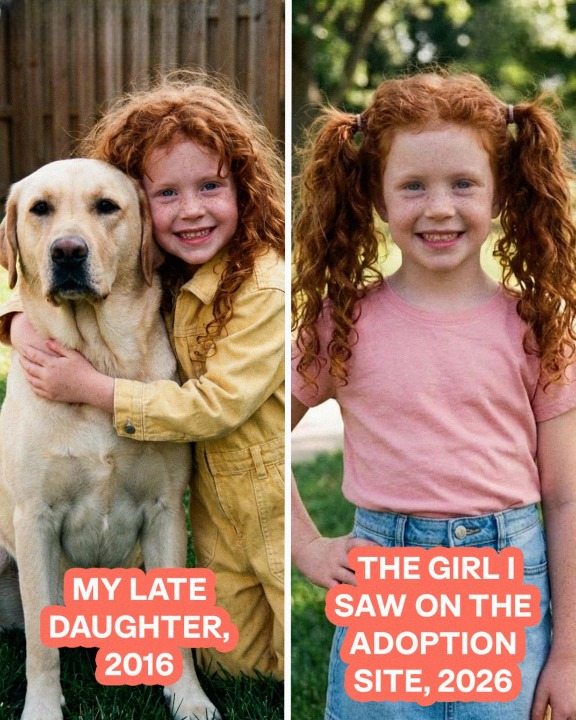
Grief can quietly take over your life until you almost forget what it felt like to truly live. I had begun to breathe again—until a single photo yanked me back into a pain I couldn’t explain.
My daughter, Emma, was just six when she died in a car accident.
That day, my husband, Mark, had been driving her to a school performance when another car ran a red light and struck them on the passenger side. Emma didn’t survive. Mark miraculously did, though I could never fully understand how.
The loss consumed me. Time didn’t heal—it just coated the wound with silence.
Mark handled grief differently. He buried himself in work, long hours, endless meetings. Sometimes I wondered if he was running from the pain—or trying to outrun it. We eventually stopped saying Emma’s name, because to speak it felt like reopening a wound.
Ten years passed in that silence. Slowly, life felt a little lighter.
One evening, I told Mark, “I think… I still want to be a mom.”
He looked at his plate. “Yeah… me too.”
For the first time in years, we had a real conversation. Weeks of discussion followed, and we decided to adopt. For the first time in a decade, hope returned to my heart.
The next day, while Mark was at work, I opened my laptop and started browsing adoption sites. Countless faces flashed across the screen—until I froze.
There she was.
A girl, five or six years old, red curls, freckles across her nose, bright blue eyes—Emma’s features perfectly mirrored in another child.
I clicked on her profile. Details were different, the name wasn’t Emma—but the resemblance was undeniable. I submitted a request immediately.
When Mark returned that evening, I pulled him toward the laptop.
“You see it, right?” I asked, voice trembling.
He hesitated. “It’s just a kid who looks like her. You’re imagining things.”
“Just a kid?” I whispered. “Mark, that’s Emma!”
He looked away. “Emma is gone.”
I didn’t argue. I knew I couldn’t let it go. I had to find the truth.
The next day, I went to the orphanage alone. I showed the director, Miss Jameson, the photo. She went pale and whispered, “I knew this day would come. There’s a truth you need to hear.”
She introduced me to Charles, a young man who explained a pattern: a sperm donor, red hair, freckles, blue eyes, whose samples had been prioritized by the bank owner—his partner. Many children ended up looking identical to the donor, even when parents hadn’t requested it.
My heart pounded. “The girl I saw…?”
“She came from that donor,” Charles confirmed.
I left the office in a daze, red hair and freckles flashing in my mind. Somehow, everything was connected.
I confronted Mark later that day.
“Why have you been donating your sperm?” I demanded.
He tried to explain, claiming he did it for Emma, to see her in some way again.
I shook my head. “This isn’t grief. This is obsession. And you dragged others into it!”
“I don’t love her! I love you,” he said.
“I should’ve gone to counseling with you. Instead, you lied, cheated, and created children under false pretenses for five years. I’m done.”
I walked out.
For the first time in a decade, I wasn’t chasing the past. I was choosing myself. I called the receptionist and scheduled a divorce. I was done living someone else’s story.