
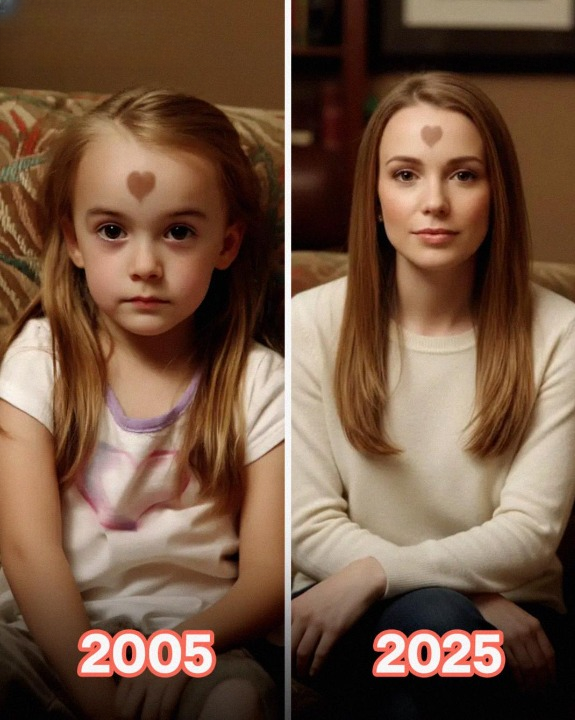
I’d spent my entire life ashamed of the birthmark on my forehead, convinced it was the ugliest, most defining thing about me. I tried to hide it, angle it away, and eventually saved up for surgery to have it removed. I thought erasing it would make everything easier—until a job interview changed everything.
I was born with a dark mark in the center of my forehead. Kids noticed immediately, whispered, laughed, and made me feel like I didn’t belong. Middle school made it louder; strangers felt entitled to comment on my face. Even at home, my adoptive parents’ reassurances—“It makes you unique,” my mom said—couldn’t completely drown out the whispers from hallways.
By high school, I mastered invisibility. I tilted my head for photos, let my hair fall just right, and avoided drawing attention. I learned to blend in. I believed the birthmark was the source of every insecurity and self-doubt I had. By my twenties, I had a plan: remove it through surgery. I saved money, scheduled consultations, and counted down the days until the operation.
Then, I got an email for a dream job interview. I almost postponed the surgery—but something inside me said to be brave. I pulled my hair back and decided: if they rejected me for my birthmark, I didn’t want the job anyway.
At the interview, everything went smoothly until the door opened and my future boss looked up. He froze, his face pale, hands trembling. “It can’t be… you were supposed to be dead,” he whispered.
Confused and stunned, I listened as he told me a story. Twenty-five years ago, the woman he loved had left town while pregnant and later told him the baby didn’t survive. She had sent him a single photo of the baby—and the baby had a birthmark, right where mine was.
I was adopted as a newborn. Could it be…? He asked for a DNA test. I agreed.
A few days later, the results confirmed it. He was my biological father. My birthmark—the thing I’d hated for decades—was proof that I had survived, that I was remembered, and that someone had wanted me.
The morning of my scheduled surgery, I stood in front of the mirror, hair pulled back, and realized I didn’t need to erase the mark. It wasn’t a flaw or a mistake. It wasn’t the worst thing that had ever happened to me. It was a map that had led me home.
I canceled the surgery. I didn’t suddenly love every cruel word I’d heard or every moment of self-doubt—but I walked away knowing that I didn’t need to hide or erase myself to have a place in the world.
The birthmark wasn’t a mistake. It was a guide, a proof, a story—and that was enough.