
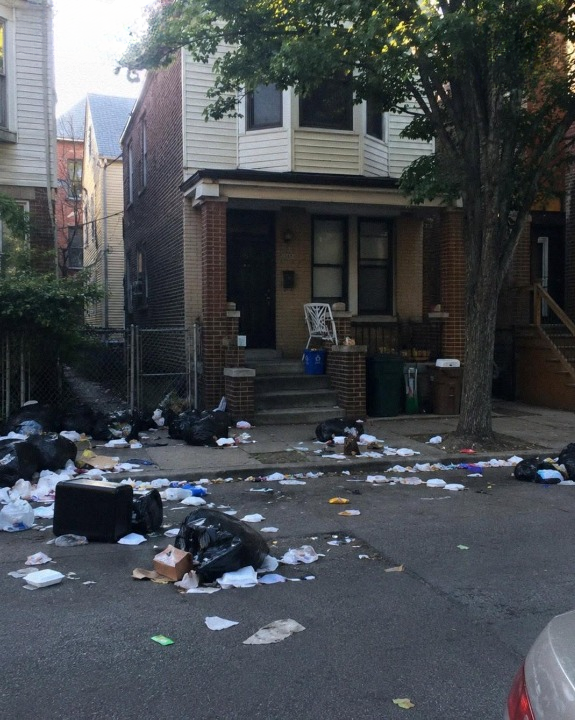
For months, Myra found herself cleaning up garbage her neighbor kept dumping along the edge of her property. What began as a small annoyance slowly turned into a constant source of frustration and exhaustion. No matter how many times she asked Tom to stop, he dismissed her concerns, brushing them off with sarcasm and indifference. She was reaching her breaking point—until one morning, everything changed in a way she never expected, revealing that there was far more going on in Tom’s life than she had realized.
Myra, 34, had always considered herself patient. She took pride in her small home, the hydrangeas she had planted, and the sense of stability she had finally built after years of renting. That peace ended when Tom moved in next door.
At first, he seemed simply reserved, but it didn’t take long before his carelessness became a pattern. He began leaving his trash bags right along Myra’s property line before collection day. When she politely asked him to stop, he shrugged it off as if it were nothing.
That “nothing” quickly grew into a weekly problem. The number of bags increased, sometimes spilling or being torn open by animals overnight, scattering waste across her lawn. The smell in summer became unbearable, and Myra often woke to a mess that felt both invasive and disrespectful.
Despite multiple attempts to reason with him, Tom remained dismissive, often mocking her complaints. His attitude made the situation worse, and Myra slowly found her daily peace replaced by frustration and resentment.
One evening, she watched him deliberately place several overfilled bags at the boundary line. She already knew what would happen next. By morning, her yard was once again covered in scattered trash after animals tore into the bags during the night.
When she confronted him, Tom simply laughed and told her to “relax.” That moment marked a shift in Myra’s patience, though she still cleaned everything up herself, refusing to escalate things further.
But the pattern continued—until one night, the situation repeated once more, and Myra went to bed overwhelmed and drained, expecting another morning of cleanup.
Instead, she woke up to something completely different.
Tom’s entire yard had been devastated overnight. Garbage was everywhere—strewn across his lawn, driveway, porch, and even his car. It looked as though the same chaos he had been causing had come back to him all at once, amplified.
Myra couldn’t help but laugh at the irony. For the first time in months, she felt a sense of release as she watched Tom react in shock and anger to the mess. He blamed everything except himself, until the situation escalated further and the true cause became clear.
As Myra observed more closely, she noticed medical supplies mixed among the trash and an overwhelmed elderly woman inside the house. It became evident that Tom was caring for his sick mother and struggling with responsibilities he had been quietly carrying alone.
The realization shifted everything. While it didn’t excuse his behavior, it explained the pressure behind it. His dismissiveness and frustration were tied to exhaustion, stress, and a life he had not shared with anyone.
In the end, Myra chose not to walk away in anger. Instead, she helped him clean up the mess, not because she forgave his actions instantly, but because she saw the situation for what it truly was—two overwhelmed lives colliding at the worst possible time.
Together, they cleared the yard, made plans for proper waste disposal, and set new boundaries. Over time, Tom changed his habits, and their relationship softened into something respectful, if distant.
Myra learned that her anger had been justified, but also that people are rarely as simple as they first appear. And Tom learned, finally, that respect is not optional when sharing space with others.
What began as a conflict rooted in disregard ended as a quiet lesson in boundaries, understanding, and perspective.