
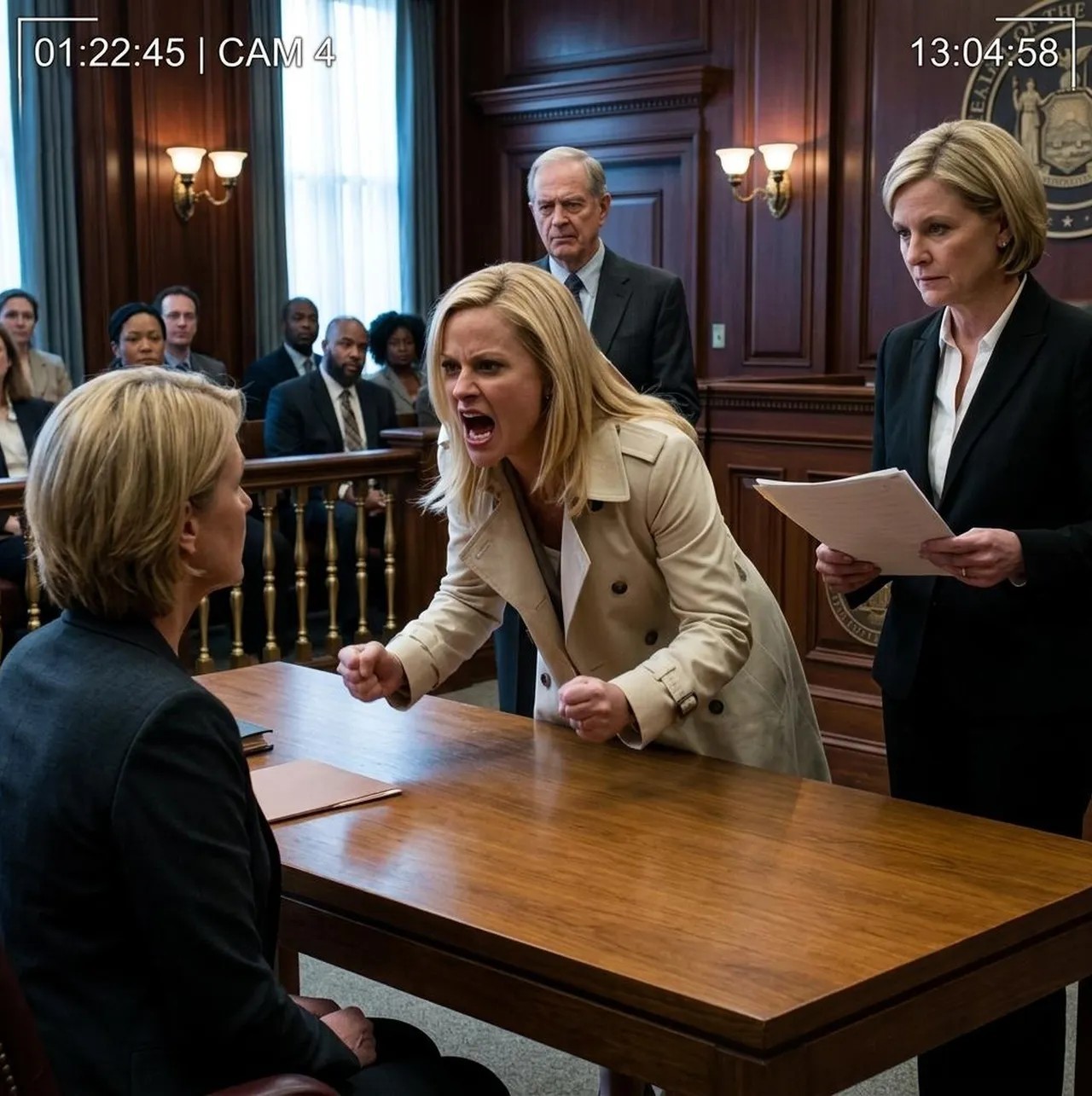
The courtroom was filled with a heavy, almost suffocating silence—the kind that settles in right before everything changes. Sunlight poured through the tall windows, sharp and unforgiving, slicing across the polished floor but doing nothing to warm the cold atmosphere. My sister Victoria entered with complete confidence, dressed in a perfectly tailored suit, every detail suggesting she had already decided she would win. Behind her sat our parents, aligned with her so naturally it felt like I was already outnumbered before anything began.
What was being debated wasn’t just money or property, but a vast family estate built over generations—land, heirlooms, and a home that carried decades of history. Victoria treated it like something that should naturally fall under her control, convinced she was the rightful decision-maker for everything our grandfather left behind. She pushed for liquidation and immediate authority over the assets, presenting herself as the only one capable of “handling” the legacy.
Her lawyer stepped forward with certainty, demanding full and immediate control of the estate as if the outcome was already guaranteed. The argument was delivered like a formality, not a question. Victoria’s entire approach reflected control, entitlement, and confidence that no one would challenge her version of events.
When the judge finally turned to me and asked for my response, I stood up despite the weight of their stares. I calmly objected, not with emotion but with certainty, explaining that the court had not yet seen all the relevant information. I asked for a pause before any irreversible decision was made.
That request caused immediate tension. Victoria dismissed me, and my parents stayed silent, but the judge allowed the delay. The courtroom waited in uneasy silence, every second stretching longer than the last.
Then the doors opened.
A representative from a national trust institution entered and delivered a sealed set of official documents to the court. The energy in the room shifted instantly—what had been speculation suddenly turned into something far more serious.
As the judge reviewed the papers, everything changed. It became clear that our grandfather had already established a legally binding trust long before his passing, with a professional trustee assigned to manage the estate. His instructions were precise, intentional, and legally irreversible, designed specifically to prevent exactly this kind of family conflict.
The judge confirmed on record that the trust—not any individual heir—controlled the entire estate, and that its terms had to be followed exactly as written. Victoria’s claim to immediate control no longer had legal standing.
Further review of the documents showed just how carefully our grandfather had prepared everything. He had anticipated disputes and structured his estate to ensure fairness, stability, and protection from emotional interference. When Victoria’s lawyer attempted to challenge my objection, there was nothing substantial to support their argument.
By the end of the hearing, Victoria’s request was fully denied, and the court ordered that the trust be administered exactly as intended, under independent oversight.
What remained with me afterward wasn’t the confrontation itself, but the clarity behind my grandfather’s planning. He had left no room for confusion or manipulation—only structure, fairness, and intention. In doing so, he ensured that his legacy wouldn’t be defined by conflict, but by order and lasting protection for the family he knew might one day fall apart without it.