
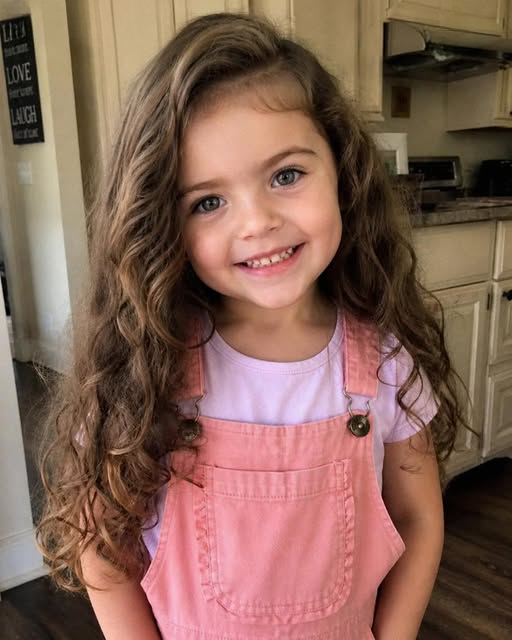
My 4-year-old daughter refused a simple haircut, crying that her father would no longer recognize her. The problem was, my husband had died years ago—so her fear didn’t make sense until I uncovered who had been feeding it to her.
I’m a widow, and I’ve been raising Olivia alone since William passed away in an accident. She was just a baby when it happened, so she knows him only through stories, photos, and a small memory box I keep at home. I’ve always tried to keep his memory gentle, not something she waits for.
One afternoon at the salon, everything changed. Olivia was fine until the scissors came out. Suddenly she panicked, clinging to her hair and crying that her “daddy won’t recognize her.”
That stopped me cold.
William had been gone for years.
When I gently asked where she heard something like that, Olivia said it came from her grandmother. According to her, she was told her curls were “how Daddy would find her,” and that if she cut them, he might not recognize her.
At first, I tried to believe it was just confusion mixed with grief. But at home, I found drawings and notes from my mother-in-law reinforcing the same idea—messages suggesting William was still “coming back” and that Olivia needed to stay the same for him.
That’s when I realized this wasn’t innocent comfort. It was something much more harmful.
The next morning, I spoke with the lawyer handling William’s estate. I learned my mother-in-law had even been questioning custody and suggesting I was “erasing” his memory. She was building a case around a narrative she had created herself.
I documented everything—messages, drawings, statements from the hairdresser, and a child therapist who confirmed Olivia’s fear had likely been reinforced by an adult.
When I finally confronted my mother-in-law, it became clear what was really happening: she wasn’t accepting William’s death and was unintentionally forcing that unresolved grief onto my daughter.
A formal mediation followed. Evidence showed how her behavior had been affecting Olivia, and boundaries were put in place: supervised visits only, counseling, and strict limits on discussing William as if he were still alive.
Afterward, Olivia slowly began to understand the truth in a safe way. One day, she asked me quietly if she still looked like herself after getting a small haircut.
I told her yes—that she was still herself, always.
And for the first time, she believed it without fear.