
After my husband passed away in a house fire, I moved in with my son Daniel and his wife, Theresa, while I tried to rebuild my life. Daniel told me to stay as long as I needed, but everything changed when he was deployed overseas.
When he was home, Theresa acted kind and welcoming—offering tea, calling me family, and making everything seem warm and normal. But the moment he left, her behavior shifted completely.
I found a strict list on the counter the next morning—chores, schedules, demands. When I questioned it, she told me plainly that since I lived there, I needed to “help,” or leave. From that point on, she kept reminding me that I could always find somewhere else to go.
So I kept quiet. I made myself smaller. I avoided the living room, followed her rules, and tried not to cause trouble, just waiting for Daniel to return.
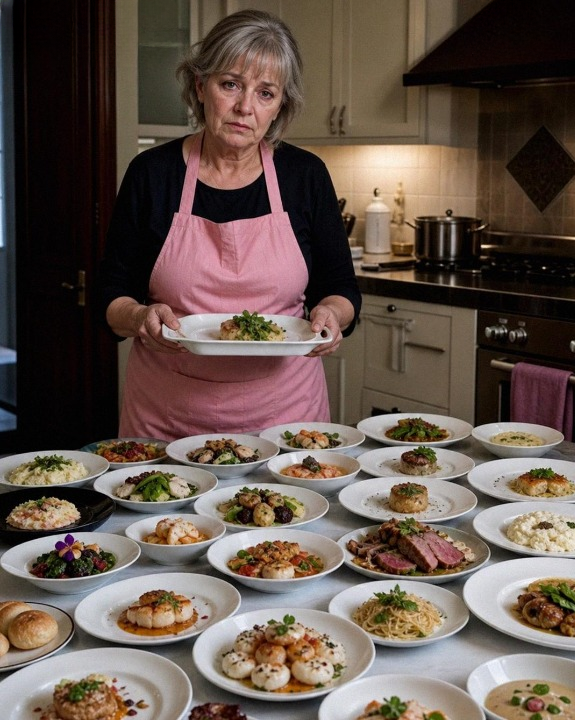
Then she announced she was hosting a birthday dinner for twelve people—and decided I would cook it all. A full tasting menu. She even insisted I pay for all the ingredients, calling it her “gift.”
I should have refused. Instead, I spent days preparing an elaborate multi-course meal—expensive, exhausting, and far beyond anything reasonable for a home kitchen.
On the night of the dinner, I stayed hidden in the kitchen while guests arrived and Theresa presented the evening as if she had created everything herself. I heard her take credit for my cooking, laughing with guests as though none of it had been done by me.
Then, halfway through the evening, everything collapsed.
A guest saw a phone filled with messages and photos revealing Theresa’s affair with another man. The entire table saw it. Shock spread instantly, and the focus shifted from celebration to confrontation.
As people began asking questions, someone finally pointed out the obvious: I had been the one cooking all day. The truth came out quickly after that.
I stepped into the room, still wearing my stained clothes, and admitted I had made everything. I also told them she had forced me to pay for it all.
The atmosphere changed immediately. Guests began speaking up—neighbors mentioned chore lists, others recalled how I had been treated, and it became clear this wasn’t an isolated incident.
Theresa lost control of the situation within minutes. Eventually, she was told to leave. She stormed out while no one followed her.
After she left, something unexpected happened: people stayed. They helped clean up, complimented the food, and treated me with kindness instead of dismissal.
For the first time in a long while, I felt seen again—not as a burden, but as a person.
The next day, I told Daniel everything when he called. He was silent for a long time before telling me I should have reached out sooner—that I always had a place and should never have been made to feel otherwise.
Theresa later left the house, and Daniel decided to end the marriage after returning home.
I’m still grieving my husband. I’m still processing everything I endured.
But one thing has changed for good:
I will not shrink myself for anyone again.