
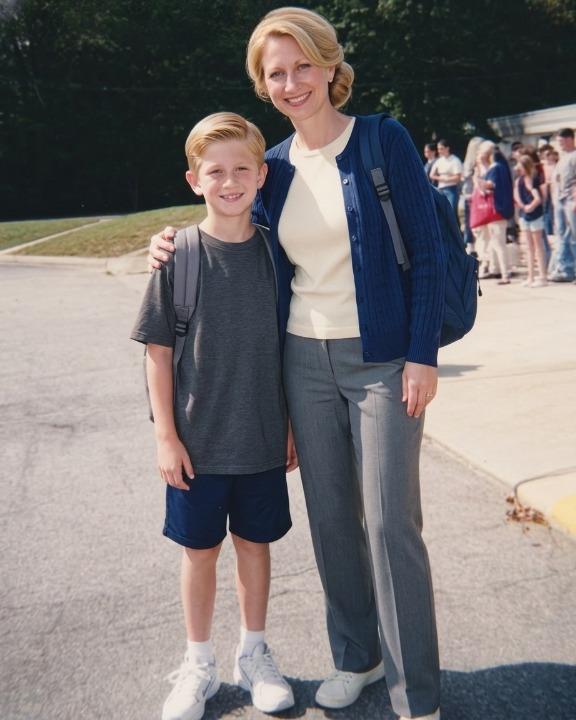
At fifty-four, I had come to understand that grief doesn’t always begin with a funeral.
Sometimes it shows up quietly—in unanswered calls, unopened letters, and a silence that stretches so long it starts to feel permanent. I hadn’t spoken to my son in ten years.
Even now, it still felt unbelievable to say. A decade of missed birthdays, holidays spent staring at my phone, waiting for a message that never came. I often wondered about him—the small details of his life, his habits, whether he ever thought of me the way I thought of him every single day.
Everything changed the day of his graduation.
He had been looking forward to it for months, wanting me there to watch him walk across the stage. But that same day, I received an urgent call from a hospital: there was a young patient in critical need of a transplant, and I was the only match.
Torn between two impossible choices, I pleaded for time—but there was none. I signed the consent forms and went into surgery.
I saved a life that day. But I lost my son.
When I later tried to explain, he refused to listen. He left, moved in with his father, and cut all contact. Letters I wrote for years came back unopened, until I eventually stopped sending them—not because I stopped loving him, but because I no longer knew how to reach him.
Then, after ten years, a wedding invitation arrived.
Inside was a note telling me not to come. But I still went.
I sat quietly in the back of the church, trying not to be seen, watching my son as he stood at the altar with his bride, Jane.
I planned to leave before the ceremony ended—until she suddenly stopped everything.
Taking the microphone, Jane turned and pointed toward me.
Then she revealed the truth.
She told everyone that years earlier, she had been dying and saved by a kidney transplant from an anonymous donor.
That donor, she said, was me.
The church fell silent. My son was stunned. I stood, trembling, as she explained how she had discovered the records and realized the woman who saved her life was his estranged mother.
Everything I had tried to say for years suddenly came crashing into that moment.
I told him again: I had gone to the hospital that day because I had to choose between being at his graduation and saving a life. I chose the life—but I never knew it would become connected to his future wife.
After years of silence, he finally looked at me—not with anger, but confusion and pain.
Then, step by step, he walked down from the altar toward me.
And for the first time in a decade, he called me “Mom.”
We held each other as the weight of ten years broke between us. He apologized for believing I had abandoned him, and I told him I had never stopped trying to reach him.
Jane, tearful but smiling, joined us, and together we stood again as a family.
The ceremony continued, but everything had changed.
Because that day wasn’t just a wedding.
It was a reunion.
And I realized that even after years of silence and misunderstanding, love doesn’t disappear—it waits for the moment the truth finally brings it back.