
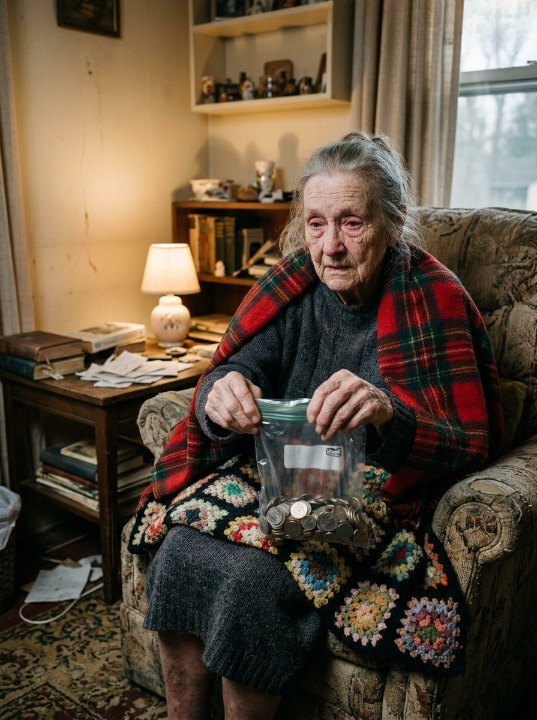
She tried to pay for a $15 pizza using a small bag of coins—so I made a choice that I couldn’t undo… and that ended up changing both of our lives forever.
The moment she looked at me and said, “This is your fault,” I understood something I hadn’t before: doing the right thing doesn’t always feel like kindness. Sometimes it feels like disruption.
It was a freezing March night when I delivered the order to an old, isolated house. The message said, “Please knock loud,” which should have been a warning—but I knocked anyway.
A tired voice told me to come in.
Inside, the house was colder than the street. The fridge was nearly empty, the kitchen barely lit, and the air felt heavy with neglect. In the living room, an elderly woman sat wrapped in thin blankets, a candle flickering beside her.
She didn’t look at me—only at the pizza.
Then she pushed a plastic bag toward me.
It was full of carefully saved coins.
“I think this covers it,” she said quietly.
I looked around and realized the truth: this wasn’t just about dinner. She was choosing between food, medicine, and heat—and losing every time.
Instead of taking the money, I refused it and told her the meal was already covered. She hesitated, then accepted the pizza like it was something she wasn’t sure she deserved.
I left the house… but I didn’t leave the situation.
Something about it stayed with me.
So I turned around and reported it to the authorities.
At the time, it felt like the responsible thing to do.
But when help arrived, she was taken from her home—and when she saw me, she broke down, accusing me of ruining her life.
“This is your fault!” she shouted.
And for a moment, I wondered if she was right.
The neighbors didn’t defend her. They questioned me instead. Only later did I realize they had all seen her struggle—but assumed someone else would handle it.
Days passed with that weight sitting on me.
Then, a week later, I was sent back to the same address.
I almost didn’t go.
But when I arrived, the house was no longer broken.
It was warm. Bright. Alive.
Neighbors were inside, unpacking groceries and setting up heaters. The same people who had once stood by silently were now actively helping.
And there she was again—sitting in a clean chair, no longer freezing, no longer alone.
She saw me and smiled.
This time, her voice was different.
“I was wrong,” she said softly. “At the hospital, they told me what almost happened. I didn’t want to see it.”
She wasn’t angry anymore. Just honest.
Behind her, I heard voices explaining schedules, meals, and check-ins—proof that people had finally stepped in together.
And in that moment, I understood something clearly:
Sometimes helping someone doesn’t feel like saving them.
Sometimes it feels like breaking the story they’ve been surviving inside.
But if the truth is the only thing that can keep them alive…
then maybe discomfort is part of doing what’s right.
And the real question is—if someone might hate you for helping them, would you still do it?