
I used to think the hardest part of raising my daughter alone was saying, “we can’t afford that,” without letting her hear the embarrassment behind it. But then a simple act of kindness at her school led to a phone call that completely shook me.
Life as a single mom often feels like a constant challenge. I juggle two jobs, stretch every dollar, and carefully plan which bills can wait and which can’t. My nine-year-old daughter, Mia, is usually full of energy—talking nonstop the moment she walks in the door.
So when she came home quiet one afternoon, I knew something wasn’t right.
She set down her backpack, sat at the table, and just stared. No snack requests, no stories, nothing. When I asked if she was okay, she brushed it off, but I could see her lips trembling. I made her a grilled cheese, but she barely touched it.
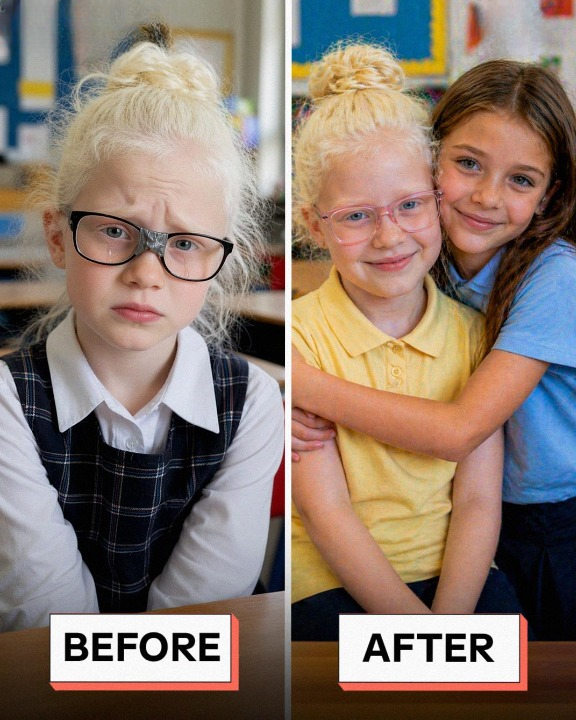
Eventually, she told me the problem was her friend Chloe. Her glasses had broken during volleyball—only the frame snapped, but now they were taped together, and other kids were teasing her badly. Mia said Chloe had even started hiding during recess.
Then she added quietly that Chloe’s parents couldn’t replace them right away.
That hit me hard. I know what it feels like to not be able to afford something important. When Mia asked if we could help, I wanted to say yes—but I couldn’t. We were already stretched too thin. So I told her the truth.
She didn’t argue. She just nodded and went to her room, which somehow felt worse.
The next day, I came home and noticed something missing—her Lego collection. Not moved. Gone.
Mia ran in, smiling for the first time in days, and told me she had “fixed it.” She handed me a receipt. She had sold all her Legos—her favorite thing in the world—for $112 and used the money to pay for new frames for Chloe at a local optical shop, with help from our neighbor.
I was stunned. She’d given up something she loved without hesitation, just to help her friend.
I thought that was the end of it—but it wasn’t.
The next morning, I got a call from her teacher asking me to come to school immediately. Chloe’s parents were there and upset.
When I arrived, the room was tense. Chloe was crying, Mia stood with her head down, and her parents looked angry. My heart dropped.
They explained they were upset because Mia had paid for their daughter’s glasses. At first, it sounded like they thought we had overstepped—but the truth came out quickly.
Chloe hadn’t been honest. Her parents could afford new glasses, but they had intentionally made her wait a few days to teach her responsibility after breaking several pairs before. Chloe, embarrassed, told Mia they couldn’t afford them.
Meanwhile, she had been bullied at school and was too afraid to tell her parents.
Once they understood what really happened—that Mia had acted entirely on her own, out of pure kindness—their anger disappeared. What replaced it was guilt.
When they asked Mia why she gave up her Legos, she simply said, “Because she needed help.”
That answer broke every adult in the room.
Soon after, Chloe apologized, the girls hugged, and everything shifted. Her parents later invited us over and, to my shock, showed me they had opened a college savings account for Mia. They said they wanted to honor her kindness in a meaningful way.
That night, as I tucked Mia into bed, I asked if she missed her Legos. She said, “A little.”
“Was it worth it?” I asked.
She smiled and said, “Chloe smiles more now.”
I spend so much time worrying about what I can’t give my daughter—more money, more comfort, fewer struggles.
But then she goes and gives away the thing she loves most without hesitation, just to help someone else.
And suddenly, that empty space where her Legos used to be didn’t feel empty at all.