
For years, I believed my husband’s sudden obsession with adoption was his way of finally giving us the family we’d always dreamed of. But the truth behind it almost destroyed everything we were building—and forced me to decide whether to walk away or fight for a life I hadn’t seen coming.
My husband and I had spent a decade learning to live with the fact that we couldn’t have children. We settled into a quiet routine—he took up fishing, I buried myself in work, and we avoided the subject of emptiness between us.
Then everything changed.
One day, he started talking about children again—insistently. He showed me adoption brochures, pointed out families in public, and kept insisting our home was “too empty.” Eventually, I gave in, resigned my job, and agreed to pursue adoption with him.
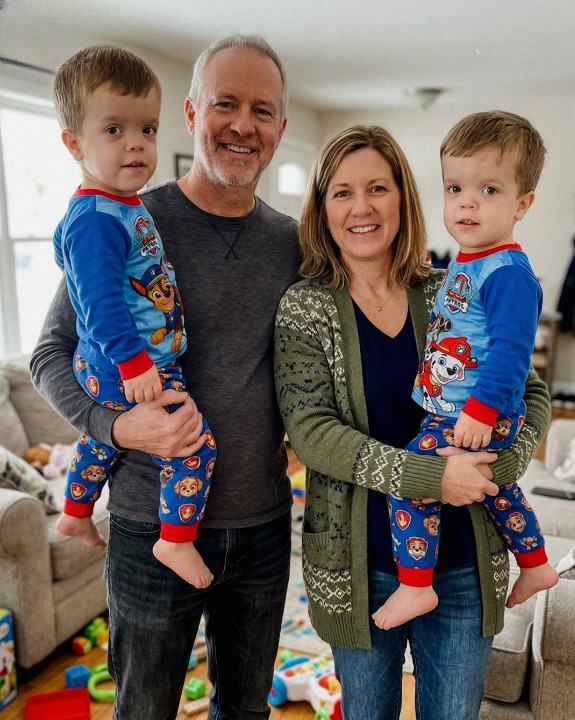
We were soon matched with four-year-old twin boys, Matthew and William. From the moment they entered our lives, everything felt overwhelming but hopeful. The house that once felt silent filled with noise, laughter, and exhaustion. For the first time in years, it felt like we were becoming a real family.
But slowly, my husband began to withdraw. He stayed late at work, avoided conversations, and disappeared emotionally just when I needed him most with the children. I assumed he was struggling with the adjustment—until the day I overheard a phone call that changed everything.
Through his office door, I heard him speaking to a doctor. And what I learned left me shaken: he had a serious illness—lymphoma—and a limited prognosis. The adoption hadn’t just been about building a family. It had been his attempt to ensure I wouldn’t be alone after he was gone, without ever telling me the truth.
He had made life-altering decisions for both of us while hiding the reality of his condition.
I was devastated—not only by the diagnosis, but by the secrecy. He had let me quit my job, become a mother, and build an entire future without knowing how fragile it all was. I packed up the children and left to process everything.
Eventually, I returned. We confronted the truth together—anger, grief, and love all tangled at once. I told him we couldn’t move forward in lies anymore, not for us and not for the boys. If we were going to fight for his life, we would do it honestly.
We told our families, started treatment, and braced ourselves for an uncertain future.
The months that followed were exhausting—hospital visits, parenting two young children, and watching his health decline while still trying to hold our family together. But we faced it as a team this time, with nothing hidden.
Then, against all odds, the treatment worked. He went into remission.
Today, our house is loud and messy, filled with the chaos of two growing boys. And when they ask what strength looks like, I tell them the truth:
It’s not pretending everything is okay. It’s refusing to face hard things alone—and choosing honesty before it’s too late.