
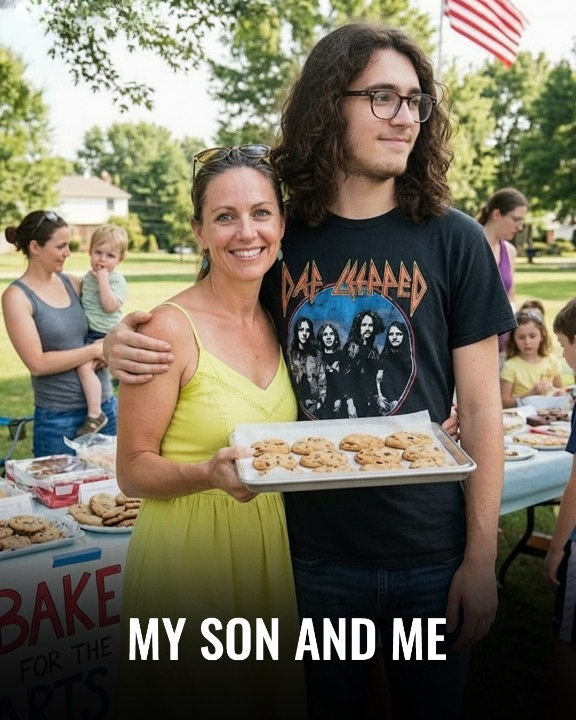
The day they called my son a thief, I watched a room full of adults decide he was guilty—without a shred of real evidence. I had no money, no influence, no connections to fight back. But Leo had something far stronger: the truth. And he was about to show it to everyone.
“I know it’s not brand new,” I said, sliding the laptop across the kitchen table, “but it’s the best I could manage.”
Leo stared at its scratched silver lid, almost afraid it would vanish.
“Mom… this is perfect,” he whispered, awe in his voice.
I’d spent the last of my savings on that computer because the school machines were too slow, froze constantly, or couldn’t run the programs he needed. I never imagined that very laptop would later be used as “evidence” to call him a thief.
Leo’s passion for coding was something I didn’t fully grasp—databases, payment gateways, user interfaces—but I knew one thing: he lit up when he talked about it. Video games and social media didn’t interest him—not the way programming did. He taught himself, building skills in library computers, free coding forums, and quiet corners of a life that had never made room for kids like him.
At school, though, Leo was an easy target. Straight A’s, quiet, thoughtful—teachers called him “gifted” in careful tones. Mason, the privileged classmate, loved to taunt him. “Scholarship kid,” he’d sneer. “Gonna hack the lunch menu for free pizza?”
Even worse, Mason’s mother, Rhonda, PTA president, wielded her role like a CEO, all smiles and “community matters” speeches.
One day, Leo excitedly told me about his idea for the spring fundraiser. “They track donations by hand—cash, checks, envelopes. It makes no sense. I can build a website—donate online, get receipts, sign up for volunteers—all in one place.”
With my encouragement, he built it in two weeks. The principal, Mr. Bennett, showcased it to the staff. Everyone was impressed—except Rhonda, whose smile was thin and tight.
The website launched. Donations flowed effortlessly. For a while, people treated Leo differently. Then the whispers began:
“Something’s off with the totals.”
“Where’s the final report?”
Soon, I got the call from the school: “You need to come in immediately. It’s about Leo.”
I rushed to the school, expecting a quiet meeting, only to be led into a full PTA emergency session. There was Leo, pale and stiff.
Rhonda spoke first. “The fundraiser account is missing $10,000,” she said, pointing at Leo. “We have no doubts who took it.”
I froze. “Excuse me?”
“He built the donation website. He had access. The money disappeared.”
Leo defended himself calmly: “I didn’t take anything. Admin accounts weren’t mine alone.”
Rhonda’s smirk remained. “How convenient.”
The PTA chair, Mr. Bennett, hesitated. “We’ll investigate, but expulsion is likely if he’s guilty.”
The story spread fast. By the next day, neighbors treated us as if we were guilty too. Leo shut himself in his room for three days, typing endlessly.
Then, on the third night, he emerged, holding a USB drive.
“Mom. Take this to the bake sale. Everyone will be… surprised.”
At the Spring Bake Sale, packed with kids and parents, I took the USB to the projector. Leo had labeled it: OPEN THIS.
Numbers, timestamps, login histories, and transaction logs filled the screen. Then his voice:
“This is a copy of the website’s backend audit log. Every administrative action is recorded. These entries show access from Rhonda’s login credentials. The funds were transferred in staged amounts over six days.”
Gasps filled the room. The logs pointed directly to Mason, Rhonda’s son.
Rhonda tried to deny it, but Mason stepped forward. “It was my fault! I moved the money. Mom said we should blame Leo to make him look bad.”
Security escorted them both, and Mr. Bennett addressed the crowd: “We trusted you, and you abused your position. Leo never stole anything.”
The parents who’d turned away now hung their heads in shame.
I found Leo at the back of the gym and cupped his face. “There’s my genius. You did good today.”
He smiled faintly. “I just told the truth, Mom.”
And for the first time that week, it felt like justice—and honesty—had won.