
For years, I thought I understood the lonely widow who lived at the end of the street. Then, after her final gesture, I was led back to a place she had quietly watched through every season of her life.
My name is Enzo. I’m 58, a farmer, and I’ve lived my whole life in the same small town where everyone knows each other’s habits, struggles, and routines without needing to ask. My days start before sunrise, shaped by hard work, simple living, and the rhythm of the land.
Margaret lived in the small blue house down the road. She had been in a wheelchair since an old accident, and over time her world shrank to that house, her porch, and the garden behind it. Still, she never let bitterness define her. Instead, she carried a quiet strength that drew me in more than I expected.
At first, I helped her because it felt like pity. One morning, I saw her struggling on her porch, and I offered a hand. That small moment turned into a routine—bringing her fresh milk, fixing small things around the house, and stopping in for short conversations.
She didn’t accept charity, and she didn’t allow anyone to treat her as fragile. We settled into something steadier than that: mutual respect, built slowly over years of shared mornings and small kindnesses.
Soon, she wasn’t just a neighbor anymore. She became part of my life. She remembered the important dates I forgot, and I showed up for her when her family didn’t. Her son, Alec, visited only occasionally, always briefly, always distracted.
Over time, I noticed something: Margaret lit up when he came, and dimmed when he left.
Then, last month, she passed away quietly in her sleep.
The funeral was small. Respectful. Distant.
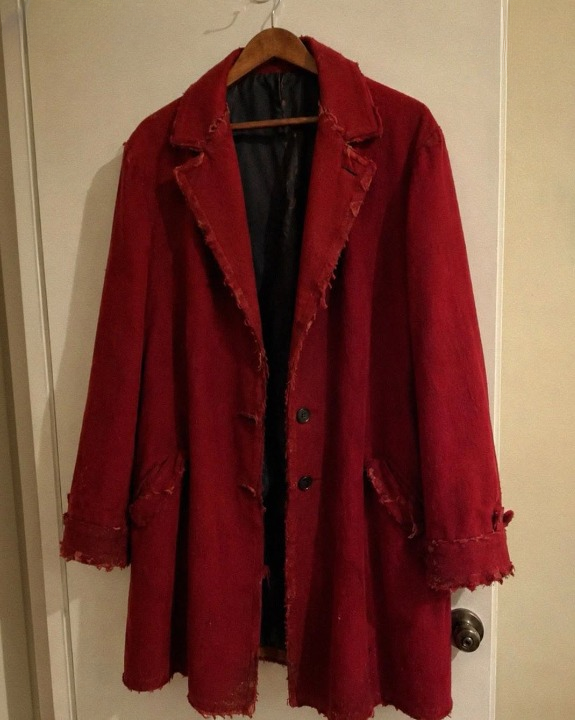
A few days later, Alec came to my door. Without explanation, he handed me an old, faded red coat and said it was something she “left behind for me,” before walking away.
At first, I thought it meant nothing. Just an old garment.
But that evening, I hung it up—and noticed the scent of lavender, familiar and unmistakably hers.
When I checked the pockets, I found something unexpected.
Folded notes. Dozens of them.
And each one began with the same chilling sentence:
“My son must never find out what I buried behind the old apple tree.”
That was the moment everything changed.
I couldn’t ignore it. That night, I went to the garden behind her house, where the old apple tree stood twisted and worn by time. The ground beneath it was hard, but I kept digging until my shovel hit something solid.
A metal box.
Inside were legal documents, a key to a safe deposit box, and a letter written in Margaret’s careful handwriting.
What I learned inside those pages changed everything I thought I knew about her.
Margaret had quietly built wealth over the years through an inheritance she never spoke about. But instead of living differently, she chose to stay the same—modest, careful, private.
And she left it all behind with instructions.
A large sum of money, tied to a final condition: it could only be used if I fulfilled her last wish.
She wanted a community center for elderly people—somewhere warm, safe, and alive with care for those who had been forgotten.
Her words stayed with me: that dreams need hands when we are gone.
Not long after, Alec tried to claim everything, accusing me of manipulation. But Margaret had anticipated that too. The box also contained recordings—her voice, clear and deliberate—explaining exactly why she made her decision.
She spoke about neglect, absence, and the difference between obligation and presence.
And in the end, she made it simple:
Alec was her son by blood, but I was the one who showed up.
The court upheld her wishes.
I used the inheritance exactly as she instructed.
Two years later, the community center opened its doors.
We named it in her honor.
On opening day, I stood on the porch and watched people arrive—those who needed company, care, or simply a place to sit without being forgotten.
And for the first time, I understood what Margaret had been doing all along.
She hadn’t just been receiving help.
She had been watching who stayed when it mattered.
And in the end, she left everything in the hands of the person who did.