
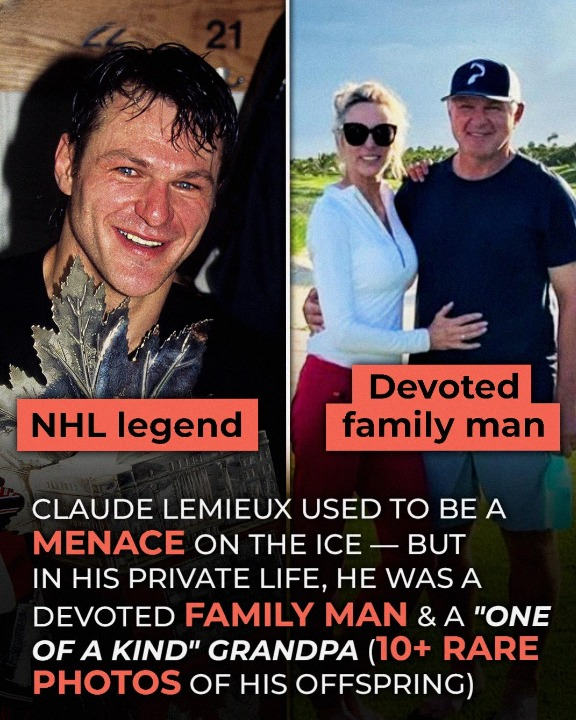
Just days after a public appearance in Montreal, Claude Lemieux’s life story took a tragic and unexpected turn, sending shockwaves through the hockey world. While headlines focused on the loss, his life also reflected a long career, championship success, and deeply personal family moments that now feel even more significant in hindsight.

Claude Lemieux, a four-time Stanley Cup champion, reportedly died by suicide at the age of 60, according to reports cited by TMZ Sports. He was found at a family business by his son in the early hours of the morning after relatives became concerned when he did not return home.
His sudden passing came shortly after he appeared at Montreal’s Bell Centre, where he participated in a ceremonial torch-lighting event ahead of an NHL playoff game. That appearance has since taken on emotional weight for fans, many of whom reflected online on how composed he seemed at the time.
Born in Buckingham, Quebec in 1965, Lemieux was selected 26th overall in the 1983 NHL Draft by the Montreal Canadiens. Over a career spanning more than two decades, he played over 1,200 NHL games, recording nearly 800 points and earning a reputation as one of the most effective postseason performers in league history.
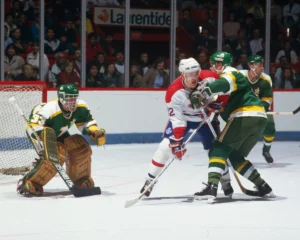
He won four Stanley Cups with multiple teams and earned the Conn Smythe Trophy in 1995 as playoff MVP with the New Jersey Devils. Known for elevating his game in high-pressure moments, he finished his playoff career with 158 points and 19 game-winning goals across 234 postseason games.
Beyond his statistics, Lemieux’s legacy included recognition as one of hockey’s most competitive playoff performers, with NHL leadership previously praising his ability to deliver in critical games.
Following his death, tributes poured in from across the hockey community and beyond. Family members also shared emotional messages, remembering him not only as an athlete but as a father and grandfather. One of his children posted a heartfelt farewell expressing deep grief and love.
Photos shared by family and friends in recent years highlighted a more personal side of Lemieux’s life, showing him with his wife, children, and grandchildren during family gatherings, celebrations, and quiet moments away from hockey.
His youngest son, Brendan Lemieux, also pursued a professional hockey career and spoke publicly about his father’s influence, describing him as a major role model both on and off the ice. After Claude’s passing, Brendan shared a tribute message expressing love and loss.

In recent years, Lemieux had also become a grandfather, and family photos showed him spending time with his grandchildren in relaxed, everyday settings — moments that contrasted with his intense reputation on the ice.
Tributes from teammates, fans, and public figures described him as a fierce competitor and a key figure in NHL playoff history, while also highlighting the private, family-centered life he built away from the rink.
Claude Lemieux’s legacy remains defined not only by championships and records, but also by the personal memories shared by those closest to him.