
Health authorities are urgently investigating how a rare hantavirus outbreak spread aboard a cruise ship, as new information surfaces about the passenger believed to be the first infected case.
The disturbing mystery surrounding the deadly outbreak on the MV Hondius has grown even more alarming after investigators identified the man suspected of unknowingly introducing the virus to the ship before the situation spiraled into tragedy.
Officials now believe 70-year-old Dutch ornithologist Leo Schilperoord may have been the outbreak’s “patient zero.” He became seriously ill during the voyage and later died at sea. Days afterward, his wife, 69-year-old Mirjam Schilperoord, also died after falling critically ill while attempting to return home to the Netherlands.
A Birdwatching Expedition That Ended in Tragedy
The shocking deaths have devastated both the scientific and birdwatching communities, where the couple was widely admired for their lifelong dedication to wildlife research and global birding expeditions.
Investigators suspect the couple contracted the dangerous Andes strain of hantavirus during a stop near Ushuaia, Argentina, shortly before boarding the cruise ship.
Friends and local tributes described Leo and Mirjam, who were from the Dutch village of Haulerwijk, as passionate travelers and conservationists who had spent decades exploring rare bird habitats around the world. The couple had even co-authored research involving pink-footed geese and regularly traveled through South America and Sri Lanka in pursuit of uncommon species.
Authorities believe the infection may have originated at a landfill site outside Ushuaia, a location popular among birdwatchers hoping to spot Darwin’s caracara. Experts suspect the virus spread through airborne particles contaminated by infected rodent droppings.
What has especially alarmed health officials is that the Andes strain is currently the only known form of hantavirus capable of spreading from person to person.
Symptoms Escalated Rapidly After Boarding
Just four days after visiting the suspected exposure site, the Schilperoords boarded the MV Hondius on April 1 alongside more than 100 passengers, many of whom were scientists and fellow bird enthusiasts.
On April 6, Leo reportedly developed symptoms including fever, severe abdominal pain, headaches, and diarrhea. What initially resembled a routine illness quickly turned deadly.
Five days later, he died aboard the ship.
Mirjam later disembarked in Saint Helena while accompanying her husband’s body before continuing toward South Africa. While attempting to travel back to the Netherlands, she reportedly became critically ill, collapsed at the airport, and later died as well.
Public Anxiety Intensifies Online
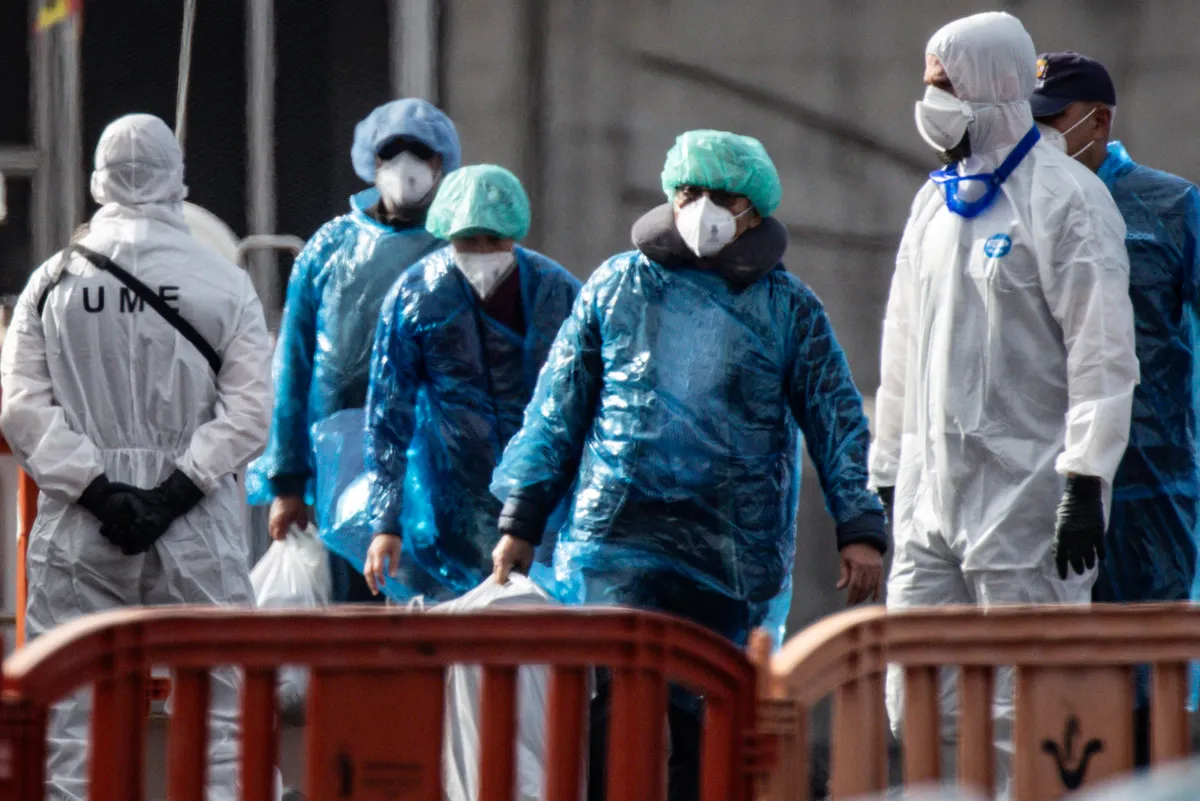
As officials continue tracing possible exposures and monitoring passengers, public concern has surged online, especially after images circulated showing medical teams in full protective suits responding to the outbreak.
Many commenters questioned whether the true seriousness of the situation was being fully communicated. Some described the outbreak as “extremely serious,” while others expressed fears that the virus could be more dangerous than initially believed.
Despite the growing alarm, health authorities continue emphasizing that the overall public risk remains low.
Investigators are still examining whether any infections aboard the ship involved direct person-to-person transmission linked to the Andes strain — a possibility that has long concerned infectious disease experts.
Why the Andes Strain Is So Concerning
Hantaviruses are typically spread through infected rodents and their bodily fluids, including urine, saliva, and droppings. People usually become infected after inhaling contaminated airborne particles.
Infections may also occur after touching contaminated surfaces and then touching the mouth, nose, or eyes, consuming contaminated food, or through rodent bites and scratches.
Most hantavirus strains found in North and South America can cause hantavirus pulmonary syndrome (HPS), a severe respiratory illness that can quickly become fatal.
The Andes strain associated with the MV Hondius outbreak is considered especially dangerous because it is one of the few known hantavirus strains capable of spreading between humans.
Early Symptoms Can Be Misleading
Early symptoms of HPS often resemble the flu and may include fever, fatigue, muscle pain, headaches, and stomach problems. In severe cases, fluid can rapidly build up in the lungs, leading to life-threatening breathing complications.
Health experts stress that immediate medical care is critical because there is currently no approved antiviral treatment or vaccine for hantavirus infections.
Patients are typically treated with intensive supportive care to help stabilize breathing and manage complications as the disease progresses. According to the CDC, nearly 40% of people diagnosed with HPS do not survive.
Experts Say Broader Risk Remains Low
Scientists say the outbreak aboard the MV Hondius is unusual because investigators suspect at least some infections may involve human-to-human transmission.
Even so, experts continue reassuring the public that widespread transmission through commercial air travel remains highly unlikely.
Robert Cross, an associate professor at the University of Texas Medical Branch, stated that “the average person has no reason to worry,” adding that modern airplanes use advanced air filtration systems designed to reduce the spread of infectious diseases.
Specialists advise travelers who remain concerned to practice careful hand hygiene and consider wearing N95 masks, especially when traveling in regions where the Andes strain is known to circulate.
Meanwhile, investigators continue reconstructing the timeline of the outbreak. The World Health Organization also confirmed that a German passenger developed symptoms in late April before later dying aboard the vessel on May 2.
Authorities are still working to determine exactly how the virus spread among passengers — and whether direct human-to-human transmission occurred during the voyage.