
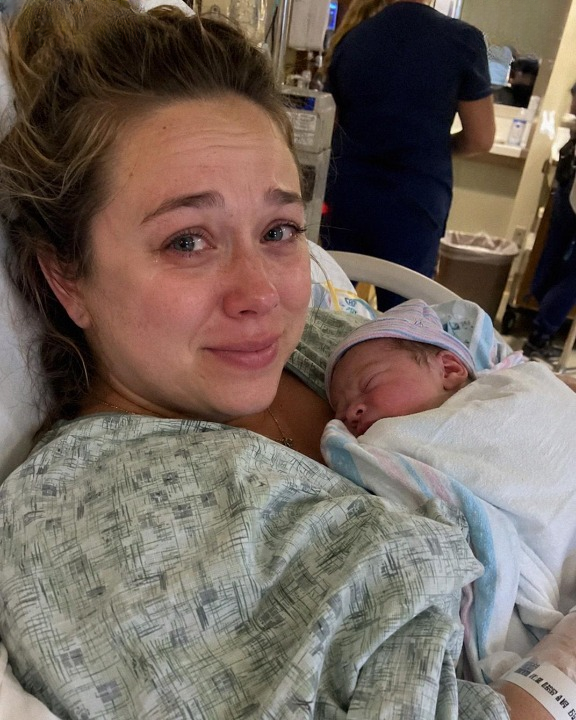
I agreed to be a surrogate for my sister because motherhood was something she had wanted her entire life.
From the time she was young, Carol had always been the one surrounded by babies—carrying dolls everywhere, volunteering to babysit, and celebrating every pregnancy announcement like it was her own. When doctors later told her she couldn’t safely carry a child, it broke something inside her. She withdrew from everyone and slowly stopped showing up in family life altogether.
Then one evening, she came to my house unannounced. Her eyes were swollen from crying, and before I could even fully react, she asked me if I would carry a baby for her and her husband. I was stunned, but after a long conversation with my own partner, I eventually agreed once we went through the proper medical and legal steps.
When I finally told her yes, she broke down completely, saying I was giving her the chance to become a mother. I didn’t fully grasp how deeply she meant those words at the time.
The pregnancy itself went smoothly at first. Carol attended appointments, chose nursery colors, and became more and more emotionally invested as the due date approached. My body changed, the baby grew, and everything seemed to be unfolding as a shared, hopeful experience. But over time, her attachment started to feel intense—almost possessive. Small moments began to feel unsettling, though I kept telling myself it was just excitement.
My husband noticed it too. He grew increasingly uneasy as Carol became more consumed by the pregnancy, but I reassured him that everything would be fine once the baby was born.
Then labor started unexpectedly, two weeks early.
The delivery room was crowded with emotion—my husband by my side, Carol and her husband waiting anxiously. And when the baby finally arrived, the moment should have been pure joy.
But something in the atmosphere shifted immediately.
Carol’s reaction wasn’t just happiness. It was overwhelming, almost frantic. And in the middle of it, my husband leaned toward me and urgently told me not to hand the baby over yet.
Confused, I asked him why—and that’s when he showed me messages between him and Carol’s husband.
They revealed something I hadn’t seen clearly before: Carol had been spiraling, terrified I might take the baby away, and talking about drastic actions to ensure nothing could interfere after birth. Her fear and fixation had escalated far beyond what I understood.
Before I could process it, Carol returned to the room, instantly sensing the tension. The situation began to unravel quickly, voices rising, emotions colliding, and it became clear she was not in a stable place.
What followed was painful and chaotic, but it ultimately led to intervention from hospital staff and a delay in handing over the baby so she could be evaluated and get help.
In the months after, Carol entered treatment. It was difficult and messy, and our relationship was strained in ways I never expected. But slowly, she began to recover. First through tears and confusion, then through small signs of clarity—asking about the baby, and eventually, asking about me again.
Later, during a supervised visit, I brought the baby to see her. She cried when she saw him, but this time, she didn’t reach for him. Instead, she looked at me and quietly thanked me for taking care of him.
And in that moment, I realized that while the situation had nearly broken all of us, it had also forced the truth to the surface—and given my sister a chance to come back to herself.