
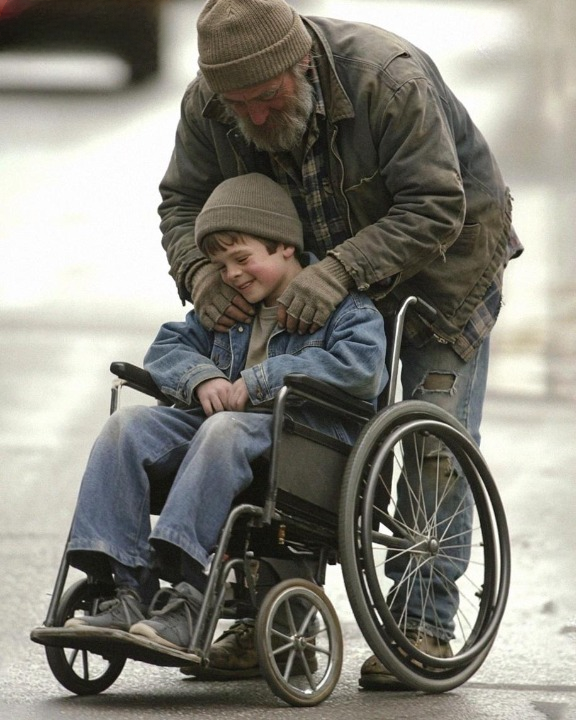
A homeless, disabled flutist spends his days playing music in a city square, using it as a way to escape constant physical pain and the hardships of his life. He once worked in a factory, but a worsening chronic condition eventually cost him his job and left him reliant on a wheelchair given to him by coworkers on his last day.
One day, while performing, he notices a young boy named Tommy and his exhausted mother watching him. The boy is deeply moved by the music, but his mother explains that Tommy cannot walk due to a serious condition, and they cannot afford proper treatment or mobility aids, so she carries him everywhere.
Seeing their struggle—and recognizing his own past suffering—the flutist makes a painful decision. Despite his condition, he forces himself to stand and insists that they take his wheelchair. He pretends he doesn’t need it, claiming it would mean more to him if it helped someone in greater need. After hesitation, the mother accepts, and Tommy joyfully uses it.
Years pass, and the flutist’s health worsens as he now moves only with difficulty. Still, he continues playing music in the square. Then one day, a well-dressed young man approaches him—it is Tommy, now fully healed and able to walk thanks to an inheritance that allowed him to receive proper medical care. His mother, too, has rebuilt her life and started a successful business.
Grateful for the life-changing kindness he once received, Tommy presents the flutist with a gift: a flute case. Inside, instead of just an instrument, the man discovers a large sum of money along with a note explaining it is a gesture of gratitude for the pain and sacrifice he endured. The note thanks him for showing that compassion can change lives.
Deeply moved, the flutist reflects on how his single act of kindness created a ripple effect that transformed not only Tommy’s life but also his own understanding of meaning and hope.