
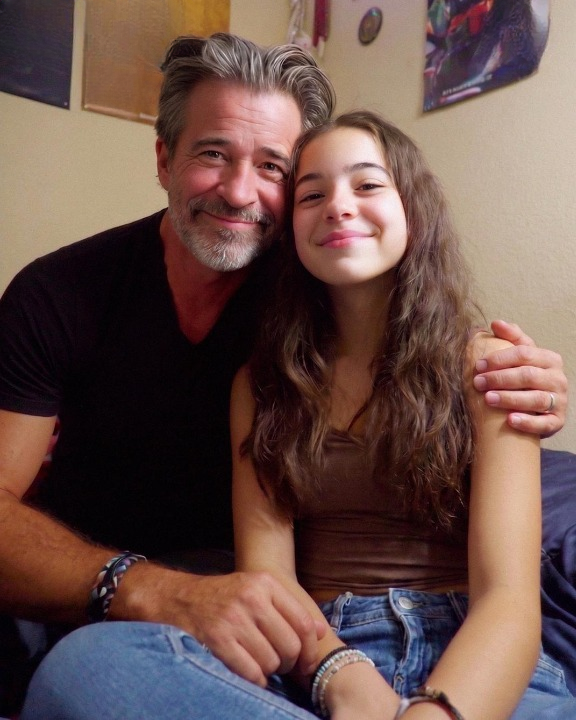
I believed I had finally created a safe, stable life for my daughter after everything we’d been through. But one restless night, I saw something through her bedroom door that brought all my old fears rushing back.
I used to think I was a good mother—not flawless, not fully healed, but attentive and protective. The kind who recognizes danger early and acts. My first marriage taught me how easily “peace” can be an illusion. When I left, Mellie was still young, and she had already seen too much. From that moment on, I promised myself no one would ever hurt her again if I could prevent it.
Then Oliver came into our lives. He was calm, steady, older than me, and never forced a bond with Mellie. He didn’t try to replace anyone—he simply showed up, consistently and quietly. Over time, I started to believe we had built something safe.
Then he began sleeping on the couch.
At first, it seemed harmless—just a sore back, or a bad mattress. But it kept happening. Every night, he’d start beside me, then slip away at the same hour. Something about it unsettled me.
At the same time, Mellie seemed exhausted in a way that felt deeper than typical teenage tiredness. I noticed small things—the way she avoided eye contact, the way Oliver went still when I asked if she was okay. And strangely, she seemed more at ease when he was around, as if they shared something I didn’t know.
Instead of comforting me, that feeling made me uneasy.
One night, I woke to find him gone. The couch was empty. The house was silent—except for the faint light under Mellie’s door.
My heart raced as I cracked it open.
There he was, sitting against her bed, half-asleep. Mellie lay beside him, holding his hand, both of them asleep.
Fear hit me instantly.
When I woke him, he calmly explained she’d had a nightmare and had asked him to come. What shook me more was learning it had been happening for weeks—and that she had asked him not to tell me.
That hurt in ways I hadn’t expected.
Still, doubt crept in. I hated myself for it, but my past had wired me to expect the worst. So I made a choice I’m not proud of—I installed a small camera in her room.
When I watched the footage, the truth came out.
Night after night, Mellie would wake from nightmares, text Oliver, and he’d come sit nearby—never too close, never crossing a line—just staying until she calmed down. Sometimes she talked, sometimes she cried, sometimes she just needed someone there.
In one clip, he gently told her he couldn’t keep this from me. She begged him not to, afraid she’d ruin my happiness if I knew she was struggling again.
That moment broke me.
There was no betrayal. No hidden wrongdoing. Just a scared girl trying not to burden her mother, and a man trying—imperfectly—to protect her.
I realized then that while I’d been so focused on guarding against outside threats, I had missed the pain already living inside my own home.
The next day, I told Mellie the truth—about the nightmares, and about the camera. She was furious, and she had every right to be. I didn’t defend myself. I apologized.
Eventually, the truth opened the door for something better. Mellie admitted how much she’d been struggling, afraid of undoing my healing. I told her she could never “ruin” my life by hurting.
That night, she slept in my room for the first time in years.
After that, we started therapy—individually and together. It wasn’t easy. Trust had to be rebuilt. But slowly, things became more honest. Mellie began to speak up when she was struggling. I stopped confusing silence with strength. And Oliver stopped carrying a burden that wasn’t his alone.
Months later, Mellie casually told me she’d slept through the night.
I nearly cried on the spot.
I still believe I’m a good mother—not because I handled everything perfectly, but because when the truth became uncomfortable and messy, I chose to face it instead of looking away.