
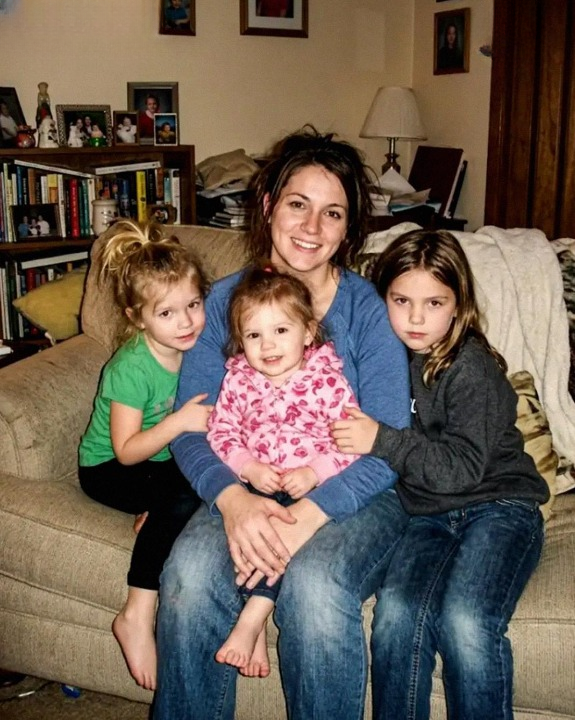
I became my nieces’ parent overnight—no warning, no guide, no idea what came next. Just when life finally started to feel stable, the past returned in a way I couldn’t ignore.
Fifteen years ago, my brother Edwin disappeared without a word after burying his wife. No goodbye, no explanation—just three little girls left behind and a social worker at my door with a single suitcase between them.
They were three, five, and eight.
That first night, the house felt unbearably still.
The youngest kept asking when her mother would come back. The oldest stopped asking questions altogether after a week. The middle one refused to unpack, afraid that settling in would make their situation real.
And I kept telling myself Edwin would return.
Weeks turned into months. Months into years. He never did.
So I stopped waiting.
I raised them instead—school runs, fevers, bedtime stories, first heartbreaks, first jobs. Somewhere along the way, they stopped feeling like someone else’s children.
They became mine.
Then, fifteen years later, everything shifted again.
There was a knock at the door in the late afternoon. I opened it—and there he was.
Edwin.
Older. Thinner. Worn down by time.
The girls didn’t recognize him at first. I barely did.
He didn’t ask for forgiveness. He didn’t ask to come in.
Instead, he handed me a sealed envelope and said quietly, “Not in front of them.”
That was all.
Outside, I opened it.
The letter inside was dated fifteen years earlier.
It explained everything I never understood: the financial collapse after his wife’s death, hidden debts, failing accounts, and the slow realization that he couldn’t stabilize their lives on his own.
He wrote about panic. About fear. About believing that leaving the girls with me—someone steady—was the only way to protect them from losing everything.
He didn’t disappear out of indifference. He disappeared thinking it was survival.
But the story didn’t end there.
Attached were recent documents—legal records showing years of work. Debts cleared. Accounts restored. Assets rebuilt. Everything now transferred to the girls’ names.
I looked at him, stunned. “What is all this?”
“I fixed it,” he said simply.
Not instantly. Not easily. But over years of work.
Still, none of it erased the absence.
“You don’t get to come back with paperwork and think it fills fifteen years,” I told him.
“I know,” he said. And he didn’t argue.
That was what unsettled me most.
Inside the house, the girls noticed something was wrong. I told them the truth—that their father was outside.
At first, they didn’t believe me.
But then he came in.
The room filled with questions immediately—sharp, hurt, overdue questions. Why now? Why leave? Why never come back sooner?
He tried to explain. He tried to take responsibility. He admitted what he’d missed.
Graduations. First steps into adulthood. Entire lives he hadn’t witnessed.
The silence after that was heavier than anger.
And yet, something unexpected happened too.
They didn’t shut him out completely.
They didn’t forgive him instantly either.
Instead, they stayed in the room.
They talked. Carefully. Unevenly. Like people trying to understand something too large to process all at once.
When he finally asked if he could stay, he didn’t demand anything.
“If you’ll let me,” he said.
No one answered right away.
But no one told him to leave either.
That night, dinner happened like nothing in the house had ever been certain—but also like something long unresolved had finally been spoken out loud.
He sat at the table.
They spoke to him, slowly at first.
And I watched it all unfold, realizing there was no version of this where I could decide how it ended.
Later, he stood on the porch again.
I joined him.
“You’re not forgiven yet,” I told him.
“I know,” he said.
“They have a lot of questions.”
“I’m here for all of them.”
And for the first time in fifteen years, no one was guessing anymore.
No one was waiting for answers that never came.
We were all just standing in the same moment, trying to figure out what came next.