
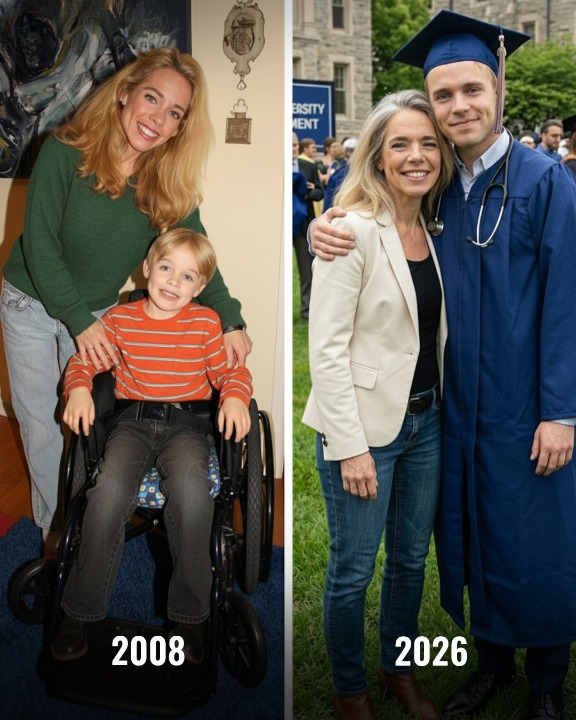
I gave birth believing my marriage could survive anything. I was wrong. The day our son was born, my husband looked at him, made a decision in silence, and walked out of the hospital. No argument, no explanation that could soften it—just abandonment at the moment we needed him most.
I left that hospital alone with a newborn in my arms and a life that had split cleanly in two: before and after.
Our son, Henry, was diagnosed immediately with motor impairments. The doctors were calm, careful, almost gentle as they explained what his future might look like—therapy, uncertainty, a different kind of childhood than we had imagined. I listened, numb, trying to process it while still physically recovering from childbirth.
My husband didn’t stay long enough to process anything at all.
He looked at Henry once, then at the reality forming around us, and said plainly that this wasn’t the life he wanted. He left as if he were stepping away from something inconvenient rather than a newborn son.
From that moment on, it was just Henry and me.
The years that followed were not inspirational—they were exhausting. I learned how to manage appointments, insurance battles, therapy schedules, and endless nights of fear and fatigue. I learned how to advocate for a child the world often underestimated, and how to protect him from being reduced to a diagnosis.
Henry grew into a sharp, determined boy who refused to be spoken about instead of spoken to. He challenged teachers, questioned assumptions, and slowly turned every limitation others predicted into something he worked through on his own terms.
By the time he reached adulthood, he had earned a place in medical school. Not as a symbol of struggle, but as someone who understood what it meant to be on the receiving end of judgment—and who wanted to change that.
Then, just before graduation, the past came back without warning.
His father called.
Henry told me about it calmly, but I could see the weight behind it. The same man who had walked out years ago now wanted back in, now that success made Henry visible in a way hardship never had.
He even asked to attend the graduation.
I didn’t trust it. I didn’t want it. But Henry said yes—not out of forgiveness, but because he didn’t want his father rewriting the story.
On graduation night, the hall was full of proud families and bright lights. I tried to hold myself together, but I could feel something coming.
Then Henry walked onto the stage.
And instead of the usual speech about achievement, he told the truth.
He spoke about being born, about the doctor’s warnings, and about the day his father left without looking back. He spoke about me—the one who stayed when everything got hard, when no one else did.
Not as a footnote. Not as background.
As the reason he made it.
By the time he finished, the room had changed. People weren’t just applauding a graduate—they were witnessing a life story corrected in real time.
I didn’t look at his father.
I didn’t need to.
Because in that moment, it was clear who had lived the story and who had only returned when it became easy to admire from a distance.
And when Henry stepped down from that stage and walked straight to me, I finally understood something I had spent twenty-five years surviving without naming:
He hadn’t just become a doctor.
He had become proof that staying matters more than leaving ever does.