
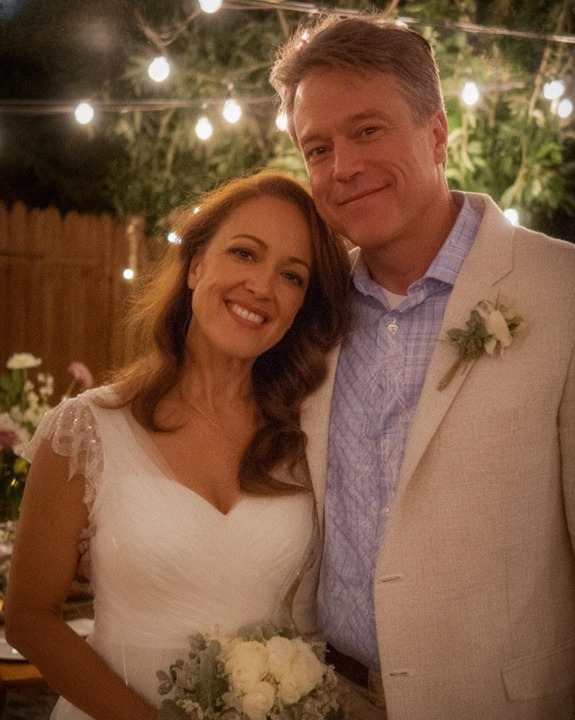
When my late husband’s best friend proposed to me, I believed I’d already endured the hardest parts of grief—and I said yes. But on our wedding night, as we stood in front of an old safe with his hands trembling, he said something that made me question everything I thought I understood about love, loyalty, and second chances.
I’m 41 now, and sometimes it still feels surreal.
For twenty years, I was married to Peter. Not in a perfect, storybook way, but in a real, imperfect, deeply meaningful one. We built a life together—a noisy home, two kids, and a rhythm filled with small arguments, laughter, and everyday routines.
Now my son is 19, studying engineering across the country, and my daughter is 21, attending college far away. The house feels empty without them… and without Peter.
He used to call our life “ordinary,” and meant it as the highest praise. Weekend soccer games, burnt dinners turned into takeout nights, silly arguments over chores—those were the moments that mattered. He wasn’t flawless, but he was steady, kind, and made me feel safe in a way I only fully understood after he was gone.
Six years ago, a drunk driver ran a red light and took his life. I barely remember the weeks that followed—just fragments of grief, silence, and shock.
But through it all, there was Daniel.
He wasn’t just Peter’s friend—they were like brothers. And Daniel had his own struggles: a failed marriage and the responsibility of raising his young daughter. Still, when Peter died, Daniel showed up without hesitation. He helped fix things around the house, brought food when I forgot to eat, and supported my kids without ever making it about himself.
When I told him he didn’t have to keep helping, he simply said, “Pete would’ve done the same for me.”
There were no hidden motives—just loyalty.
Over time, something shifted. Slowly, quietly, without drama. One night, years later, he came over to fix a leaking sink, and in that ordinary moment, I realized I didn’t feel alone anymore.
Our connection grew naturally—shared meals, long conversations, quiet companionship. Eventually, my daughter pointed out what I hadn’t fully admitted to myself: that Daniel loved me.
I didn’t know what to do at first. Part of me felt like even considering him was a betrayal. But he never pressured me, never rushed anything. And that made it easier to trust what was growing between us.
One evening, sitting on the porch, he finally confessed.
“I’m in love with you,” he said, quietly and honestly. “I know it’s complicated… but I can’t ignore it anymore.”
And the truth was—I felt the same.
We took things slowly, making sure it wasn’t just grief or comfort. When we eventually told others, my kids supported us, and even Peter’s mother reassured me that moving forward wasn’t a betrayal—it was life continuing.
So we got engaged.
The wedding was small and intimate, held in the backyard. It was everything we wanted—simple, warm, and filled with love. For the first time in years, I felt like happiness was possible again.
But that night, after we got home, something changed.
Instead of relaxing, Daniel stood in front of a safe, tense and silent. His hands were shaking.
When I asked what was wrong, he finally turned to me—his face filled with guilt and fear.
“There’s something you need to see,” he said. “Before we begin our life together.”
He opened the safe and pulled out an old phone. On it was a conversation between him and Peter, from years before the accident.
At first, it was harmless—jokes and casual talk. But then Daniel had written something more personal, admitting how much he admired our relationship… and me.
Peter’s response was firm:
“Don’t go there. Promise me you’ll never cross that line. She’s my wife.”
Staring at those words, everything inside me shifted.
I realized that long before anything ever happened between us, Daniel had once stepped too close to a boundary—and Peter had seen it.
And now, standing there on our wedding night, Daniel was finally telling me the truth.