
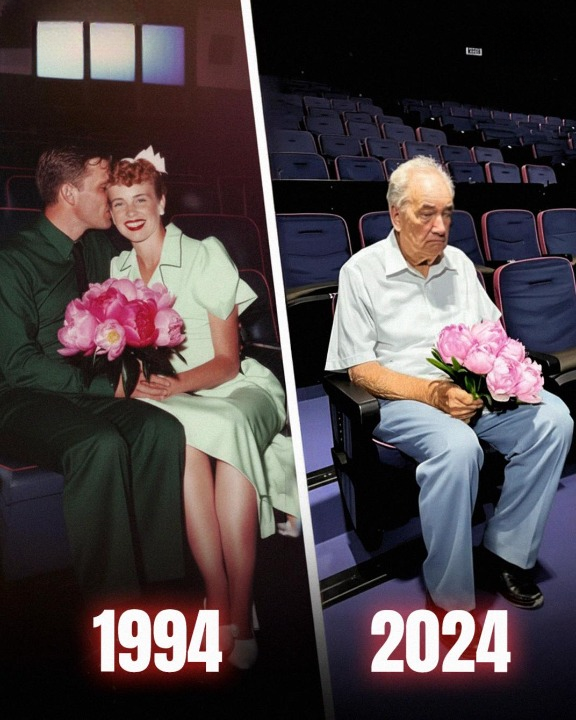
Every Monday, I noticed an elderly man coming into the old city cinema, always buying two tickets—but never sitting with anyone. Curiosity slowly took hold of me, until I finally decided to sit beside him and uncover the truth. What he shared changed everything I thought I knew, and somehow pulled our lives together in a way none of us could have predicted.
Working at the cinema wasn’t just a job to me. It felt like stepping into a different world, where the flicker of the projector and the smell of popcorn briefly erased real-life worries. It was a place filled with stories—some on screen, some quietly unfolding in the seats.
And then there was Edward.
Every Monday morning, he arrived with calm consistency, always dressed neatly in a gray coat, always carrying himself with quiet dignity. Without fail, he would ask for the same thing:
“Two tickets for the morning show.”
But he would always enter alone.
It didn’t take long for people around me to notice. Coworkers made guesses, joking that maybe he was visiting a lost love or sitting with a ghost. But something about him made those jokes feel uncomfortable, even wrong.
I almost asked him about it many times—but I never did.
Until one Monday, when I wasn’t working.
That day, I chose to follow him instead of staying away. I told myself it was just curiosity, nothing more. When I entered the theater, he was already seated, waiting as always. When he noticed me, he didn’t seem surprised.
I sat beside him and admitted I had been watching him for a while. Gently, I asked why he always bought two tickets.
He smiled faintly—but sadly.
“It isn’t about the movies,” he said.
Then he told me about Evelyn.
Years ago, she had worked at the cinema. They met there, fell in love there, and shared something he described as unforgettable. He once invited her to a morning screening—but she never came. After that, she disappeared from his life completely. No explanation, no goodbye.
Eventually, life moved on. He got married, lived quietly, and after losing his wife, he returned to the cinema every Monday—not for films, but for memories.
“I never stopped waiting,” he said simply.
The only thing he remembered clearly was her name: Evelyn.
I promised I would help him find her.
That promise led me somewhere I never expected—to my own father, the man who managed the cinema.
When Edward and I confronted him, the truth finally came out. Evelyn hadn’t been just an employee. Her real name was Margaret. She had been my mother. And she had lived a double life—one with my father, and another with Edward.
The revelation shattered everything Edward believed, and forced my father to admit painful truths he had buried for years. None of us were who we thought we were to each other.
In the end, we decided to visit her together.
At the care facility, we found her sitting quietly by the window, distant and fragile. But the moment Edward called her “Evelyn,” something changed. She looked at him like time had folded in on itself, like the past had suddenly returned.
They reunited in a moment filled with emotion and long-delayed recognition.
And as I watched them, I realized something important: these stories we think are finished often aren’t. People we assume are strangers are sometimes connected in ways we can’t see until much later.
That Christmas, instead of endings, we found something else—truth, forgiveness, and the beginning of a family none of us expected.