
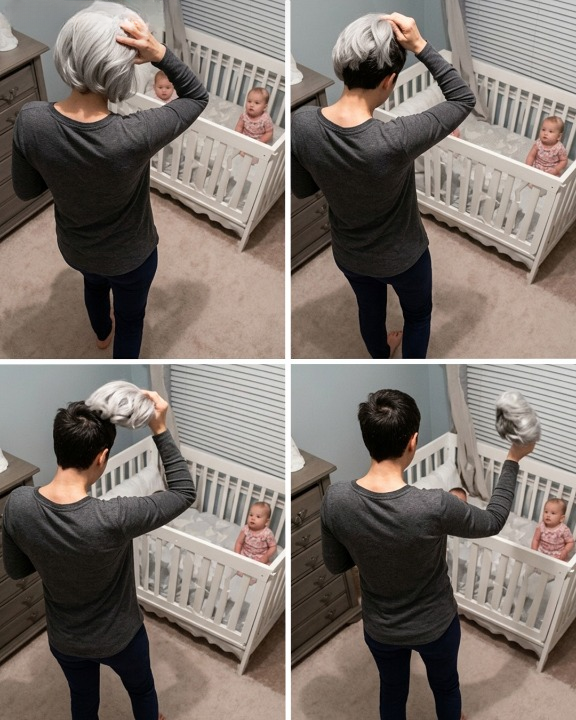
I still remember believing the hardest part of having twins was the constant exhaustion. I was wrong. The real shock came one night when I opened the nanny cam app and saw something that made my blood run cold.
I’m a mother to 11-month-old twin boys, and if you’ve never had twins, imagine sleep deprivation becoming your entire personality. For nearly a year, I hadn’t slept more than a few uninterrupted hours at a time.
My husband, Mark, traveled frequently for work—sometimes twice a month or more. And we had no family nearby. My parents were gone, and Mark had grown up in foster care, so there were no grandparents to call, no backup plan waiting in the wings.
Two weeks before everything changed, I broke down on the kitchen floor while talking to Mark on the phone. One baby was screaming in the background while the other banged a spoon on the high chair. I told him I couldn’t keep going like this. I was beyond exhausted.
He immediately said I shouldn’t have to do it alone, and that we should have hired help sooner. So we went through a licensed agency, checked everything carefully, and finally brought in a caregiver named Mrs. Higgins—a warm, gentle woman in her sixties who instantly calmed the boys. They usually cried with strangers, but they went straight to her.
Within days, she seemed to know our household better than I did. She handled bottles, laundry, even the linen closet exactly how Mark liked it. For the first time in a long while, it felt like things were finally under control.
One night, Mark surprised me with a spa getaway and insisted we leave the boys with her. I still felt uneasy, so before we left, I secretly installed a nanny camera in the living room.
At the spa, I checked the feed. The boys were asleep, but Mrs. Higgins wasn’t knitting or watching TV. Instead, she carefully removed her gray wig, revealing dark hair underneath. Then she wiped away her aged makeup. The transformation was shocking—she wasn’t elderly at all.
My heart pounded as she moved around the room and pulled a hidden bag from behind the curtain. I thought the worst.
We rushed home immediately.
But when I checked the live feed again during the drive, I saw something unexpected: she wasn’t harming the children. She was gently unpacking small knitted sweaters, stuffed animals, and carefully placing a camera near the crib. Then she whispered softly that she just wanted one photo for “Nana.”
When we arrived home, we found her holding one of the babies peacefully.
My husband finally admitted the truth—she was his mother.
He had told me she was dangerous and absent from his life, but she was there, insisting she had only disguised herself to be allowed near her grandchildren because she knew he would never accept her otherwise.
Tension exploded as old wounds surfaced. She claimed she had lost custody when he was young after a difficult court battle and had spent years trying to stay connected. Mark insisted she had abandoned him and couldn’t be trusted. She insisted she had tried for years.
Eventually, she left after an emotional confrontation.
The next day, I reached out to the nanny agency myself. They confirmed she was one of their most trusted caregivers with an excellent record.
Curious and conflicted, I met her privately. There, she explained her side: financial struggles, custody loss, blocked communication, and years of trying to stay connected to her son in any way she could. She had even been sending money anonymously after the twins were born.
Later, I told Mark I had met her. He was angry at first, saying I went behind his back, but eventually, the truth began to crack through his certainty.
He agreed to meet her.
The conversation between them was painful but important. When he came back, he was shaken, admitting he didn’t know what came next, but that hearing her voice had changed something.
A few days later, she came to our home without disguise—just as herself. She didn’t push or demand anything. Mark let her in. When she held the twins, she softly called them “my little darlings,” and for the first time, Mark quietly acknowledged her as “Mom.”
And in that moment, something fragile—but real—began to heal.