
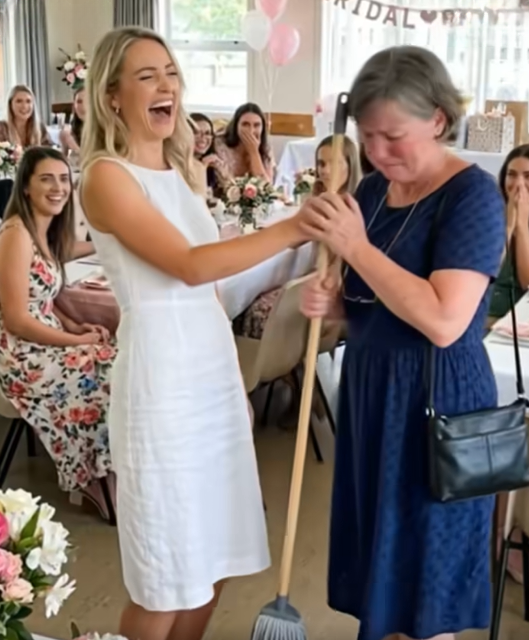
At my son’s fiancée’s bridal shower, I expected nothing more than awkward conversations and polite smiles. What I didn’t expect was to leave questioning whether my son truly understood who he was about to marry.
I raised Daniel alone after his father died when he was eight. I worked as a janitor wherever I could—schools, offices, clinics—anything that kept food on the table and a roof over our heads.
So when Daniel told me he planned to propose to Emily, I was overjoyed.
Emily always seemed polite enough, though never particularly warm. Sometimes her comments felt edged with judgment, especially about my work or lifestyle, but I told myself I was imagining it. When I was invited to her bridal shower, I took it as a step forward.
That should have been my first warning.
The shower was held in a beautifully decorated rented hall, full of well-dressed guests who clearly belonged in that kind of setting. I tried my best to blend in, greeted people kindly, and kept to myself while waiting for Daniel, who said he might come later.
Emily barely acknowledged me.
Then, midway through the event, she clapped loudly to get everyone’s attention.
“Before we eat,” she announced cheerfully, “we’re going to do something fun.”
A few people laughed, assuming it was a game. Then she deliberately knocked a glass off the table. It shattered on the floor.
She turned directly to me, picked up a mop, and handed it over.
“Since you didn’t really contribute,” she said with a smile, “you can at least earn your meal. You’re probably used to this anyway.”
The room went silent.
I could feel every gaze in the room land on me. My face burned, but I didn’t argue.
Instead, I calmly reached into my purse.
What I pulled out changed everything.
It was a silver key tied to a faded ribbon.
I held it up and told them it was meant to be a wedding gift—a condo Daniel and I had been saving for over years of my overtime work and sacrifices, intended as a fresh start for the couple.
The mood in the room shifted instantly.
Guests stared in shock. Whispering started almost immediately. Emily’s expression froze.
I told them I had spent nearly two decades working, saving every extra dollar I could, believing I was building something meaningful for my son’s future. But respect matters—and gifts aren’t for people who humiliate others.
I left soon after, holding myself together until I reached my car.
By the time I got home, Daniel called. His voice was tense, confused. Emily had told him it was “just a joke” and claimed I overreacted.
I asked him plainly if she had told him about the mop, the comment, or how she’d orchestrated the moment in front of everyone. He hadn’t heard any of that.
That silence said enough.
The next morning, Emily showed up at my door, furious. She accused me of ruining her image and embarrassing her on purpose. She insisted I misunderstood everything and claimed I was being dramatic.
But when I repeated her exact words back to her, there was no explanation left.
Eventually, Daniel came over. I told him everything exactly as it happened. This time, he listened.
When I finished, he admitted he had dismissed small moments before, excusing them as stress or misunderstandings. But hearing it all together changed something in him.
I placed the condo key on the table between us and told him it wasn’t just a gift—it was years of effort and sacrifice, meant for a life built on respect.
Later that night, he went to Emily and ended the engagement.
He told her plainly that humiliating his mother was not something he could overlook. Emily tried to justify it, but he didn’t waver. He left her apartment and came straight to me afterward.
The wedding was canceled. The engagement ended. And slowly, Daniel began to understand what I had been trying to teach him all along—that kindness without respect isn’t kindness at all.
Weeks later, he gave me a small engraved keychain that read: For the home you taught me to deserve.
I still have the silver key in my drawer. Maybe one day I’ll pass it on.
But I’ve learned something important: dignity isn’t about what you do for a living—it’s about how you treat people. And in the end, that’s what my son finally saw clearly.