
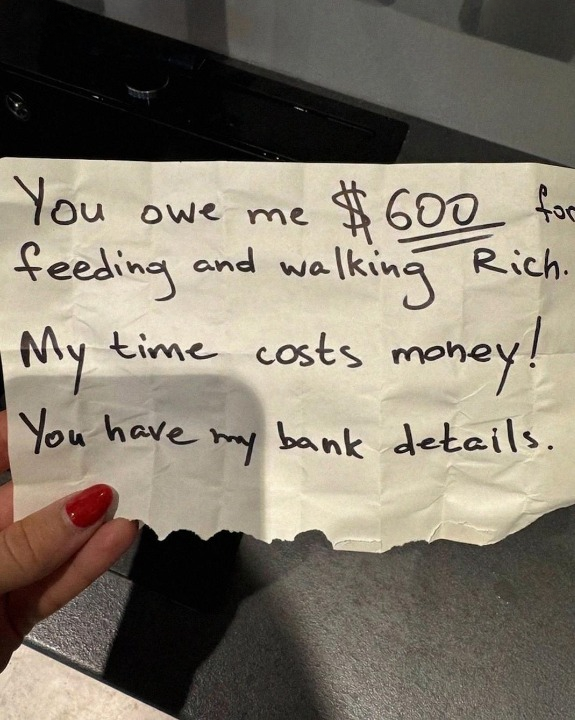
When I brought my newborn home from the hospital, I found a note on the table and assumed it was something kind from my mother-in-law. Instead, it was a demand for $600 for taking care of our dog while I was in labor. My husband said he’d speak to her, but I decided to handle it myself.
A few days before going into labor, I was lying on the couch, dealing with increasing back pain. Our golden retriever, Rich, rested his head on my lap as I called out to my husband, Jake, to discuss what we’d do with the dog while we were at the hospital. Since I was scheduled to be induced the next day, we needed a plan. Jake suggested asking his mother, Abigail, and assured me she’d be happy to help. Later, he confirmed that she had agreed.
The next morning, we left for the hospital, trusting Abigail to look after Rich. Labor turned out to be far more intense than I expected, but after hours of pain, our son was finally born. We spent three days in the hospital before heading home, excited to settle in and introduce the baby to our dog.
When we walked into the kitchen, I spotted a folded note and thought it might be a welcome message. Instead, it stated that we owed Abigail $600 for feeding and walking Rich, along with her bank details. Shocked and frustrated, I showed Jake. He offered to talk to her, but I chose to take a different approach.
A week later, Abigail came over to meet the baby. After some small talk, she asked when she would receive her payment. I calmly agreed to pay—but only on one condition. I brought out a folder where I had documented every favor and expense we had covered for her over time, from helping her move to paying for car repairs and doing unpaid favors at her request.
I explained that if she wanted to charge us for helping out, it was only fair that we do the same. As she reviewed the list, she became upset and argued that family shouldn’t charge each other. I pointed out that this was exactly my perspective as well.
Unable to respond, she left angrily without another word. My husband, who had been watching, couldn’t help but smile. In the end, the issue was dropped—and the $600 was never mentioned again.