
I thought planning my wedding would be the happiest time of my life. Instead, it became the moment I learned how far my mother-in-law would go to control everything—and how my husband would ultimately stand up and change it all.
My name is Hannah, and I’m 31. My fiancé Ethan and I always wanted something simple for our wedding—an intimate vineyard ceremony, close family, and nothing extravagant. That was our dream.
But Patricia, my future mother-in-law, saw it differently.
To her, “simple” meant embarrassing. She cared deeply about appearances and social status, and she made it clear that our wedding had to reflect her standards, not ours. Before long, she took over everything—venue, guest list, catering—repeating the same excuse whenever we objected: “It’s already paid for.”
My parents, who had modest means, still contributed in their own meaningful ways. My mom spent weeks making decorations, and my dad prepared a heartfelt speech. They didn’t have money, but they gave love.
On the day of the wedding, everything looked perfect—chandeliers, music, elegance—but it felt more like a performance than our own celebration.
At the reception, Patricia suddenly tapped her glass and stood to make a speech.
What began as polite remarks quickly turned cruel. She openly implied that those who didn’t pay had no place there, then directly humiliated my parents in front of everyone, suggesting they were freeloaders.
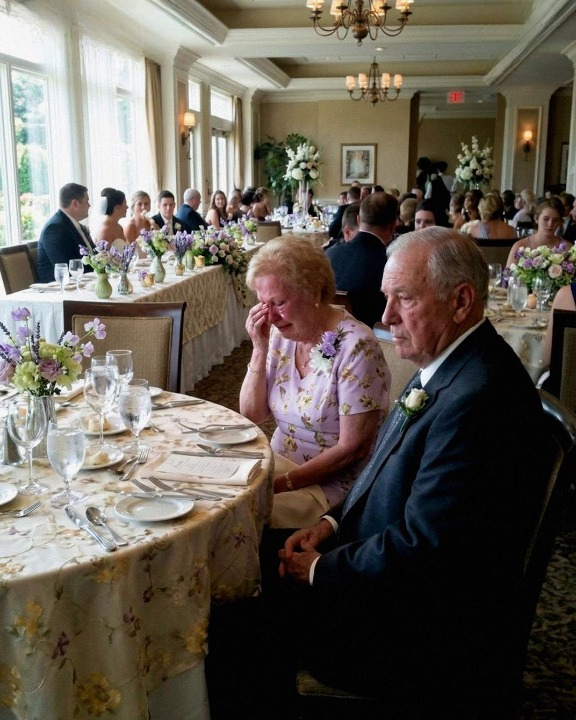
My dad, humiliated but dignified, quietly stood up and decided to leave with my mother rather than endure further disrespect. I watched them walk out of my wedding in tears, completely heartbroken.
Before I could react, Ethan stood up, walked to the microphone, and took control of the room.
He told everyone clearly that if my parents weren’t welcome, then neither were we. He called out his mother for insulting the people who raised me and made it clear the wedding would not continue under those conditions.
Then, holding my hand, he made a decision: we were leaving.
To my shock, several guests followed us out, refusing to stay in a celebration built on humiliation.
We ended up at a small, familiar restaurant nearby—no decorations, no luxury, just the people who truly cared about us. And in that simple place, we ended up having the wedding we were supposed to have all along.
Months passed without contact from Patricia. Eventually, she reappeared, offering a vague apology that felt more like damage control than regret. Still, over time, boundaries were set, and things slowly shifted.
She never truly admitted fault, but she learned she could no longer control or dominate our lives.
And in the end, that experience brought Ethan and me closer than ever. It taught us to protect each other, to value the people who love us sincerely, and to never let money or status define family.
Because real love doesn’t need perfection—it just needs courage, respect, and someone willing to speak up when it matters most.