
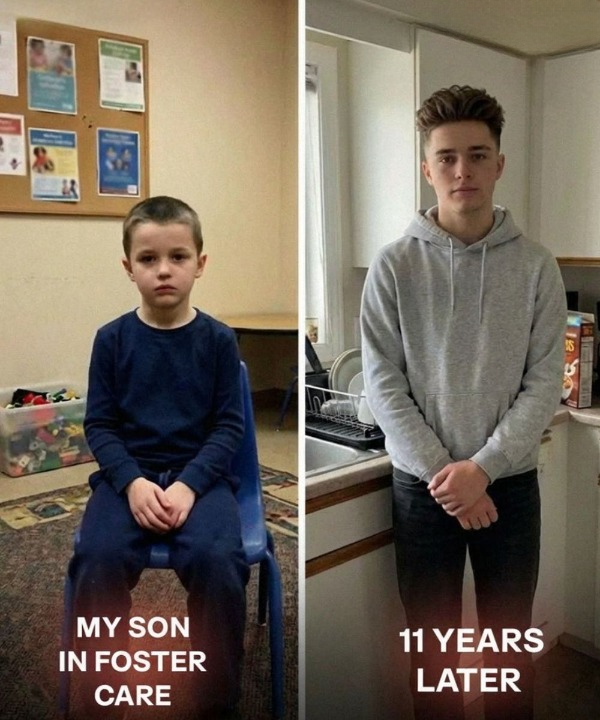
By the time my son turned eighteen, I thought I understood him completely—the quiet fears he carried, the way he second-guessed even simple kindness. I was wrong.
The morning after his birthday, he sat me down in the kitchen and told me he was finally ready to talk about something he had carried for eleven years.
I adopted Mike when he was seven. He was a child no one else wanted—older than most in the system, marked by a past that made adults uncomfortable. The first time I met him, he looked me straight in the eye and said, “You don’t have to pretend. I know you won’t pick me.”
But I did.
From that day on, he was my son.
Still, even after years together, he never fully let go of the fear that he didn’t belong. He would ask things like, “Am I still staying if I mess up?” as if love had an expiration date.
On his eighteenth birthday, that fear finally came into the open.
He told me he had spent his whole life believing he was “bad luck”—that people around him suffered because of him. Someone had told him that when he was younger, and it had shaped everything he believed about himself.
And then he left.
A short time later, I discovered the full truth. A woman from his past had spread the idea that he was cursed after her own family experienced tragedy while caring for him. A grieving mind had turned pain into blame—and a child had carried it ever since.
When I confronted her, she didn’t deny it. She had truly believed it—but belief had destroyed a child’s sense of worth.
When I got home, Mike was gone.
He had left a note saying he didn’t want to “bring more bad luck” into my life.
I found him at the train station, sitting alone, ready to disappear from the only home he had ever known.
And I told him the truth.
That he was not the cause of anything bad. That he was not a curse, or a burden, or a mistake. He was my son—and the best thing that had ever happened to me.
It didn’t erase eleven years of fear in an instant, but something softened in him that day.
We went home together.
And for the first time, he began to believe that his story didn’t have to end with what someone once said about him—it could begin with what he chose to believe instead.