
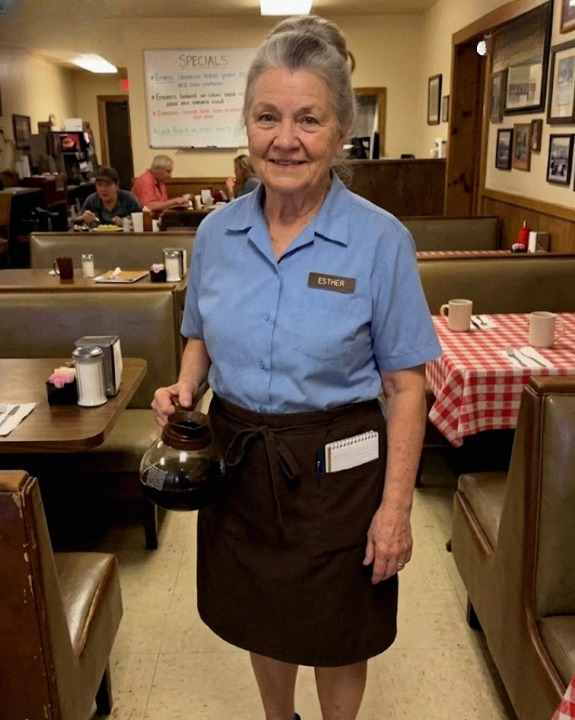
I’m 72 years old, and I’ve spent more than two decades working as a waitress. Most folks treat me kindly—but last Friday, one woman called me “rude,” walked out on a $112 bill, and thought she’d gotten away with it. She didn’t realize she’d crossed the wrong grandma. I made sure she learned her lesson.
My name’s Esther. I may be in my seventies, but I still move like a teenager when I’m working the floor at a cozy little diner in small-town Texas. It’s the kind of place where people still hold doors open and ask about your family like they truly mean it.
I never planned to stay this long. I started working here after my husband, Joe, passed away—just to keep myself busy. But I ended up falling in love with the routine, the people, and the feeling of being needed.
This place means even more to me because it’s where I met Joe. He came in one rainy day back in 1981, drenched, joking about needing coffee strong enough to wake the dead. I told him ours could raise them. He laughed—and kept coming back. Six months later, we were married.
After he died, the diner became my anchor. Being there makes me feel close to him, like he’s still sitting at his favorite table. The owner treats me well, and regulars always ask for my section. I may not be the fastest anymore, but I remember every order and treat people like guests in my own home. Most appreciate that.
But not everyone.
Last Friday during the lunch rush, a young woman came in, already filming herself on her phone. She sat in my section and barely acknowledged me. She ordered a customized meal and kept narrating everything to her audience, criticizing the service before I’d even had a chance to provide it.
No matter what I brought—fresh tea, extra dressing—she complained on camera. Nothing pleased her. For half an hour, she picked apart her food and my service, putting on a show for her viewers.
When I brought the bill, she scoffed at the total—$112—and accused me of being rude. Then, smiling at her phone, she announced she wasn’t paying and walked right out.
I watched her leave… and smiled.
Because she had no idea who she was dealing with.
I told my manager what happened, but when he suggested letting it go, I refused. I wasn’t about to let someone walk away without paying just because they thought they could.
With the help of one of the younger servers, Simon, I went after her. We spotted her still livestreaming down the street. I called out loudly, reminding her—and everyone nearby—that she hadn’t paid her bill.
She tried to brush it off, calling it harassment, but I calmly told her it was business. Then she ran.
And I followed.
From a grocery store to a shoe shop, then a café, a park, and even a yoga studio—I showed up everywhere she went, patiently reminding her about that unpaid $112. Each time, she grew more flustered, more desperate to escape.
But I wasn’t in a hurry. I had patience—and a point to prove.
Finally, in the middle of a yoga class, she snapped. She pulled out the money and shoved it at me, telling me to leave her alone.
I counted it carefully. Every dollar was there.
Then I looked her straight in the eye and said, “You eat, you pay. That’s how life works. Filming doesn’t excuse disrespect.”
I walked out with my dignity—and the money.
Back at the diner, everyone cheered when I returned. Later, I found out the whole thing had gone viral. People were calling me the “Respect Sheriff.”
Sabrina never came back, but I heard she posted an apology online. Good. Maybe she learned something.
Because around here, respect isn’t optional—it’s part of the deal. And age doesn’t make you weak. It just means you’ve had more time to learn exactly where to aim.