
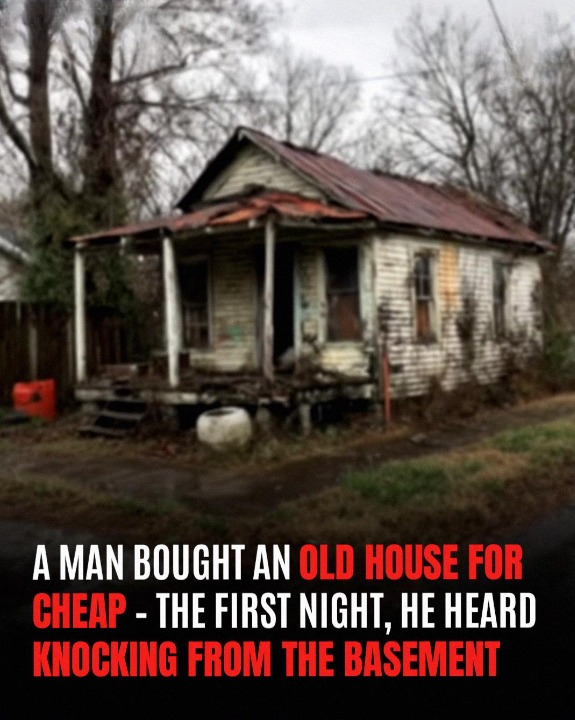
Daniel had bought the house at a suspiciously low price, but after years of cramped apartments and a messy divorce, suspicion was a luxury he couldn’t afford. On his first night, a slow, deliberate knock came from the basement—less a warning than a message. But who was it meant for?
Daniel didn’t believe in signs. He believed in logic, work, and getting through the day without drama. At 35, freshly divorced, he’d spent most of his adult life in tiny apartments that made him feel boxed in, folding his life smaller each year.
After the divorce, he’d rented a one-bedroom above a laundromat, pipes clanging, smells of detergent, rent creeping higher each month. He longed for walls he could paint, a yard to ignore or ruin, and real silence.
Then he found it: an old two-story house at the edge of town. Worn but solid, the price inexplicably low. Denise, the realtor, barely spoke, leaving him to explore the house alone. It smelled of damp wood and dust, floors creaked, wallpaper peeled, windows cracked. Nothing seemed dangerous—except the basement. The heavy, overpainted door exhaled a chill when opened, stairs disappearing into darkness.
“Why so cheap?” he asked. Denise shrugged. “The previous owners left quickly.” That vague answer settled in Daniel’s mind, but he ignored it. A week later, he bought the house.
The first night, sitting on the floor with takeout, he noticed a silence unlike any apartment’s. It felt alive, listening. Before bed, he checked the basement one last time: dark, empty… or so he thought.
At 2:11 a.m., a hollow knock woke him. Not outside. From below. Daniel grabbed a flashlight and cautiously descended. The knocks stopped. He called, nothing. Then a silhouette appeared, tall, narrow, moving along the wall. It ran deeper into the basement.
Daniel chased, but the basement seemed to stretch endlessly. He backed upstairs, slammed the door, and called the police. They found nothing.
The next morning, a man, Harry, stood at the door, claiming he owed an apology for the previous night. Daniel, suspicious, let him inside. Harry revealed tunnels beneath the street, hidden passages under houses, once used by him to sleep unseen. Another man was using them—hence the knocking.
Over the next days, Daniel and Harry explored the tunnels, discovering hidden rooms, stolen items, surveillance equipment, and notebooks documenting years of observing the neighborhood. Whoever had lived there had created an underground collection of lives, meticulous and patient.
Eventually, a figure fled through the tunnels, leaving behind evidence. Police arrived, uncovered the network, surveillance, and stolen property. The cheap house wasn’t a bargain—it was a warning. The original owners had left after discovering too much.
Daniel sealed the basement with contractors and tried to feel relief. Yet one thought lingered: the first knock had not been meant to frighten him—it was intended for someone who was supposed to answer.