
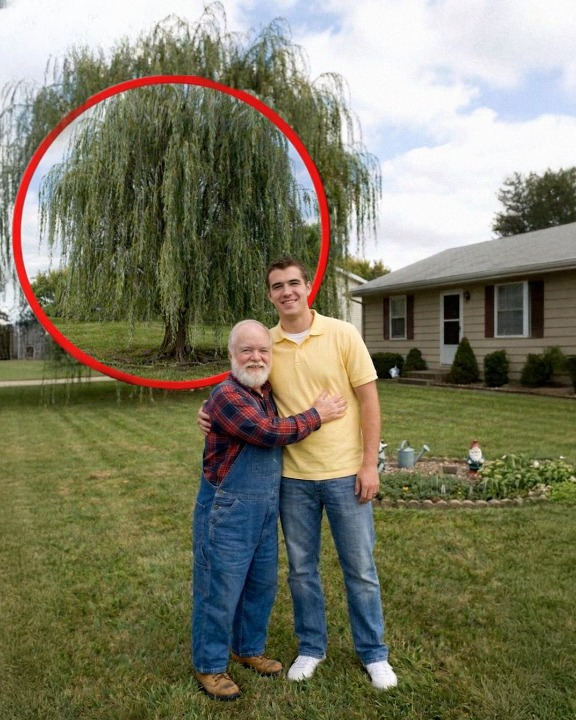
After losing my parents as a child, my grandpa raised me on his own. When he passed away last week, I discovered a hidden letter under his toolbox. It read: “Dig beneath the weeping willow in the backyard. There’s a private matter I’ve been keeping from you for 22 years.” What I uncovered was just the beginning.
My name’s Nolan, I’m 22, and I grew up with Grandpa Earl in our old farmhouse outside Cedar Hollow. Creaky floors, the radio humming in the kitchen, the constant smell of coffee—it was a simple home, but it was ours. After my parents died in a car accident when I was three, Grandpa gave up his quiet retirement for sleepless nights, scraped knees, and endless school projects. He never complained.
My cousin Marla, already 16 when my parents died, visited occasionally. But after Grandpa’s funeral, she appeared suddenly, moving through the house as if she had been waiting for this moment all along. She suggested selling the farmhouse, asking about Grandpa’s will, and scanning everything for anything of value. It was clear she wasn’t grieving—she was there to claim.
Later that night, alone in the house, I wandered through the rooms. Grandpa’s chair sat empty, his reading glasses folded neatly on the armrest. I couldn’t move them. That’s when I noticed a yellowed envelope taped under his toolbox, my name written in his shaky handwriting. Inside was a note directing me to the weeping willow in the backyard.
I grabbed Grandpa’s old shovel and began digging beneath the tree. After a few minutes, the blade hit something solid—an old, rusted metal safe. As I struggled to pull it free, a car door slammed behind me. Marla had returned, eyes fixed on the safe, feigning innocence. I ignored her and opened it. Inside were a modest pile of cash, a folded letter, and another sealed envelope labeled: “Only open if you choose to stay. If you choose the money, leave this one unopened.”
The first letter explained Grandpa’s intentions: the safe wasn’t about the money, it was a test of character. Would I fold under pressure, or stand my ground? Marla pressured me to sell the house, but I refused. Her greed and entitlement became clear; she wanted what wasn’t hers, just as she had when we were kids.
After she stormed off, I opened the second envelope. It contained stacks of cash and a final letter from Grandpa: he had been saving it for me since birth, waiting for the right moment to ensure I understood its value and could stand on my own. The tears came freely. Even in his final days, Grandpa had been thinking of me, guiding me from beyond the grave.
In the days that followed, I began restoring the farmhouse. Every repair felt like a conversation with Grandpa, a confirmation that I could honor his life and lessons. Beneath the weeping willow, I planted a small oak sapling—a symbol of growth, resilience, and the enduring legacy he left me. For the first time since his passing, I felt like I could breathe. Grandpa didn’t just leave me answers; he ensured I could stand on my own—and that was the greatest gift of all.