
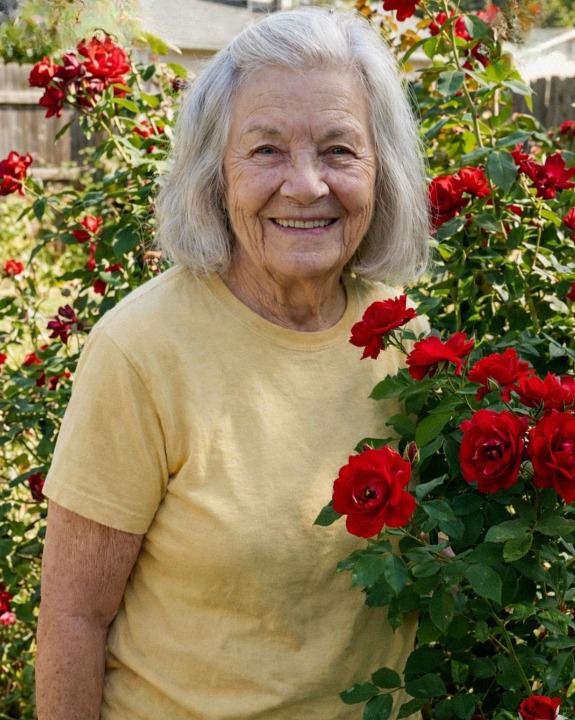
My 78-year-old neighbor was the kind of person everyone loved—warm, gentle, and almost like family to me. So when she passed away and left me a note along with a key to the shed she’d always kept off-limits, I never imagined what I’d find inside.
I had moved into a quiet suburb three years earlier, and within two days, Mrs. Whitmore showed up at my door with a freshly baked blueberry pie and a smile that instantly put me at ease. She was 75 then, a widow living a couple of houses away in a tidy white home with perfectly maintained seasonal flowers.
Over time, she became a steady presence in my life. We chatted over the fence, shared the occasional meal, and she’d often sit on her porch in the evenings, waving as I came home from work. But one thing always stood out: an old shed in her backyard, slightly hidden and secured with a rusty lock, oddly out of place next to her otherwise pristine home.
Four days ago, she passed away peacefully in her sleep.
Her funeral was small—just neighbors and a few unfamiliar faces. After the service, a young girl approached me, asked if I was Amber, and handed me an envelope Mrs. Whitmore had instructed her to deliver that day. Inside was a key and a note telling me I needed to open the shed to understand the truth she’d kept hidden for years.
That evening, I went to her backyard and unlocked the shed. Inside, the air was cool and dusty, everything draped in white sheets. In the center stood a large, human-shaped figure beneath one of them. When I pulled the sheet away, I panicked and called 911—only to learn it was a sculpture.
A life-sized one. And it looked exactly like me.
After the officers left, I found sketches—dozens of them—of the same face, spanning decades. My face. Some were dated over 30 years ago. Alongside them were old photographs, including one of a young Mrs. Whitmore standing beside a woman who looked just like my mother.
Then I found another letter.
In it, Mrs. Whitmore revealed the truth: she was my grandmother. She recognized me the moment she saw my mother’s photo. My mother—her daughter—had left years ago and never returned, believing she’d been cut off forever.
In reality, Mrs. Whitmore had spent decades remembering her through art, sketching her face again and again so she wouldn’t forget.
I took everything to my mother, who finally told me what happened. She had been adopted, fallen in love young, and ran away under pressure, planning to return—but life got in the way. By the time she tried to reconnect, her parents were gone.
She never knew her mother had been searching for her in her own way all along.
We went back to the shed together, where my mother saw the sculptures and drawings—years of love, loss, and longing preserved in silence. Later, at the grave, she tearfully apologized for everything left unsaid.
A few days later, a lawyer read the will. Mrs. Whitmore had left everything to me—her home, her savings, her life’s work.
She never got to call herself my grandmother out loud. But in the end, she made sure I would know the truth—that she had always known exactly who I was, and loved me quietly from the very beginning.