
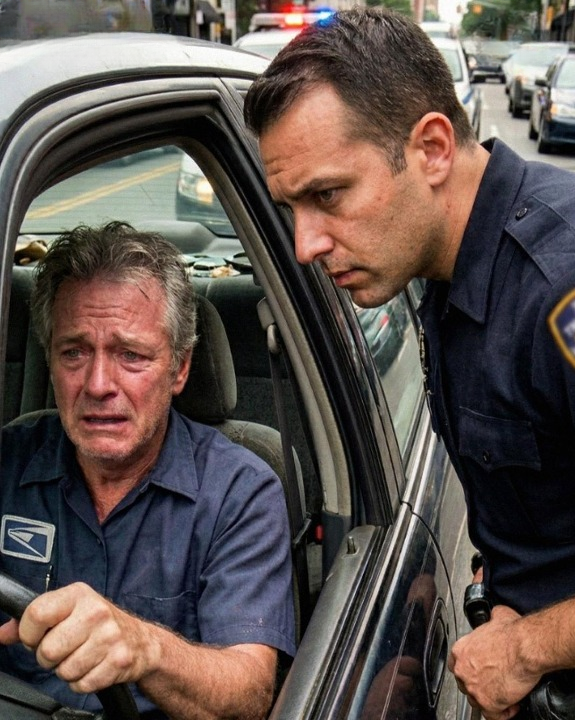
I clocked a car speeding and approached it expecting the usual excuses—but what I found turned a routine stop into a decision I’ll never forget.
He was doing 88 in a 55.
I picked him up on radar just past the overpass, where drivers usually slow down the moment they see a patrol car. He didn’t. Even after I turned on my lights, he hesitated before pulling over, like he was fighting something inside his own head.
By the time I reached the car, I was already annoyed.
“Engine off,” I ordered.
He obeyed immediately—but didn’t reach for his license.
Instead, he gripped the steering wheel tightly, knuckles pale.
“My daughter…” he said, voice breaking. “The hospital called. Something’s wrong. I need to get there.”
At first, I questioned him like I would anyone else. But when he finally looked at me, I saw it—real fear. Not an excuse. Not a lie.
Pure panic.
She was in labor. There were complications. And she was asking for him.
I glanced at the road ahead—traffic was building, lights were against us, and even if he sped again, he might not make it in time.
That’s when I made a choice.
“Stay right behind me,” I told him. “Do exactly what I do.”
Then I ran back to my cruiser, hit the sirens, and cleared a path through traffic—guiding him all the way to the hospital.
It wasn’t by the book.
But I didn’t care.
When we arrived, he barely waited for the car to stop before running inside. I should’ve left then—filed the report and gone back to patrol.
Instead, I stayed.
Minutes later, a nurse came out and told me the truth: his daughter had been refusing a critical procedure until he arrived. She was terrified and kept asking for him.
He made it just in time.
Inside the room, I saw him standing beside her bed, both of them overwhelmed—but alive. In her arms was a newborn baby.
“Dad,” she whispered.
“I’m here,” he said.
They introduced the baby.
Her name was Hope.
For a moment, everything felt right.
Then reality caught up.
Complaints had come in. Supervisors were waiting downstairs. Questions were asked—about procedures, about risks, about decisions.
I told them the truth.
I made a judgment call.
Yes, I broke protocol. But I got a father to his daughter when she needed him most.
In the end, I received a reprimand.
But a week later, I got something else—a photo of that father, his daughter, and baby Hope. On the back, a simple message:
“You got him there in time. We’ll never forget that.”
I still pull people over.
I still follow the rules.
But every now and then, I think about that moment—and how, just once, doing the right thing didn’t fit inside the lines.
And I’d make the same choice again.