
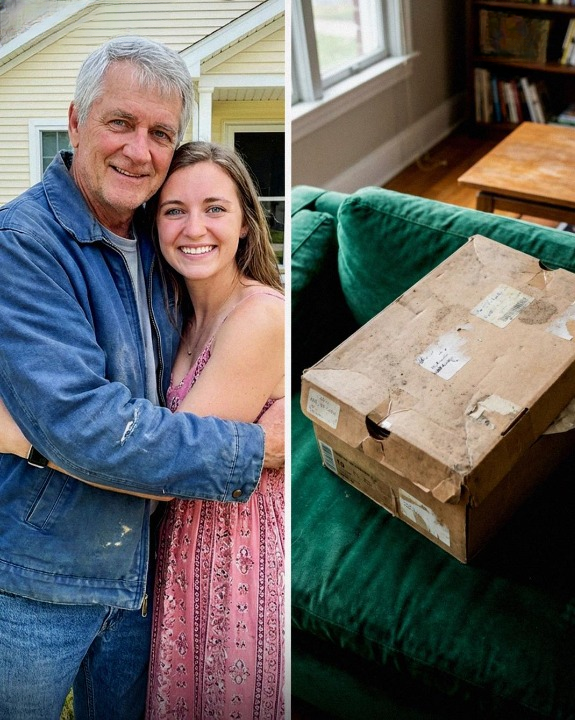
My father passed away three months ago after a long illness. During his final year, I was the one by his side—sitting in hospital waiting rooms, covering his expenses, and even taking unpaid leave from work to care for him. My sister, meanwhile, spent that time traveling, partying, and only calling when she wanted money—which Dad always gave her anyway.
After his death, she showed up just in time to handle the formalities and take stock of his assets. When the will was read, it seemed everything—his house, savings, and a $500,000 inheritance—had been left to her. All I received was an old, dusty shoebox. She even added a $50 bill on top and told me to be grateful.
At home, hurt and confused, I opened the box. Inside were what looked like meaningless papers—receipts, statements, scraps. But something felt off. When I checked more carefully, I discovered a hidden compartment. Inside it was an envelope addressed to my sister, along with detailed records my father had kept for years—every dollar he had given her, and every expense I had covered during his illness.
When my sister arrived and opened the letter, everything changed. Our father had set strict conditions: she could only access the inheritance if she repaid every cent he had ever given her and reimbursed me for all I had spent caring for him. On top of that, I had the final say—and could add my own conditions.
She had one week.
Desperate, she scrambled to sell her belongings and gather the money. I added one more requirement: she had to repair and fix up our father’s house, something she had never helped with before. She reluctantly agreed and rushed to complete everything before the deadline.
At the lawyer’s office, she believed she had done enough. But at the last moment, an overlooked expense left her short—and the deadline passed by a single minute. That was all it took.
The lawyer then revealed a final document my father had prepared: an amended will. It stated that if my sister failed to meet the conditions in time, everything would go to me instead.
And that’s exactly what happened.
As she lashed out, blaming me, I realized the truth—this wasn’t about me taking anything from her. She had lost our father’s trust long before he passed.
In the end, he didn’t choose between us. He simply let our actions speak—and made sure the outcome reflected who we truly were.