
Many people focus on diet, exercise, and other lifestyle habits to maintain their health, but often overlook a factor that can significantly affect digestive comfort: sleeping position. For individuals who experience acid reflux or heartburn, the way they sleep may influence how often symptoms occur during the night.
Acid reflux happens when stomach acid flows back into the esophagus, causing a burning sensation in the chest, a sour taste in the mouth, or discomfort that can disrupt sleep. During the day, gravity helps keep stomach contents where they belong. However, when a person lies down, that natural advantage is reduced, making it easier for acid to move upward if the body’s position allows it.
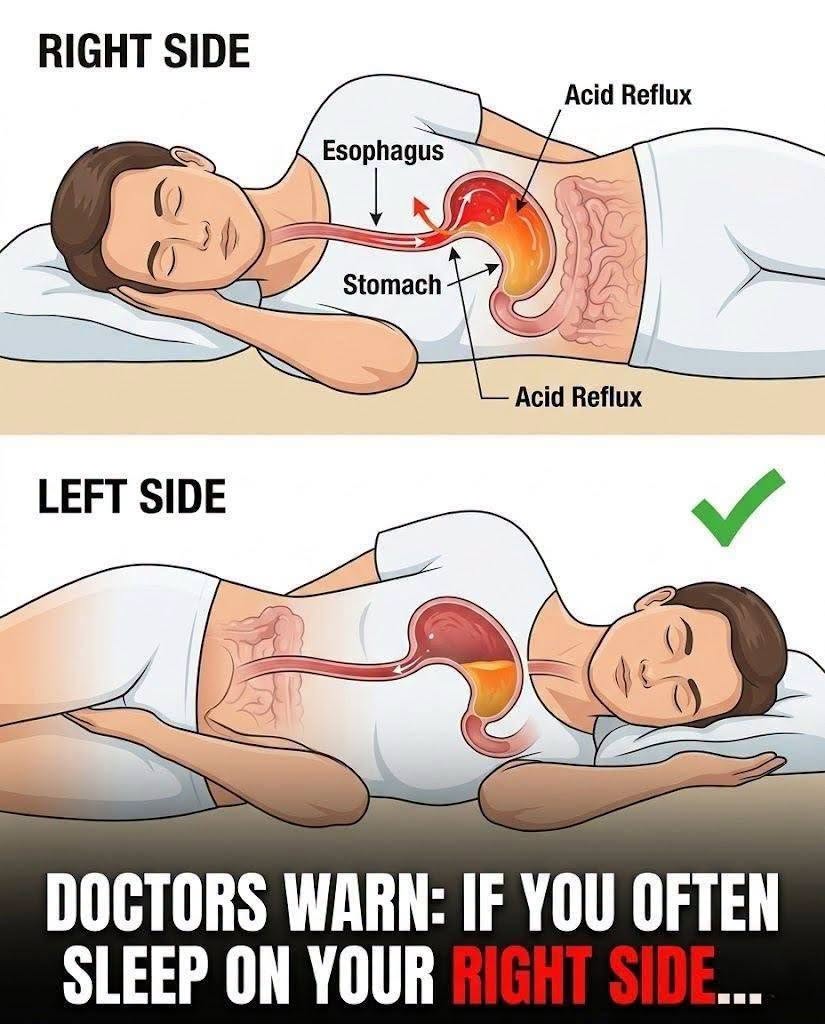
Research has shown that sleeping on the left side may help reduce nighttime reflux symptoms for some people. This is largely due to the position of the stomach within the body. When lying on the left side, the connection between the stomach and esophagus tends to remain above the level of stomach contents, making it more difficult for acid to travel upward.
In contrast, sleeping on the right side may increase the likelihood of reflux in certain individuals. In that position, stomach acid may have an easier path toward the esophagus, potentially leading to heartburn, coughing, throat irritation, or interrupted sleep.
Of course, sleeping position is only one piece of the puzzle. Other factors—including body weight, eating habits, alcohol consumption, smoking, stress levels, and underlying medical conditions—can all contribute to reflux symptoms. Managing acid reflux often requires a combination of lifestyle adjustments rather than relying on a single solution.
One commonly recommended strategy is to avoid eating large meals close to bedtime. Many healthcare professionals suggest waiting at least two to three hours after eating before lying down. This gives the stomach time to begin digestion and may reduce the risk of reflux during sleep.
Another helpful approach is elevating the head and upper body while sleeping. Using a wedge pillow or raising the head of the bed can help gravity keep stomach contents from moving into the esophagus. For many people, combining this method with sleeping on the left side provides additional relief.
Identifying personal food triggers can also make a difference. While spicy foods, fatty meals, caffeine, chocolate, and carbonated beverages are common triggers, sensitivities vary from person to person. Keeping track of symptoms and dietary habits may help reveal which foods contribute to discomfort.
It’s also important not to ignore persistent reflux symptoms. Frequent heartburn, chronic coughing, throat irritation, or recurring chest discomfort may indicate a more serious condition such as gastroesophageal reflux disease (GERD). If symptoms occur regularly or interfere with daily life, consulting a healthcare professional is advisable.
Quality sleep plays a vital role in overall health, affecting everything from energy levels and concentration to immune function and emotional well-being. For those who struggle with nighttime reflux, simple changes such as adjusting sleeping position, modifying meal timing, and addressing lifestyle factors may help improve both sleep quality and digestive comfort.
While these strategies are not a substitute for medical care, they can be useful tools for managing symptoms and supporting better long-term health.