
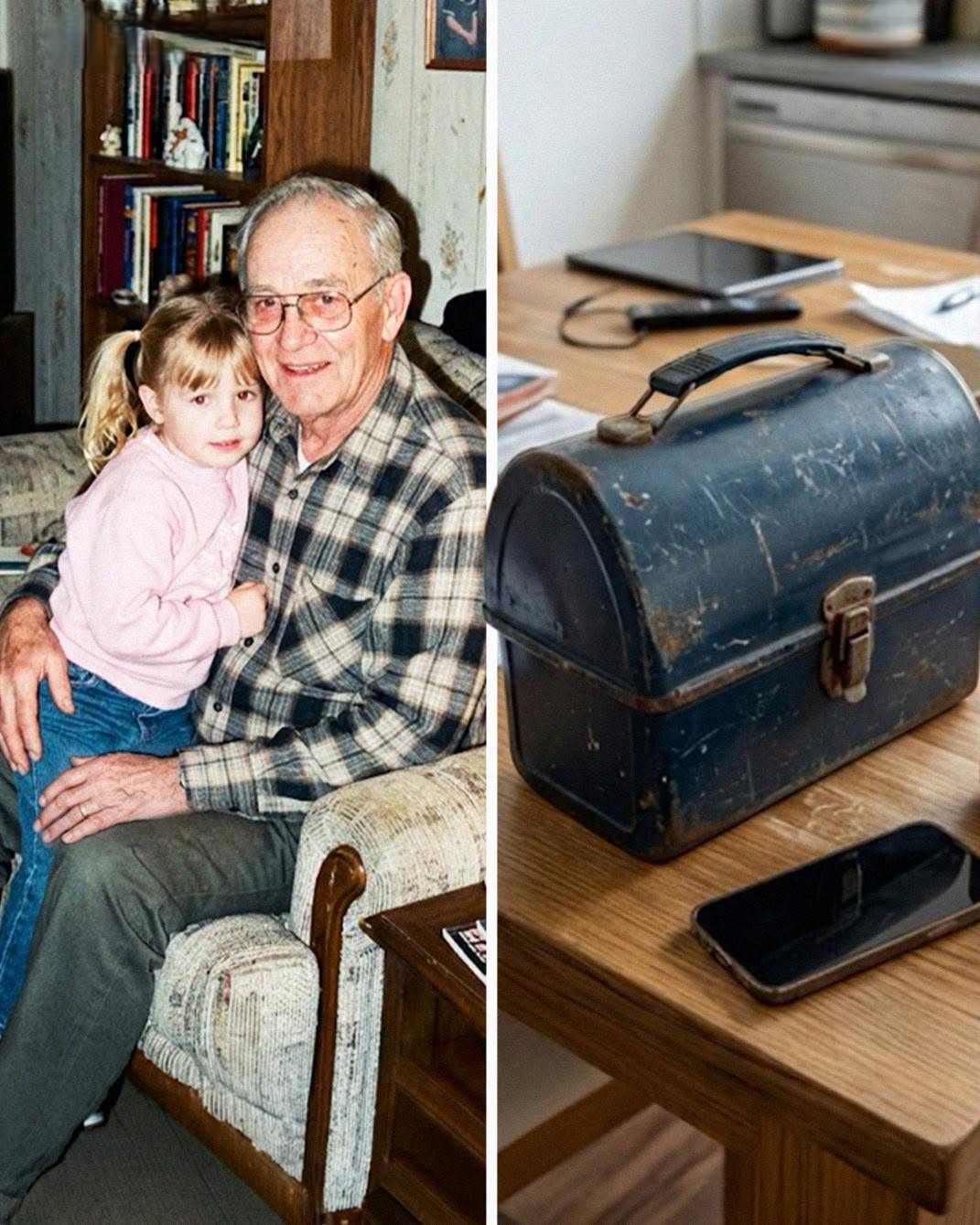
I’ve always felt like the outsider in my own family. Being the youngest of five, I grew up carrying blame that was never mine. My parents died in a car crash when I was just two, and my siblings never let me forget their belief that I was somehow responsible for it. While they left home as soon as they could, chasing distance from both memories and responsibility, I stayed. After college, I moved back in with my grandfather, Walter, as his health declined. I wasn’t there for money or inheritance — I stayed because he was the only person who treated me without resentment.
When he died, the atmosphere in the lawyer’s office was heavy with expectation. My siblings sat impatiently, clearly waiting for their share. The will was read, and they each received what they considered valuable: the house went to Matthew, the car to Jake, and Kirk and Jessica received cash. Then came my turn. I was left with nothing but my grandfather’s old metal lunchbox — worn, rusted, and seemingly worthless.
My siblings couldn’t contain their mockery. They laughed openly, treating it as a final insult. I left in silence, humiliated and heartbroken, convinced that even Grandpa had seen me as insignificant in the end.
I went to the park where he used to take me as a child and, overwhelmed with grief, opened the lunchbox with trembling hands. Inside, there was no food — only stacks of old receipts and bus tickets. At first, it felt meaningless, until I noticed a strange pattern: certain numbers were circled across every slip. They weren’t random. They were coordinates.
That realization changed everything. It reminded me of the scavenger hunts he used to create for me when I was young. This wasn’t rejection — it was a final game he had planned. That night, I decoded the numbers and mapped five locations across the city.
The next morning, I began following them. At each stop, I uncovered something new. An old friend of his gave me a sealed note encouraging me to continue. A waitress handed me a small key. A librarian showed me financial records revealing years of careful, consistent savings and investments made in my name.
The fourth location revealed the truth about my siblings. A retired accountant showed me proof that they had repeatedly taken money from Grandpa over the years, treating him like a personal bank whenever they were in trouble. He had helped them, but he had also documented everything. And in those records, a pattern became clear: they took his money, while I gave him my time.
The final stop was a bank. Using the key, I opened a safe-deposit box under my name and discovered deeds to multiple properties Grandpa had quietly built and invested in over the years — assets far greater than anything my siblings had received. Alongside them was a final note: he had chosen me not for fairness, but for trust.
In the end, the lunchbox wasn’t a joke or an afterthought. It was the beginning of everything he left behind.