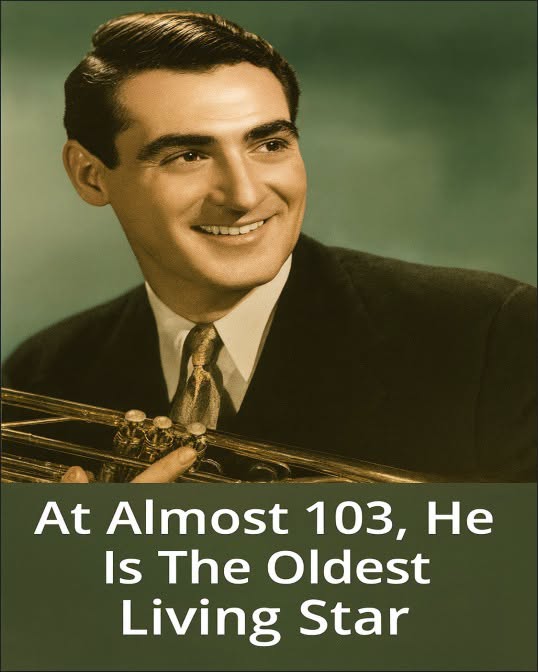
In Hollywood’s fast-moving world—where fame often flickers out as quickly as it appears—true longevity is rare. Most careers are measured in brief peaks of relevance, yet a select few performers transcend eras entirely, living through sweeping changes in culture, technology, and entertainment itself. Among these exceptional figures stands Ray Anthony, a name closely tied to the Big Band sound and the golden age of American music. At nearly 103 years old, he represents far more than endurance; he embodies a living connection to a century of artistic evolution.
To grasp the significance of a life like his, it helps to remember the world he came from. In the early 20th century, success in music and entertainment demanded discipline, patience, and constant live performance. There were no viral shortcuts or instant fame—only relentless touring, stagecraft, and mastery of one’s instrument. From this demanding environment, Anthony rose as a gifted trumpeter and influential bandleader, helping define the sound of an era that shaped modern American music. His long career reflects a rare truth: genuine artistry doesn’t expire with age but often deepens with experience.
Beyond personal achievement, figures like Anthony function as living history. His lifetime spans monumental shifts in culture—from radio’s dominance to television, from swing music to rock and roll, and from analog performance to digital entertainment. In that sense, he is not just a musician but a witness to the transformation of how the world creates and consumes art. For younger artists, his continued presence offers a powerful counterpoint to burnout culture, showing that creative passion can endure across a lifetime when it is rooted in genuine love for the craft.
What makes Anthony especially striking is the vitality he has maintained well into advanced age. While many legendary entertainers retreat fully from public life, he has remained a symbol of resilience and dedication. His career reflects the values of the “Golden Age” of entertainment—showmanship, discipline, and a deep respect for the audience. Even now, his legacy highlights what it meant to be a complete entertainer: someone who could lead, perform, and connect with audiences through pure musical expression.
Although stories of aging icons are often told through nostalgia, Anthony’s life speaks more to the present than the past. Reaching over a century in age while remaining creatively engaged challenges assumptions about decline and irrelevance. His example aligns with long-observed ideas in health and sociology: continued purpose and artistic engagement often contribute to a fuller, more meaningful later life. In his case, music is not just a career but a sustaining force.
He also plays an important role in preserving musical authenticity. In contrast to heavily processed modern production, the sound of big band music emphasizes human timing, expression, and imperfection. Anthony’s contributions help keep that tradition alive, offering a direct link to the foundations of American popular music. His continued recognition ensures that this style remains part of the living cultural conversation rather than a distant memory.
Public fascination with his longevity also reflects a broader cultural sentiment. In a world that often sidelines the elderly, his presence challenges assumptions about aging and relevance. Rather than fading, he demonstrates how a life in the arts can continue evolving, shaped by decades of resilience and adaptation within an ever-changing industry.
Ultimately, he stands as a reminder that while entertainment evolves, the core human desire for rhythm, storytelling, and emotional connection remains unchanged. His legacy is not only in the music he helped shape but in the example he continues to set: that a life devoted to passion does not diminish with time—it expands through it.