
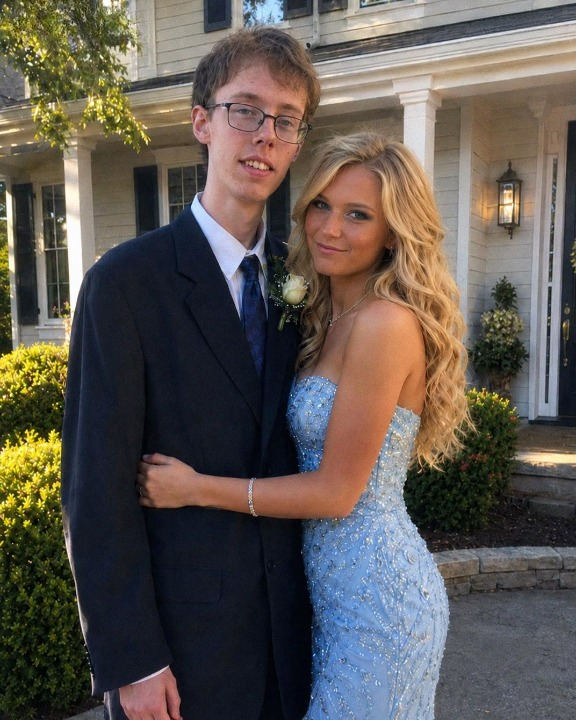
“I wanted him to have one perfect night,” I whispered, holding the envelope of cash. I thought I was giving him a gift. I didn’t realize it would become the thing that unraveled everything I believed about my son.
The kitchen table was covered in old photographs, their edges worn and yellowed, each one showing Jeremiah at different stages of his life. I had been sorting through them since morning, and the fading afternoon light had crept across the floor without me noticing. His entire childhood was laid out in front of me, yet it still felt incomplete.
I picked up a fourth-grade class photo and traced his face with my thumb. He stood slightly apart from the other children, as he so often did.
“Mom, did you eat anything today?”
His voice came softly from the hallway.
“I had toast,” I answered, not entirely truthfully.
He entered the kitchen quietly, wearing socks and a gray hoodie, taller now, more grown into himself. He paused behind my chair, glancing at the scattered photos without touching them.
“You’re doing it again,” he said gently.
“I’m just remembering.”
“You remember a lot.”
I reached up and squeezed his hand, like I had done since he was small enough to lean into my side.
“I’m so proud of you. A top university… after everything.”
He didn’t respond right away. Instead, he sat down across from me, his eyes landing on a middle-school picture near the top of the pile — Ella.
“Have you thought about it?” he asked.
I looked up. “About what?”
“About what you said… about Ella.”
My hand stopped moving.
I had mentioned it once, carelessly, in a late-night conversation — something I barely even remembered saying.
“Jeremiah, I was just talking,” I said quickly. “I didn’t mean anything by it.”
“You said you’d think about it,” he replied quietly. “I just wanted to know if you did.”
“This is just nerves,” I said. “Prom is weeks away. Don’t pressure yourself.”
His expression softened, and he gave me a small, tired smile.
“I just don’t want to be alone that night,” he admitted.
My chest tightened.
“You won’t be,” I promised. “You won’t be alone.”
He nodded, stood, and brushed past my shoulder.
“Thanks, Mom. For everything.”
As he walked away, I heard his bedroom door close softly behind him.
I looked back at the photographs: birthday parties with barely anyone there, school events where he stood slightly apart, moments of quiet isolation I had tried not to dwell on but never forgot.
And I told myself a story I wanted to believe — that I was helping him, that I was giving him something he’d never had.
The next morning, I messaged Ella.
The conversation was careful at first, uncertain. Then she agreed — not out of excitement, but out of need. I arranged everything: the dress, the hair, the makeup.
On prom day, she arrived at our door trembling slightly. Jeremiah came down the stairs dressed in a tuxedo, suddenly looking older than I had ever seen him.
They left together, and I stood in the driveway watching the car disappear.
At first, everything seemed normal.
Then a message arrived from his teacher:
“IS THIS YOUR SON?”
Followed by a photo.
And when I saw it, everything I thought I knew began to collapse.