
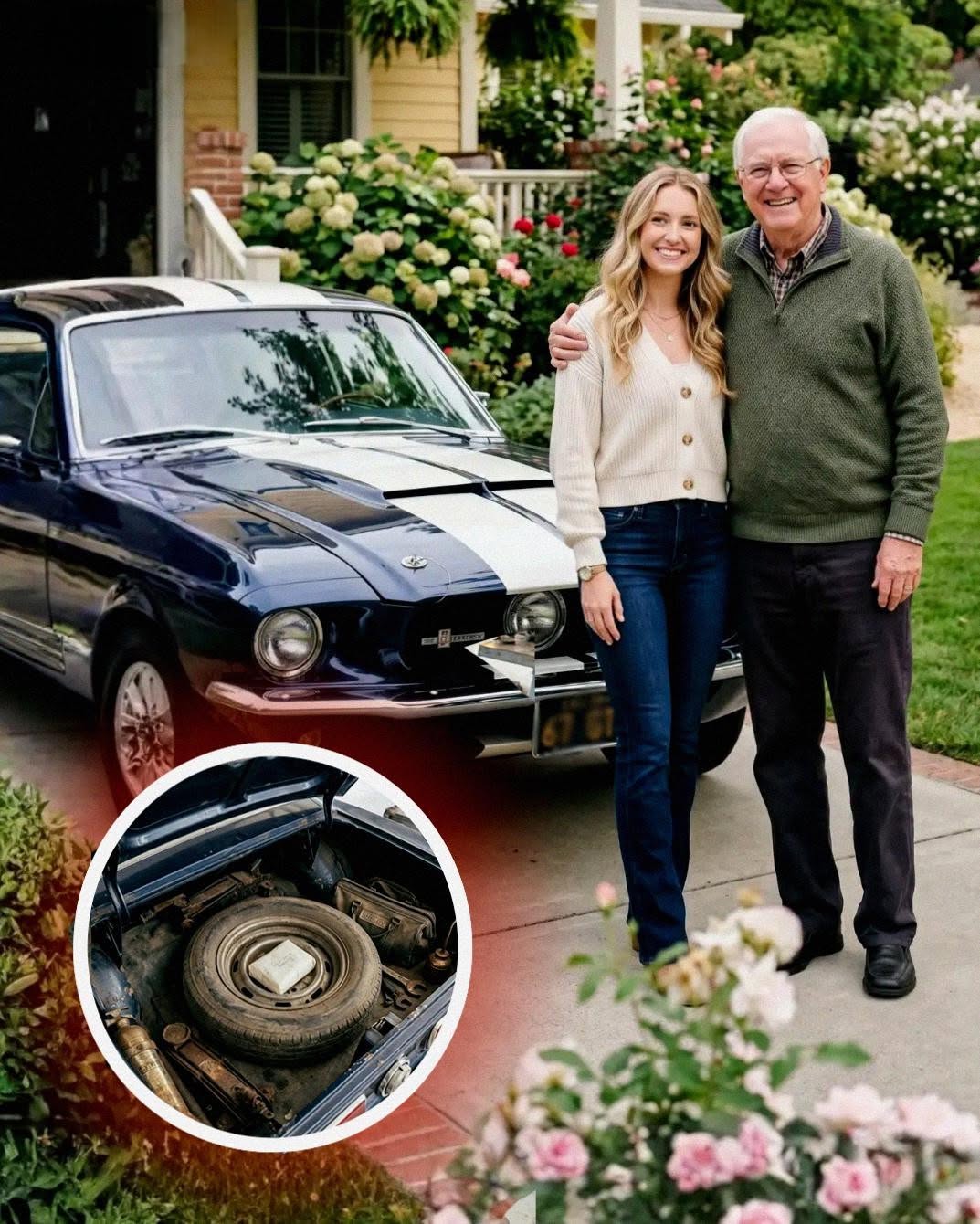
The morning of my father’s funeral felt like a fog of cold coffee, silence, and memories I couldn’t stop replaying. I stood in the kitchen scrolling through old photos, searching for something I hadn’t already memorized—the angle of his smile, the spark in his eyes, the way sunlight reflected off the chrome of his 1967 Shelby Mustang. That car wasn’t just a vehicle to him; it was a lifetime of work, rebuilt piece by piece over thirty years. It held his patience, his pride, and everything he loved about building something with his own hands.
My stepmother, Karen, barely appeared in those memories. She had always felt like someone on the edge of our lives rather than part of them. So when her name lit up my phone that morning, I already felt uneasy.
She said she was too overwhelmed to come to the funeral—too fragile, too stressed. I didn’t have the energy to argue. My own car was in the shop, so I had been using my dad’s Shelby, and driving it felt like carrying a piece of him with me.
At the church, I sat in the driver’s seat for a moment before going in, the engine still warm beneath me. I gave a quiet goodbye, then went inside and delivered the eulogy through a trembling voice, speaking about how my father never abandoned what mattered to him, no matter how hard life became.
All the while, I had no idea what was happening outside.
When the service ended, I stepped into the sunlight and stopped cold—the Shelby was gone. In its place was a flatbed truck lowering its ramps. Karen stood nearby with a white envelope in her hand, speaking to a man with paperwork.
She had sold the car.
Not later. Not after the mourning. During the funeral.
For a fraction of its worth, she let go of the one thing my father had spent decades restoring. She called it just a car. A financial burden. Something to move on from. I couldn’t believe what I was hearing as the truck pulled away, taking years of memories with it.
I was still reeling when a silver sedan pulled up abruptly. A young mechanic stepped out holding a sealed plastic bag. He said they had found something hidden in the car during inspection before transport.
Karen tried to dismiss it immediately, assuming it was worthless, but the moment she opened it, everything changed. Her expression collapsed. The envelope inside fell to the ground as she went pale, unable to speak.
Inside was a letter from my father, along with documents he had deliberately hidden in the car.
The letter made it clear he had known exactly who she was. He explained that if she was reading it, then she had already done what he expected—sold the car. But what she didn’t know was that the Shelby wasn’t just sentimental. It was tied to something else entirely: evidence of plans he had made in secret, including financial arrangements and a future he had been preparing long before his death.
As I read it aloud, the truth unfolded slowly. My father hadn’t been careless—he had been deliberate. He had left instructions, accounts, and protections meant to ensure that his legacy and wishes couldn’t be erased by impulse or greed.
Karen sat down, shaken, realizing too late that she had destroyed something far more important than she understood.
The mechanic said the sale could still be stopped if acted on immediately. Without hesitation, I made the call.
In that moment, something shifted in me. Grief was still there, heavy and sharp, but so was clarity. I wasn’t just reacting anymore—I was following my father’s final instructions.
I told Karen there would be no more unilateral decisions, no more control taken in silence. Everything would be handled properly, through his will and his intent, exactly as he had planned.
As the sun lowered behind the church, I stood with my aunt beside me, holding onto the weight of what had just happened. The Shelby might have been taken for a moment, but the truth behind it wasn’t lost.
My father had anticipated everything.
And even in death, he had left behind a path for us to follow.